THATCamp (which stands for “The Humanities and Technology Camp”) is a gathering where the agenda is set by attendees on the day of the event based on what people want to learn and/or share. It is an event where students, staff, and faculty from any discipline and from all skill levels learn and build together in sessions proposed, led, and voted upon by the community.
At DH@MSU THATCamp, we create space for meeting fellow members of the community in informal networking sessions. We encourage people to share their work in impromptu discussions and workshops.
This January, we are holding THATCamp as a virtual event from 9:30AM – 3:00PM EST.
The goals of DH@MSU THATCamp are:
To bring people back together at the beginning of the semester
To introduce new folks to the DH community
Build connections between community members for future collaborations, troubleshooting, and less formal, unplanned interactions
Who is THATCamp for?
This is an opportunity for people, whether formally a part of the DH@MSU community or part of the larger DH community, to gather, learn from each other, and make connections to carry forward into the academic year. We welcome:
Members of the DH community, old and new
Students in–or interested in MSU’s Digital Studies in the Arts and Humanities minor or the Digital Humanities graduate certificate
Humanists who are engaged in digital and computer-assisted research, teaching, and creation
Anyone interested in exploring digital topics especially (but not exclusively) in the areas of arts, humanities, and social sciences
Family members (kids, pets, are welcome!)
This is a flexible, family- and pet-friendly event.
10:20 – 10:50AM – Discussion and workshop topic ideas – gathering proposals, voting, and creating the schedule
10:50 – 11:50AM – Session 1 (breakout rooms)
11:50AM – 12:00PM – Break
12:00 – 12:30PM – Session 2 (breakout rooms)
12:30 – 1:15PM – Lunch Break
1:15 – 2:15PM – Session 3 (breakout rooms)
2:15 – 2:25PM – Break
2:25 – 2:40PM – What did we learn?
2:40 – 2:55PM – Breakout Facilitation for connections
2:55 – 3:00PM – Ending Remarks
*This schedule may shift if the community decides to make adjustments on the day of the event. For example, one of the sessions may break into two thirty-minute sessions in order to accommodate more topics. This page will be updated during the day of the event with any schedule changes.
How the day will work
Meet and Greets / Introductions
Using breakout rooms, we will have 3 short meet and greet opportunities. This means that groups of 4-6 will be gathered in a breakout room to introduce themselves and answer a question prompt for 7 minutes and then will be reshuffled into another room for 7 minutes with different people.
Sessions
Over the course of the day, there are two one-hour sessions and one half-hour session. During each of these session times, there will be up to 4 concurrent sessions that participants can choose among.
These sessions will be proposed or requested by THATCamp participants at the time of the event.
Session types could be:
Panel – 2-3 subject matter experts (and one moderator) gather to discuss a specific topic and offer differing perspectives. Panelists share facts or personal experiences, express opinions, and answer audience questions. The moderator keeps the momentum going, facilitates the discussion, and manages questions from the audience.
Demo/How To – A practical instruction that can be accomplished in a session wherein attendees learn a single skill. How-To sessions are similar to workshops in that they are participatory, but are less in depth, concentrated on audiences walking away with a single skill, rather than multiple, or more involved, skills.
Deep Dive – An in-depth discussion of a particular subject in DH, such as pedagogy, research, or outreach that digs extensively into a single topic
Problem Solving – A open forum to discuss moments when you may have hit a block with a DH project and would like to brainstorm ways forward with THATCamp participants
Show and Tell – an individual or group showcases a project and explains how it was created, what went into it, including the technology, etc (this type of session may also group together 1 to 3 project show and tells)
Other: You decide what format you will use
Technology and Communication
Zoom
THATCamp will take place on Zoom. The meeting link and information will be sent via email to registrants when registration is complete. For the best experience, please update to the most recent version of Zoom via these instructions.
When you enter the Zoom meeting room, your video and microphone will be turned off/muted by default, and you are welcome to turn them on/unmute as you prefer throughout the event. We will all convene in one room, and we will use breakout sessions to facilitate introduction sessions and the discussion sections. There will be moderators available throughout the day and in each breakout room to assist with technical issues and Zoom questions.
Closed Captions will be provided throughout THATCamp and made available to all in main sessions. If participants would like captions provided during breakout rooms, please let the organizers know by emailing dh@msu.edu.
I learned about Digital Humanities when I was working as Performance and Digital Engagement Specialist at the MSU Museum (2015-2019), and increasingly I’ve seen how Digital Humanities happens in the museum context while I’ve been involved by presenting at Museum Computer Network Conferences and volunteering for that organization. When someone is using a digital tool to analyze collections, or make them more accessible through digital means I see that as digital humanities. Projects such as the Pink Art project at Williams College Museum of Art or the Open API at the Art Institute of Chicago, I see as digital humanities projects born in museum work, among many others. But I think I got the best sense of what digital humanities is by going to the Global Digital Humanities Symposium (for which I am on the planning committee), and seeing the wide array of projects and most importantly, stories that are being told that can’t be told any other way, or that would be exceedingly difficulty to unearth without the assistance of some digital technology. It also involves being critical about digital technologies, and the ethical considerations we must address in the use of the tools. Now I work in Digital Humanities at MSU as the Digital Humanities Coordinator, working on digital communication through web, social, and newsletter, and I chair the Engagement and Outreach Committee. Digital Humanities includes a really rich and dynamic community, and there’s always something new to learn about it. I welcome all to find out what DH means to them!
–Max Evjen (Assistant Professor)
Core Faculty: Digital Humanities, Arts Cultural Management and Museum Studies Affiliate Faculty: CIRCLE (Center for Interdisciplinary Research, Collaboration, Learning, and Engagement)
The following piece was originally created for the DH@MSU Newsletter and was featured in the September 16, 2024 issue. Subscribe to the Newsletter here.
I am associate professor of German, core faculty in the Digital Humanities, Associate Chair for Graduate Studies in LiLaC, and Interim Chair of Digital Humanities. This might sound like a strange combination of interests, but it goes to the heart of what DH means to me. I started my undergraduate majors in mathematics and German literature with little sense that the two subjects had anything in common. However, as my studies in both continued (and as I encountered more mathematical theories named after Gauss, Riemann, Hausdorff, Weierstraß, etc.), I became more and more convinced of the overlaps between German culture and theories and practices of mathematics in the early 20th century. Indeed, as I learned as a graduate student, mathematics had originally been housed in the “philosophical faculty” in German universities, along with philosophy and literary studies. Their separation into STEM and the humanities as we know them today started to appear more as an ideology we imposed on these areas of study—one that covered up their deep and shared interest in language, the nature of reason, and the logical underpinnings of the world. I see DH as a way of bringing them back into productive conversation.
What DH means to me is in a sense interdisciplinary study that better reflects the mix of language, culture, technology, and algorithms that makes up our current reality. This doesn’t mean that we should give up on any of these individual subjects, but rather that a more complete image of knowledge includes both what we may learn in a German and mathematics courses as well as what is revealed by their often surprising and sometimes odd combinations. For instance, the German-Jewish mathematician Felix Hausdorff, considered one of the founders of the modern study of topology, wrote aphorisms and experimental literature inspired by the philosopher Friedrich Nietzsche under the name Paul Mongré. If, for Hausdorff, the combination of philosophy and literature helped question the legacy of metaphysics around 1900, how might knowledge of Germany in the 20th century (and the role of technology in propaganda) inform how we deal with the problems of algorithmic bias and hate speech on the internet today?
I attempt to model these interdisciplinary ways of thinking in my DH work and teaching. Network analysis, for instance, has provided me with new insights into how German-Jewish intellectuals organized themselves socially between the World Wars and how ideas spread throughout the social networks they created through their exchanges of letters. In my DH courses, I have students explore the origins of “the digital” in the 1940s and 1950s as well as collaborate on semester-long projects that work to analyze and make accessible materials in MSU Library’s Special Collections. In all of these endeavors, I see DH as helping makes visible otherwise hidden connections in the same ways I experienced as an undergraduate major in German and math.
–Dr. Matthew Handelman (Associate Professor)
Interim Director, Digital Humanities Faculty: Linguistics, Languages, and Cultures, Digital Humanities, Jewish Studies, German
The piece above was originally created for the DH@MSU Newsletter and was featured in the October 14, 2024 issue. Subscribe to the Newsletter here.
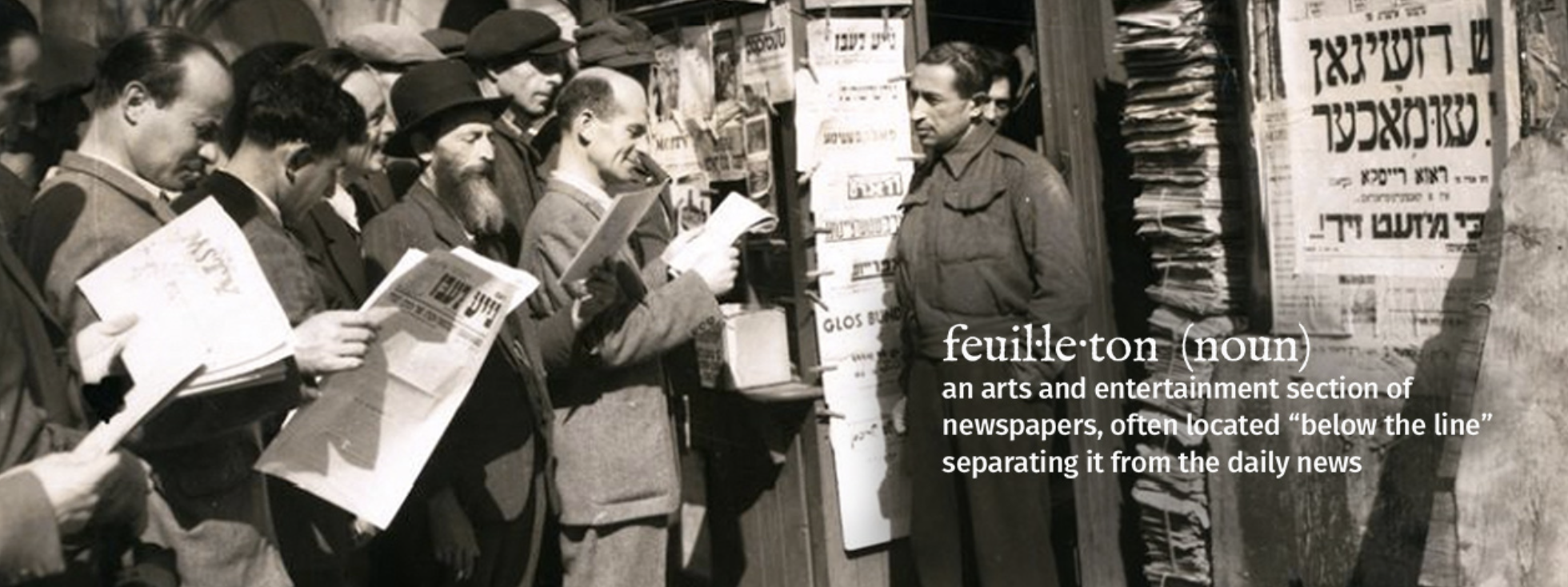
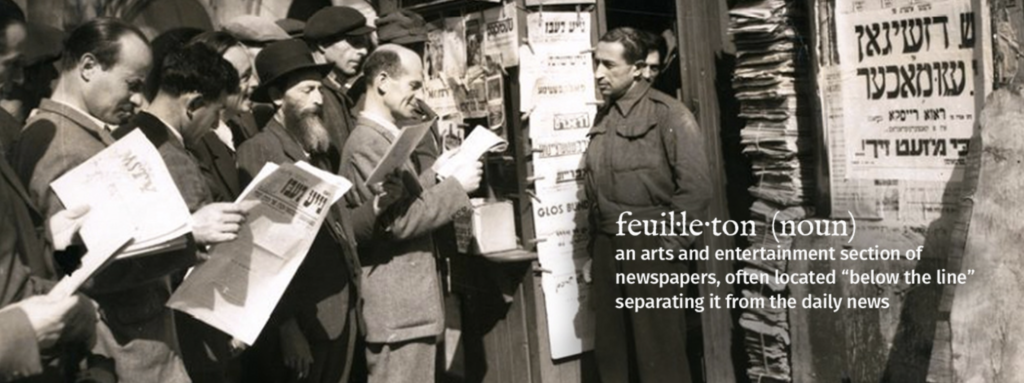
“Below the Line” (https://www.feuilletonproject.org/) provides open-access resources for those interested in learning more about the feuilleton—an arts and culture section of European newspapers popular before the Second World War—and its importance in the formation of modern Jewish cultures. The project aims to foster conversation about and research into the feuilleton as a historical forum that attracted many different types of writing, writers, and readers.
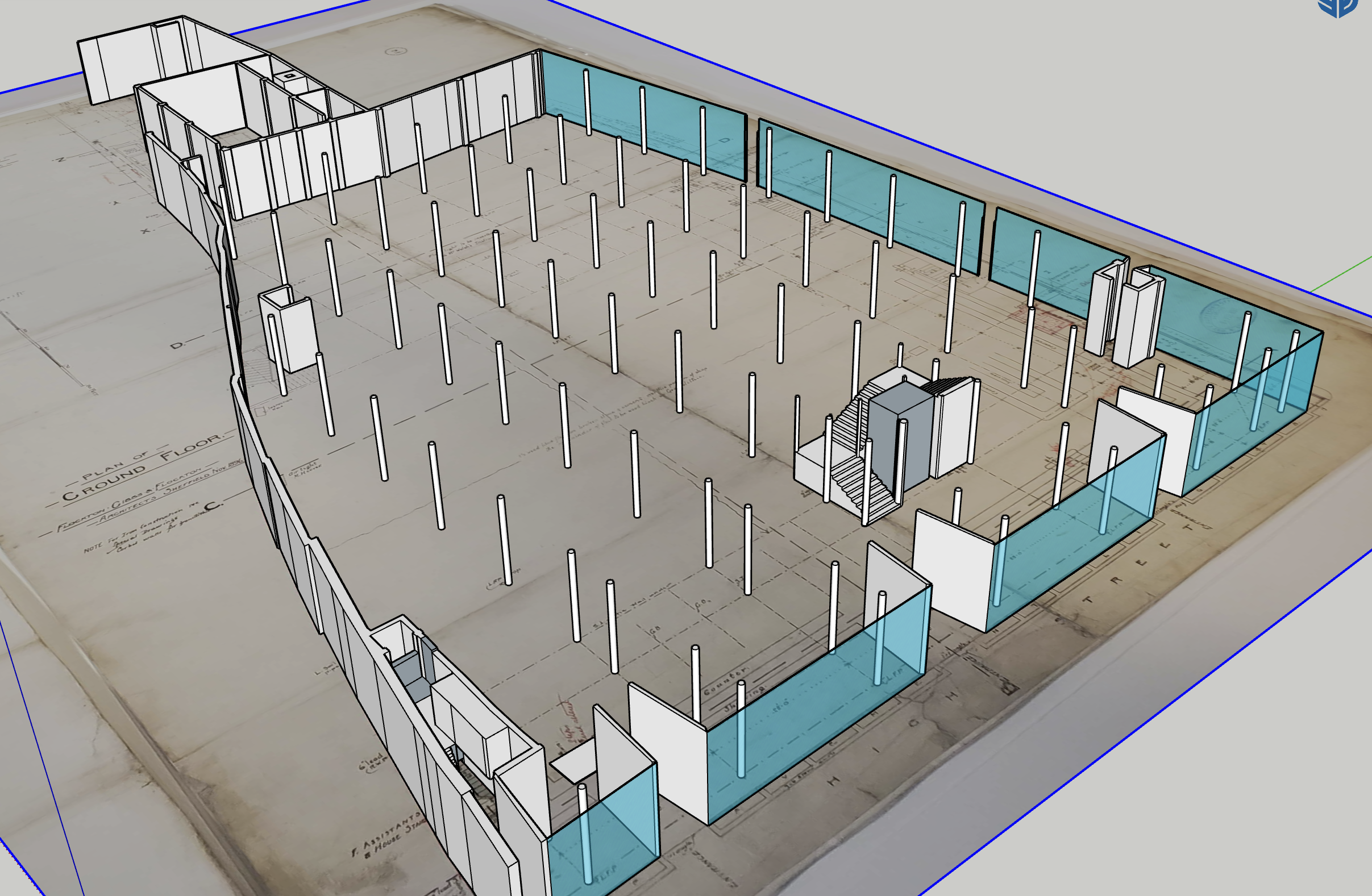
This project is a 3D model, built in SketchUp, of the 1899 John Walsh department store in Sheffield, UK. Drawn from the architectural plans of Flockton, Gibbs & Flockton, accessed at the Sheffield Archives, I am attempting to create a general recreation of the building which was destroyed in 1940. This project is part of my dissertation, which is a comparative study of department and fashioning stores in Sheffield, UK and Cologne, Germany, as sites of industrialized labor at the turn of the twentieth century. Currently, the model is a work in progress, but has helped my conceptualize space and the ways in which people imbue and read meaning in and through the spaces they occupy. I have three long-term goals for this project: finish 3D model of the Walsh store so that each floor has a reasonable representation of the interior and exterior; print the 3D model so that it is materialized; and expand the project to include the Leonhard Tietz Hohe Strasse store that is also part of my study.
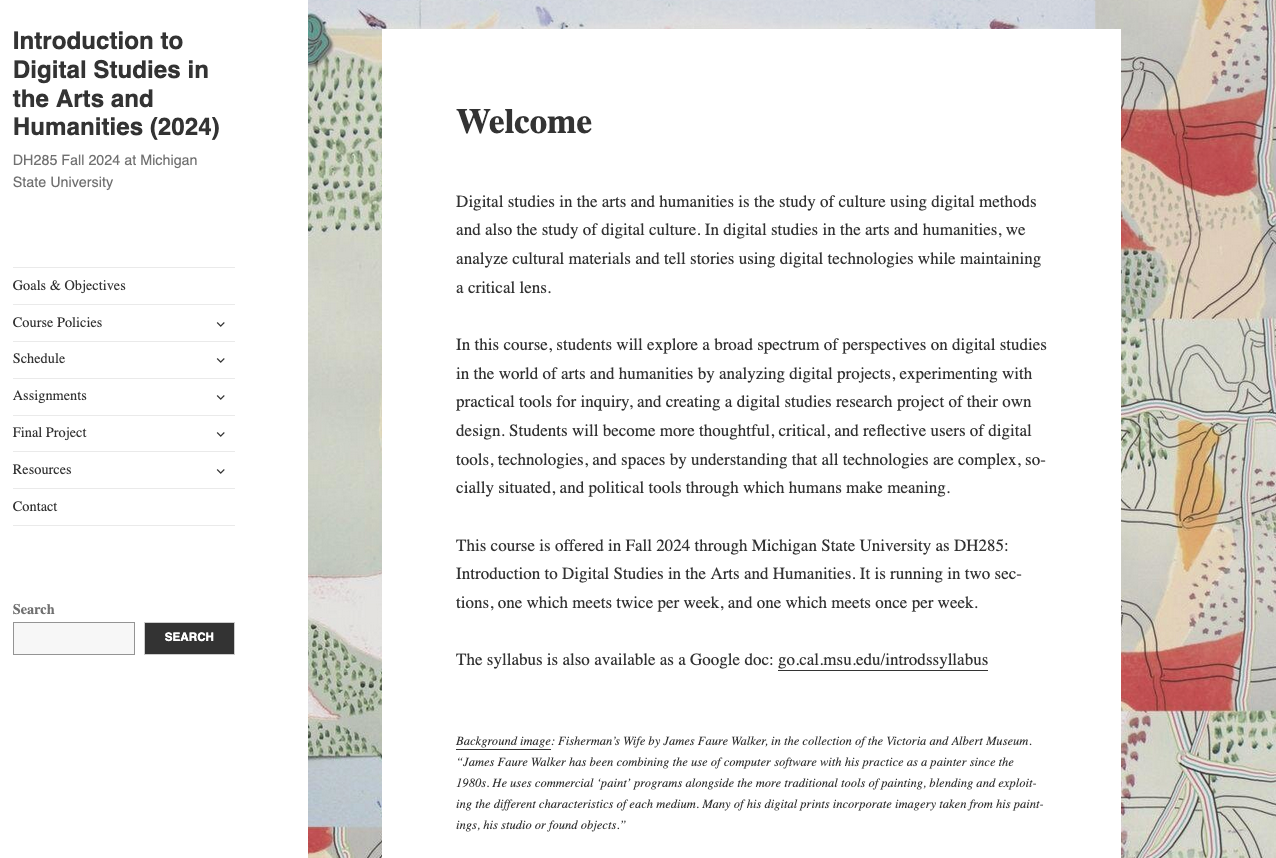
Digital studies in the arts and humanities (DSAH) is the study of culture using digital methods and also the study of digital culture. The class analyzes cultural materials and tell stories using digital technologies while maintaining a critical lens. By creating their own projects and learning about digital studies tools, students become more reflective of themselves and the technologies and society around them. Some projects include looking at maps and networks. In addition, the class visits the Digital Scholarship Lab and has guest visits from the head of the Voice Library at MSU, an AR workshop, and guest visits from DH project leaders from outside MSU.
My journey into digital humanities came from a love of technology, working with software and hardware, that eventually led me into the humanities and scholarship. I began working on immersive projects, serious games for training and VR simulations, and soon transitioned into higher education from studio work. The environment provided a wide range of uses for digital tools, and I discovered the various ways faculty were leveraging technology to enrich their research and instruction.
This past summer, I had the privilege of supporting Morgan Hill on her project during the Graduate Arts Fellowship. This fellowship fosters creative engagement through the resources available at the Digital Scholarship Lab (DSL). Morgan’s project, “Rituals in Communities: The Art of Breaking,” utilized the DSL’s 360 Visualization Room, along with digitization, audio/visual recordings, and animation software. The entire experience—from concept to execution—was incredibly fulfilling, highlighting collaboration within both the project and the digital humanities community. I am excited to continue supporting innovative projects for next year’s Graduate Arts Fellowship and during the annual Project Incubator.
–Yuri Cantrell
Digital Scholarship Librarian
The piece above was originally created for the DH@MSU Newsletter and was featured in the October 29, 2024 issue. Subscribe to the Newsletter here.
Digital Humanities (DH) has come to mean a lot to me. In 2018 – which is when my introduction to DH occurred – it was a graduate certificate that I thought would make an interesting addition to my curriculum vitae. When I made the decision to join the Digital Humanities Graduate Certificate at MSU, I had no idea that it was going to completely change my career trajectory. I had never even considered myself a technical person (heck, I still use a paper planner). By the time I was halfway through my first year as a Cultural Heritage Informatics (CHI) Fellow, I recognized that DH was something I might want to continue doing in the future. I saw it as a way of creating projects that reach wider audiences and require creative problem solving than just writing about research does not.
I appreciate the emphasis on collaboration. Academics can so often become isolated within their own research projects, which, for me at least, can create an echo chamber in which I am unable to gain feedback and new insight that outsider perspectives can provide. A second but related aspect I appreciate about DH is the interdisciplinary nature which allows for more opportunities to learn from each other gaining insights you can only get from interdisciplinary discussion. My own research tends to be interdisciplinary and so I especially benefited from collaborating with DH community members coming from backgrounds in fields like Anthropology, Archaeology, English, Urban Planning, and Linguistics. This spirit of collaboration goes beyond MSU. One example would be the #DHMakes community that I learned at the 2024 Association for Digital Humanities Organizations (ADHO) Conference. It was an entire group of like-minded scholars who wanted to bring their creative art and crafting ideas into conversation with DH tools and methods.
DH also means being able to do meaningful work. For example, I work as the Digital Humanities Lead Developer for the Roberson Project on Slavery Race, and Reconciliation at the University of the South in Sewanee, Tennessee. My first project on the team was building Honoris Causa: Sewanee, The Lost Cause, and Honorary Degrees, a website displaying the research of our Public Historian, Maia Council, on the honorary degrees awarded to former and unapologetic Confederates. They were celebrated in 1957 at the height of the Civil Rights Era. I have also developed a site to tell the live and up-to-date story of Sewanee Praises. This project is a community-focused initiative between the University of the South, Virginia Tech, and Virginia Commonwealth University to develop a monument in the area that was once the heart of Sewanee’s Black Community. Finally, I am developing a 3D map to display land leases of black and white Sewanee residents in the early twentieth century. Working with the Roberson Project has meant building public-facing digital products that are accessible to current, former, and future Sewanee residents and their families. What is more, these projects make interventions in recognizing and chipping away at the legacy of white supremacy in the South.
Even when working with serious material and content, DH, to me, means being able to have fun with my work. This is because of the tinkering and experimentation that is required of DH practitioners as we constantly have to problem solve something. Part of what I enjoy the most about working with digital tools, methods, and platforms is that they are always evolving and that there is always something new to consider and experiment with. For example, I am working on a project called Menu Made America for Matrix Center for Digital Humanities and Social Science here at MSU. The project is a culmination of a DH Summer Seed Grant and a chance encounter with a collection of menus from the late CEO of Crown Publishing/Crown Menus. The collection roughly covers the years 1959 to 2008 and focuses mostly on Michigan, but goes beyond and throughout the United States. We have been vetting, cataloging, and digitizing the menus and I am going to build an Omeka-S database in the Spring. Our goal is to have the collection connect to other menu collections and to set a standard for vocabularies related to restaurants and menus as source material.
Being a part of the DH community has opened up doors for me I never even knew existed. DH has made me realize how much I enjoy teaching, but that I enjoy teaching skills and working with others on their projects more than teaching in a traditional classroom setting. Thanks to my experience as a Graduate Assistant in the Lab for Education in and Advancement of Digital Research (LEADR), I am the new Training Specialist for Omeka, replacing fellow LEADR, CHI, and MSU DH alum, Zach Francis. I will be teaching intensive and one-off workshops to scholars and researchers from all over the world. DH means being able to continue thinking creatively about how to present my own research and how to collaborate with other scholars on scholarly and public-facing projects.
–Dr. Dani M. Willcutt (Department of History)
Graduate Research Assistant, Matrix Center for Digital Humanities & Social Sciences Digital Humanities Lead Developer, Roberson Project for Slavery, Race & Reconciliation Editor, H-Food-Studies
The following piece was originally created for the DH@MSU Newsletter and was featured in the November 11, 2024 issue. Subscribe to the Newsletter here.
This semester, Emily Joan Elliott’s ISS 210 course on social movements is partnering with Lab for Education in and Advancement of Digital Research (LEADR), run by Gillian MacDonald. Over the course of the semester, a LEADR assistant, Jada Gannaway, will visit Emily’s 200-student lecture to teach the students how to use Voyant, Timeline JS, andCanva. Students will use these tools to create digital media kits that address a specific social movement assigned to their recitation section. In several cases, recitation sections will directly support local, community-based organizations by developing informational pamphlets and interactive timelines of the organization’s history.
Taught by Jeff Kurre, a professor in Writing, Rhetoric and Cultures, this class also incorporates aspects of Digital Humanities. The concepts that define “computational thinking” have been around for ages but recently gained prominence in 2006 with an essay by Dr. Jeanette Wing. She argued that the skills of decomposition (breaking large problems into smaller ones), identifying patterns and anomalies, abstracting away distractions, and devising reusable systems as solutions should be fundamental skills for all students, not just aspiring computer scientists.
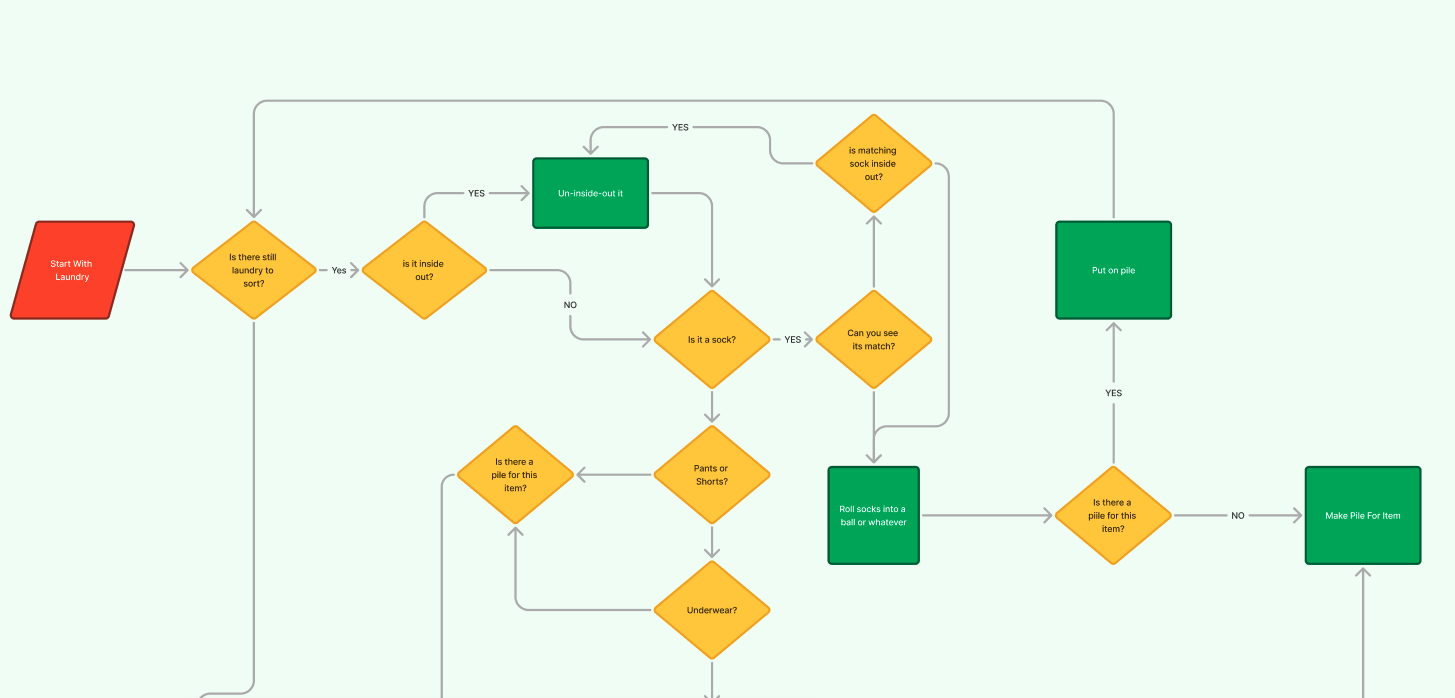
While later assignments do include actual programming, earlier projects focus on real world analogies for computer data types, flowcharts and pseudocode to represent steps of a process. Mimicking the actions of sorting algorithms to arrange actual physical items by size.
The goal isn’t for XA students (who have wildly different levels of experience and expertise with computing) to become expert coders, but to learn how their work might benefit from the tireless speed and accuracy of computers. Instead, the goal is to learn ways on how to effectively collaborate with future colleagues who deal in systems and data, and – most importantly – how to keep their work grounded in their humanistic ideals.
Downtown Main Street. A few images may come to mind, but that image is different for everyone because we all have various experiences and perceptions. Like any historical record, many small towns have a homogenized history—one that is recorded by those in positions of power and lacking in diversity. In some places, there may be political, social, or religious interests as well that shape Main Street. With attempts to revitalize or bring tourists to their downtown areas, some post-industrial small towns are continuing to retell the history told by those in power in order to simply survive. But, this problem is not new. These attempts rely on an idealized past, which prompts issues in creating an imagined sort of Main Street in a historical way.
The problem with developing content to share with tourists is access, specifically accessing a more diverse history. Technology can be used as a bridge between what is already in downtown archives and what tourists are looking to learn about that destination. A digital platform would allow for immersion into Main Street history and would provide an opportunity for the community to share other narratives or heritage artifacts, broadening the historical narrative to include more diverse voices.
Project Description
My dissertation project, titled Memory Lane,is a digital humanities project that employs public humanities, specifically public history and anthropology. The goal of this project is two-fold: (1) provide an example of an approach to immersive educational digital heritage experiences and (2) provide access to heritage through the use of digital methodologies for tourists to engage with that heritage. The question guiding my research is how can we critically integrate what communities already have preserved into a more inclusive and accessible digital public history project?
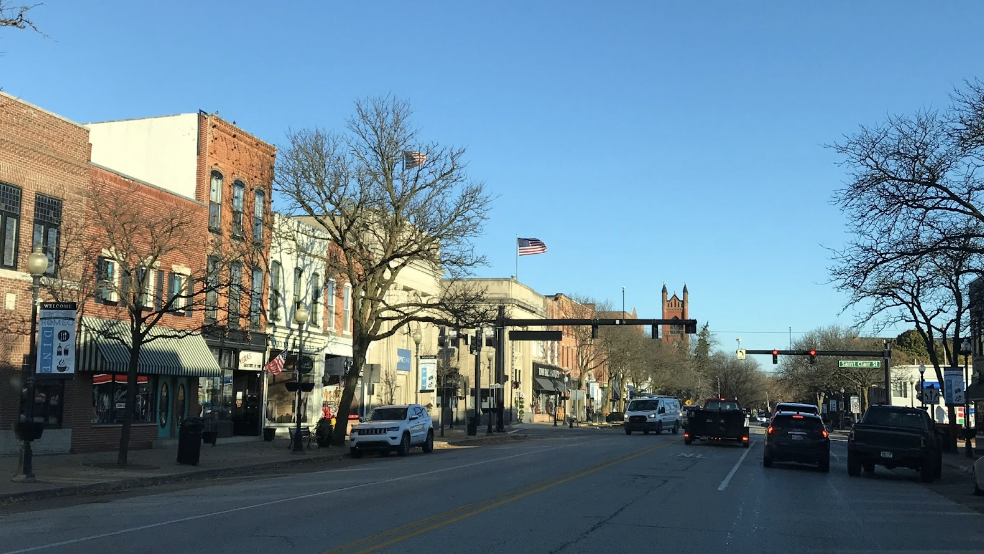
For this case study, I am using semiotics as a theoretical framework to talk about the different layers there are to a physical cultural space. I will also be using historical photographs to allow for more narratives, potentially competing ones, to come to light and those cultural layers bring about different historical and personal meanings to a space. I chose Romeo, Michigan as a location to investigate the semiotic landscape and these competing histories because of its preserved history, established archives, and development of tourism efforts. These multiple audiences bring about an opportunity to share and understand diverse narratives. My project is still developing, but I will create a public website with the use of different digital tools, including digitized archival documents and historical photographs, augmented reality software, geographical mapping, and a portal for the public to add to the town’s history by sharing their own narratives.
I applied for the DH Seed Grant to help fund my summer fieldwork. I first started by creating a general website that participants could reference if they wanted to know more about my project. I also used it as another way for people to access my survey (which was also distributed via flyers).
I then reached out to every business on Main Street via email–this included finding locations on Google maps, searching their website for their contact information, sending the email, and then keeping extensive records of who I contacted, the dates of any email communications back and forth, and any meetings I scheduled. In total, that started at about 60 emails. However, that number continued to grow from there. I then reached out to the village’s chamber of commerce and DDA board to which I received much interest for me to come and talk at meetings and to host interviews. I have since conducted interviews with the village President, DDA members, Lions Club, business owners, and residents. I also began to digitize historical photographs from some of the interviewees and explored the Library’s online archival database. I had plans to visit the Historical Society’s archives (as their collection is not digitized at this time), but their location flooded over the summer and they are still working on repairs, so that task is still pending.
The interviews have been very enlightening for me, not only as a history buff, but also as a researcher. They provide a space for people to share their personal histories and memories of Romeo. One central question I ask in every interview is “When you hear the name Romeo, what is the first memory that comes to mind?” One participant said “Sundays dinners at my grandmother’s,” another said “the smell of the bakery through their grandparents’ apartment window,” and another said that they remembered being in the local diner feeling the crisp denim of their new blue jeans on the first day they allowed boys to wear them to school. All of these memories and stories matter, and my hope is that this project offers an opportunity to weave these narratives into the larger central narrative of Romeo, offering a more diverse and accessible history.
Outcomes
The intended outcome of this project is to provide a model on how to critically integrate what communities have already done for heritage preservation into a more inclusive digital public history project. With the use of semiotics as a theoretical framework, I am investigating how different narratives and memories help define different social spaces on main street. Through an ethnographic methodological approach, I will continue to research Romeo’s history and tourism efforts to better understand (1) what approaches they have done so far and (2) what information community members and tourists are currently seeking. This will allow for a deeper understanding of how to connect narratives of the past to those in the present. The final product will be a website that spotlights the diverse history and narratives of Romeo, Michigan. The use of digital technologies will help multiple audiences discuss a main street history that is more reflective and inclusive of multiple narratives.
Future Directions
I plan to finish conducting interviews and scanning archival documents and historical photographs by the end of this semester. I am also currently drafting three publications about this project—one examining semiotic landscapes through an anthropological lens, one on the digital humanities approaches used, and one about Romeo, Michigan as a case study—which will add to pertinent literature in these fields, demonstrate an interdisciplinary approach to creating digital public history projects, and inspire others to become more involved in heritage preservation efforts. Over the holiday break and into the beginning of the spring semester, I will be creating the website. The goal is to have it available to the public by May or June 2025, as that will be after defending the entire dissertation project.
Memory Lane will be a digital heritage and public history project that promotes access to multiple narratives about different social spaces on Main Street. Because of the integration of ethnography, public history, digital heritage, and tourism, this project will critically analyze how to better integrate erased or contradictory narratives and mitigate homogenized approaches to tourism in post-industrial small towns.
Inspired by the stories of her extended family in Anchorage, Alaska, Crystal VanKooten at Michigan State University, documented the lives of three Alaskan nurses; Jacqueline Greenman, Anna Belle Engbers, and Marjorie VanKooten. These were American women of Dutch descent who lived in Alaska and worked at the Alaska Native Medical Center. In this website you can read all about their life stories from the Tuberculosis outbreak to the Great Alaskan Earthquake and the trials and tribulations that they’ve overcame.
Daniel Fandino is a historian of the United States and Japan with a specialization in Digital History, and a PhD candidate at Michigan State University. He received the Graduate Certificate in Spring 2024. Daniel’s research focuses on the relationship between the United States and Japan, popular culture, and technology. His dissertation traces the rising influence of Japan on the American comic book, computer game, and tabletop roleplaying game subcultures starting in the 1970s. The digital deeply influenced Daniel’s time at MSU. He was a research assistant in the Lab for the Education and Advancement of Digital research (LEADR) and taught courses using digital methods including History of the Digital Age and Global Digital Cultures as an instructor. He was a Cultural Heritage Informatics fellow from 2017 to 2020 and served as the graduate representative on the Michigan State University Library Digital Scholarship Lab Advisory Board and the Michigan State University Digital Humanities Curriculum Committee. He was also an H-Net Executive Council Member. His most recent digital project follows the travels of a 13th century Japanese noblewoman turned Buddhist monk as a means to chart pilgrimage, early tourism, and networks in Japan during the late Kamakura period.
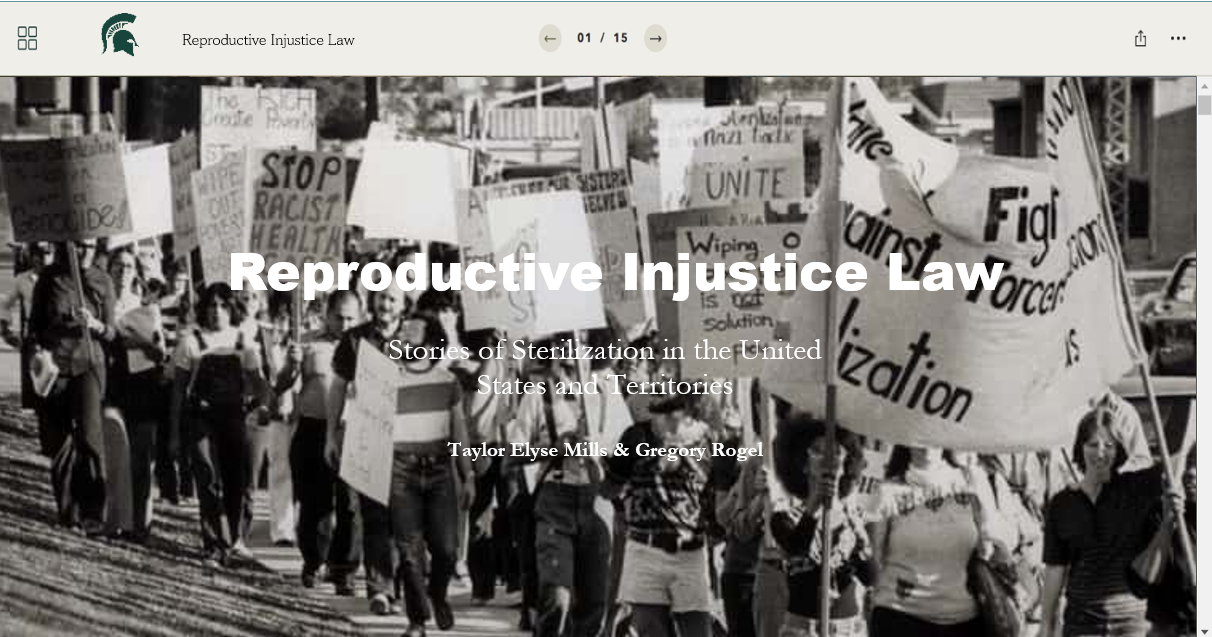
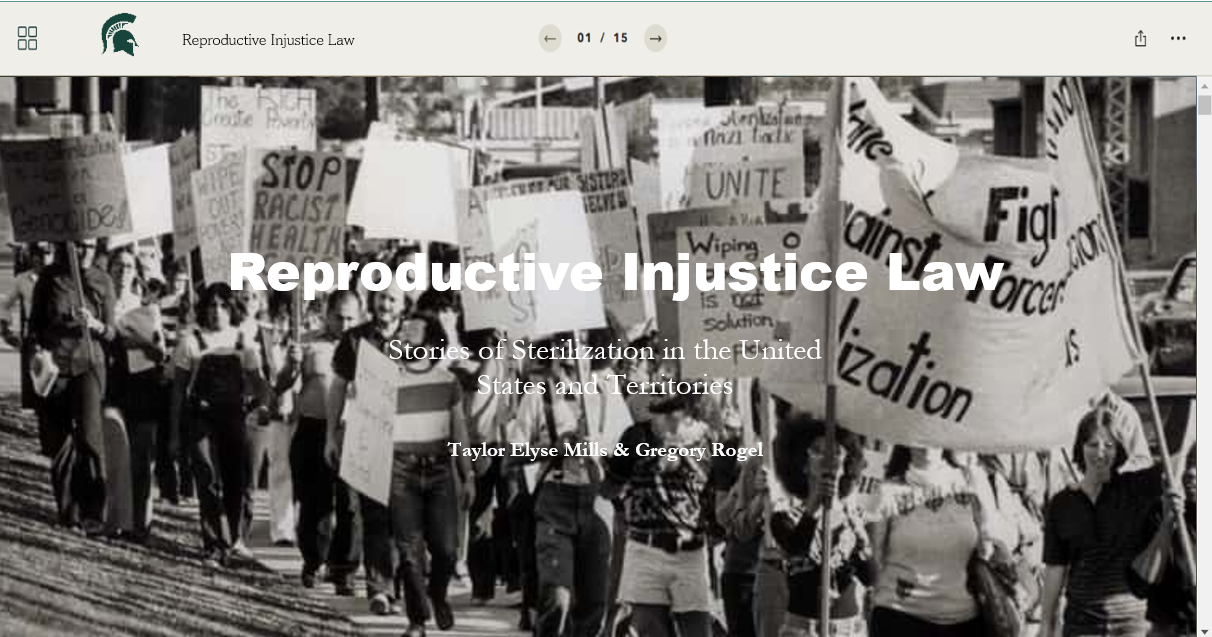
With the overturn of Roe v. Wade and current, continued reports of forced sterilization of immigrant women in recent years, our timely project aims to track and map the history of legal precedent that has enabled the forced sterilization of women (and those who gestate) of color in the United States and U.S. territories, with particular emphasis on migrant/immigrant and Indigenous communities. The history of this grave reproductive injustice is under-researched in philosophy, bioethics, and in law. By bringing these disciplines together, we aim to provide a comprehensive overview of the legal system’s colonial pathways for forced sterilization, and the unique impact it has had on Latinx immigrant and Indigenous communities. Our project seeks to serve as powerful a research testimony that can bridge the gap between policy discourse and the lived experiences of the Latinx and Indigenous communities, fostering a more empathetic and nuanced approach to immigration policy and enforcement.
For the 2024 summer term, we had the following goals:
Gather data in legal and biomedical contexts to aggregate under-researched and scattered statistics about the history of sterilization in the United States.
Visit prominent archives such as the Center for Oral History Research at Cal State Fullerton and the UCLA Chicano Studies Research Center to gather additional data, particularly from a narrative perspective, about the lives and experiences of those who have been sterilized.
Research and draft an overview of the history of sterilization from political, legal, and biomedical perspectives to use as the starting point for a publication.
Begin constructing a map with the collected data to tell the story and impact of sterilization in the United States through stories, caselaw, and statistics.
Project Description
As stated, the overarching project aims to bridge the gap between policy discourse and the histories and experiences of communities impacted by sterilization. Addressing this gap is important since immigration policies are consistently contentious and in need of reform. In particular, this project draws from historical data and narratives to inform the present because forced sterilizations are continuing to happen today, especially with detained Latinx women.
For this summer, we tackled this goal primarily through data collection from various sources. In addition to legal research, we were committed to archive research in efforts to humanize the data through testimonies. In doing so, we aimed to explicate and then map the intricate web of social, economic, and political elements that exacerbate health disparities within these communities stemming from decades of forced sterilization.
First we gathered as much data as we could from publicly accessible resources and legal databases like Westlaw. Collecting data from these legal and statistical report sources proved challenging because the data is not available in raw formats. For example, we would find an approximate number of sterilizations occurring in a particular state, but no breakdown in years or demographics. The process was rather piece-meal but eye-opening about the fact that our project is necessary as the first intersectional, multidisciplinary effort to tackle this problem.
Next we visited the archives at the Center for Oral History Research at Cal State Fullerton, the UCLA Chicano Studies Research Center, and the Human Betterment Foundation archive at Cal Tech. We focused on gathering additional data, particularly narrative accounts, about the experiences of individuals who have been sterilized. The process entailed reviewing and analyzing various documents, piecing together information to construct an understanding of the Eugenics movement. Throughout this endeavor, we maintained detailed records of our findings while adhering strictly to data privacy protections, ensuring the ethical handling of sensitive information.
Then we began researching the history of eugenics and sterilization from our respective disciplines in philosophy, bioethics, and jurisprudence. The process was like a puzzle in which we would put together time period pieces together to see a larger image of the social, economic, political, and medical forces at work to produce this history.
Finally, we began mapping our findings. The majority of this stage involved discussions about what mapping platform we wanted to use because each platform offers different types of impacts. We decided that because we wanted our project to, as much as possible, put the communities’ voices at the forefront of telling this narrative, that Storymaps was our best avenue.
Outcomes
Preliminary Analysis Our preliminary analysis has revealed potential patterns in the historical practice of sterilization, disproportionately affecting women of color. For example, documents from institutions across the country indicate a widespread embrace of eugenic ideas, with many signaling their eagerness to learn more about or participate in these endeavors. This preliminary work lays the foundation for a more comprehensive analysis of how these historical practices have shaped and potentially continue to influence contemporary reproductive rights issues, especially among marginalized communities.
Article Draft Though not complete, we have a first draft of the major sections of a paper we will submit for publication. In this respect we were able to pull together the research we had conducted in our respective disciplines to craft a multidisciplinary narrative about the history and current concerns about sterilization in the United States, with particular attention to Latinx immigrant communities.
Preliminary Mapping Once we decided on using Storymaps, we began plotting some points to tell the story of sterilization from a multidisciplinary, multigenerational perspective. The map is still being developed but we are pleased with the direction that the map is going in.
Reflections and Future Directions
Our research has encountered unexpected challenges in accessing detailed historical medical records due to stringent privacy protections. We underestimated the extent of these privacy concerns and the requirement for IRB approval to examine sensitive personal data. We hope to obtain the IRB soon. Once obtained, this information will significantly enhance our understanding of how these practices were implemented and discussed at an individual level. This will also allow us to finalize our research paper and digital map project.
Inspired by more recent developments in the field of network science and early modern studies, Networking is a nascent open access digital repository of code and data specifically related to relationships and networks of people in Scotland during the Revolution. The recent publication of Tudor Networks and Stanford’s Mapping the Republic of Letters project are important contributions to the growing field of network analysis in the early modern world. These datasets have asked important questions about early modern communication systems and social networks. The communications revolution between 1450 and 1700 transformed the capacity for Europeans–and those in the British Isles–to communicate and engage with each other. Gutenberg’s printing press and the network of universities around Europe provided useful channels for books, ideas, and letters to travel from country to country. During the late seventeenth century, the evolution of newsletters and newspapers allowed information to travel more quickly along those networks. Historians have argued in the past that relationships and group dynamics are important in reconstructing moments of watershed. One particularly important way of visualizing this is through social networks.
A network approach allows us to focus our attention primarily on the interactions within any given system – whether that be a world of letters, journeys etc. The bigger the data however, the harder it is to deal with. Our database is one corpus of letters–there are 600 letters–centered around one particularly important figure at the time, George Melville, Lord Melville the Secretary of State for Scotland. The letters exchanged in this period are more than just networks of correspondence; people were bound together through community, print, and dialogue. Exchanging letters in a period of chaotic and often violent warfare was even more complex. Context is everything in understanding people, groups, identity, and behavior in the early modern world. Given this, understanding the relationships is paramount to visualizing the data. Behavior, relationships, and identity changed over the course of the Revolution and Networking Letters of the Revolution sought to trace those changes and connect historical networks with visual interpretation by building a new database and visual representation of the interconnected nature of communication. In the last 25 years, there has been a noticeable shift from historical records remaining piecemeal or fragmented in boxes in archives to a sea of digitized images and texts in the form of PDFs or PNGs. A number of manuscripts are now available online, including the Leven and Melville Papers. Our goals in this project were to:
Visualize the world of communication from a corpora of letters.
Understand communication patterns during conflict and a regime change.
Parse group dynamics and information distribution from a chaotic period of transition.
Democratize the pursuit of knowledge and expand the potential for research in this area of research.
Description
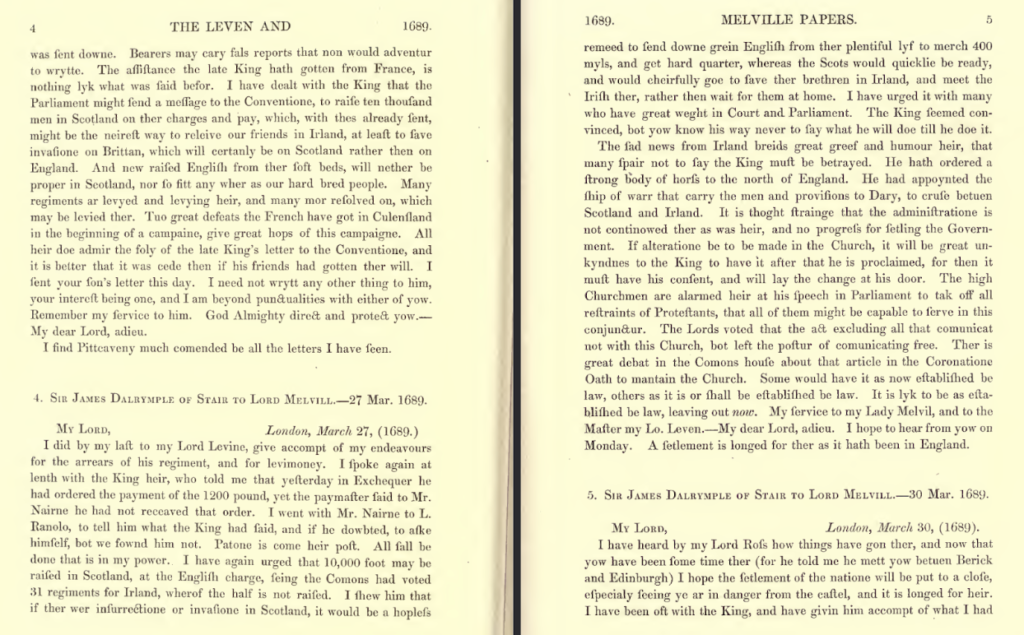
This project is a marriage of early modern Scottish history and computational data science. It brings together methods of network science, prosopography, and traditional early modern political history surrounding communication. We applied for the Seed Grant to begin working with the data and create an open-access project that scholars and researchers interested in the project can access and visualize the world of communication during this moment in history. Phase one required turning qualitative data into quantitative data. We started by recording all of the pertinent data from the PDF version of the Leven and Melville Papers [Figure 1].
Figure 1. PDF version of Leven and Melville Papers
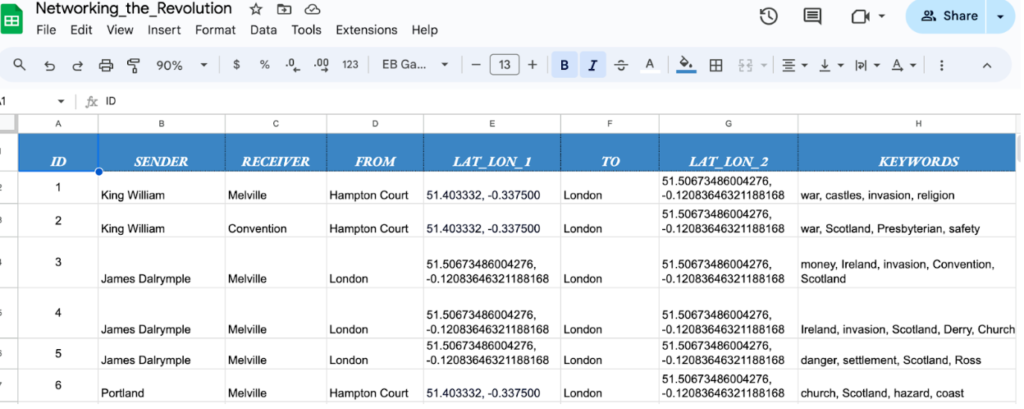
We then turned this data into spreadsheet data, here we used categories: Id, Sender, Receiver, Location from, Location to, Latitude and Longitude, Type and Date. This allowed us to parse the networking data in the form of nodes and edges. The data was then cleaned using OpenRefine to split up latitude and longitude and keywords into different columns; we also made sure there were no blank tiles and duplicates. After creating a master spreadsheet information file, we then set about creating different sheets for different visualizations including people, places, keywords, nodes, and then edges (relationships). We were able to get all the data from the 600 letters contained in the digitized copy of the Leven and Melville papers into the csv file [Figure 2].
Figure 2. Networking Spreadsheet data
After some experimentation with different tools, we decided to create visualizations using Python’s networkx library, Leaflet.js maps, and the data visualization tools Flourish and Gephi. Nodes represent important data points such as people, events, and groups; edges represent the connective tissue between those nodes and help illustrate the relationships between them. We also experimented with directional, radial, and regular network graphs.
Outcomes
Given the large dataset of Network Letters, it allowed for exploratory data analysis and investigation on different digital tools to identify the best representation of the relationships presented in the papers. One of the main tools we ended up using was the programming language Python; which contains a large number of libraries that extend the capabilities of the language, allowing for complex visualizations of the Network Data. These visuals were created on Jupyter notebook, which is an open-source software for interactive computing. In addition, we experimented with tools such as Leaflet, Flourish, and Gephi for further analysis of the letters.
Networkx Library
The networkx library enables us to make network graphs to explore patterns and structures within our data. Our project implemented the Girvan-Newman algorithm, which is used to detect communities (occurrence of a group of nodes that are more densely connected/or betweenness centrality). This is done by importing network algorithms and by iteratively removing edges that are on the shortest paths. Then the nodes are given corresponding colors to highlight their community. This algorithm is important for understanding the network graph because a node with higher betweenness centrality (shortest path importance) would have more control over the network, due to the fact that more information will pass through that node.
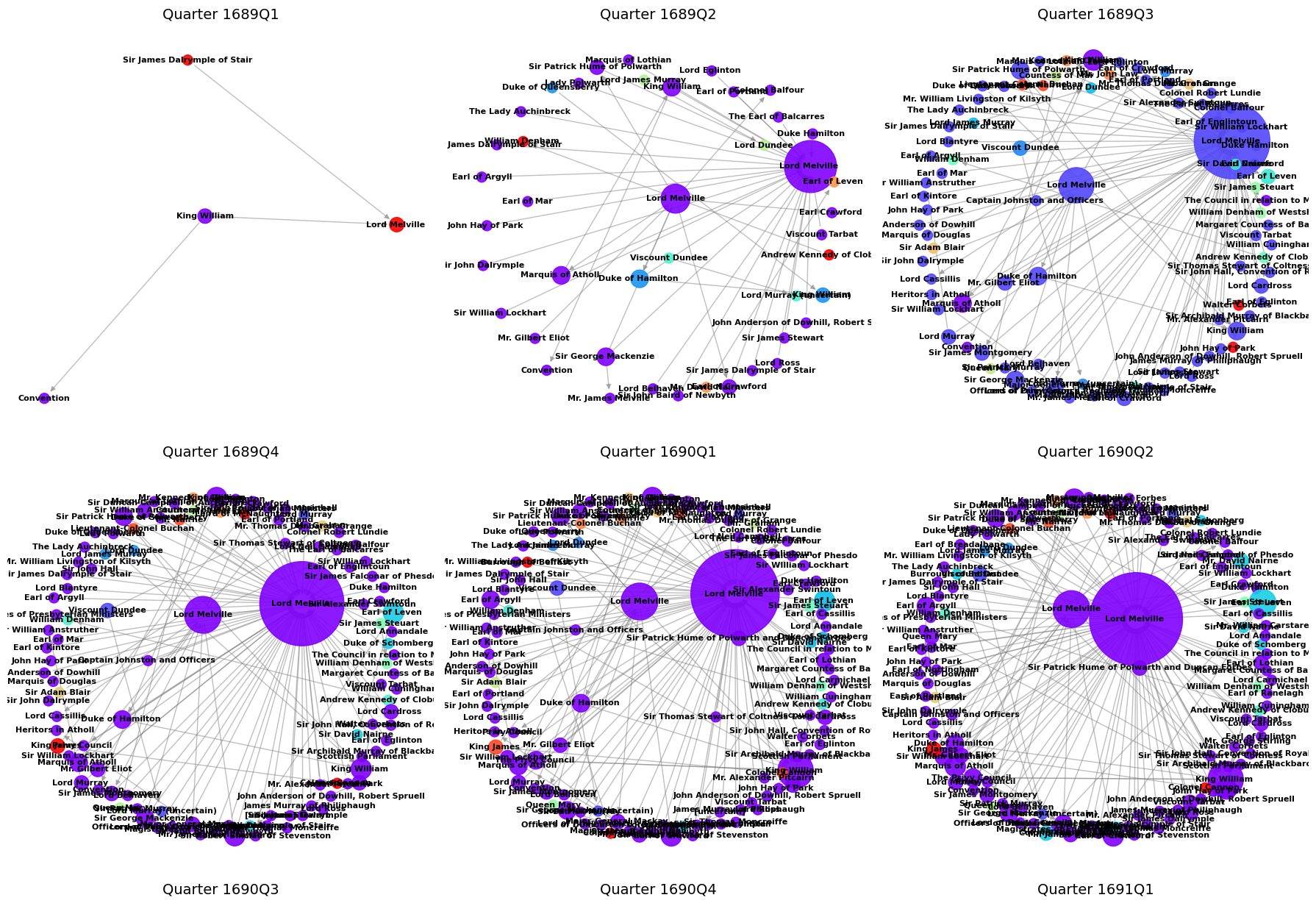
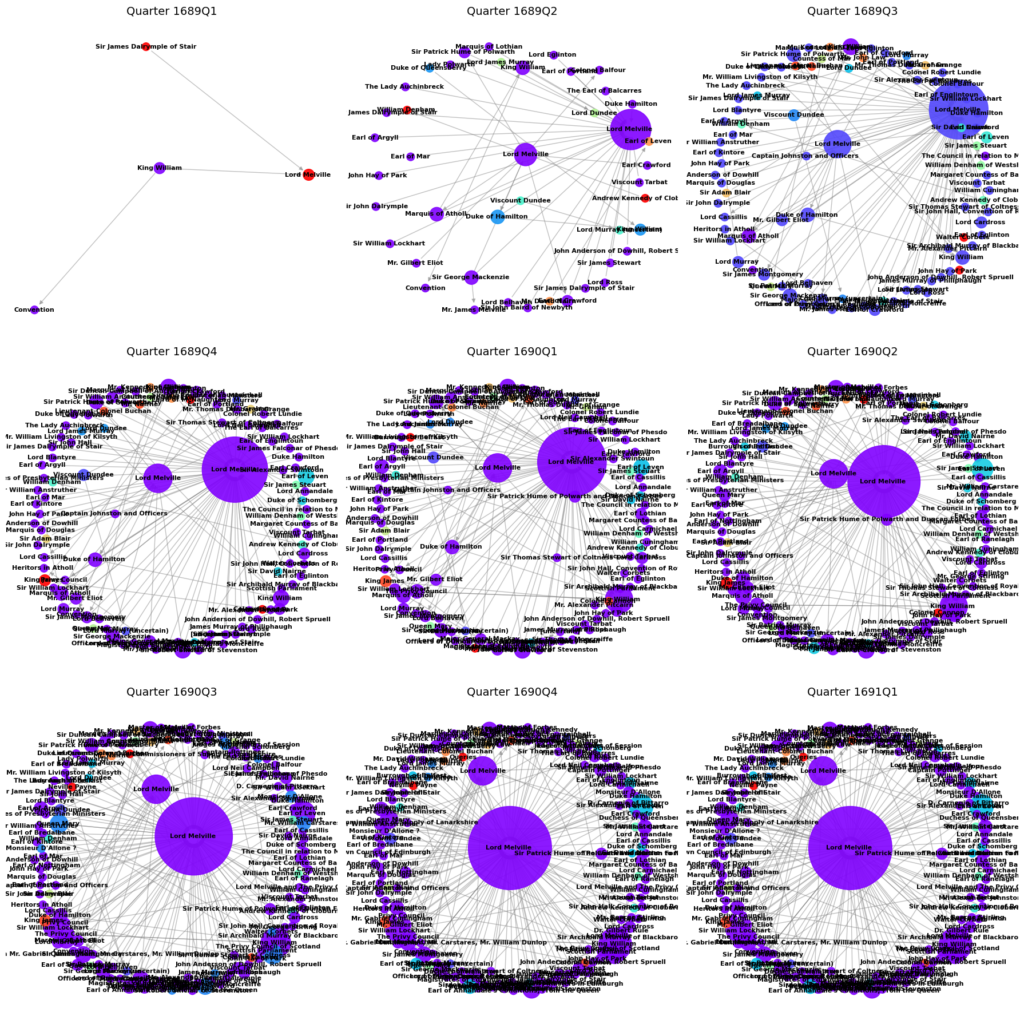
Figure 3: Network Graphs Quarterly from 1689-1691
This quarterly visualization shows just how connected the people in this corpus of letters were over the course of three years. Lord Melville is depicted by the large purple node present in each diagram as both a sender and a receiver of letters – since he is either the letter writer or letter receiver in 510 of the 600 letters within the corpus. Lord Melville has the highest infrastructural role in the network, followed by the Duke of Hamilton (High Commissioner to the Scottish Parliament), his successor the Earl of Crawford, and then the monarch himself. This is unsurprising since the monarch and their principal secretaries tend to be the same epistolary hub. The quarterly graphs also show how correspondence became a very crucial part of the information network during warfare.
Leaflet
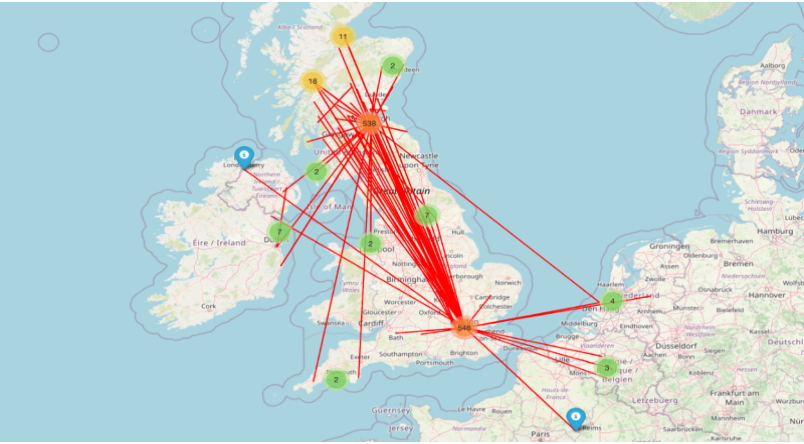
We were also able to create a leaflet map generated through Jupyter notebook by using the Python library Folium; a wrapper around leaflet.js to create interactive maps. The map was initialized by applying the coordinates from the network data to create a base map. We then constructed markers that are represented by the senders and receivers of letters that contain a popup with additional information when the marker is clicked. Furthermore, the use of the tool “MarkerCluster()” allowed the map to handle many markers by grouping them into clusters, granting us the ability to view different group dynamics. The visualization shows dense networks of letters across several kingdoms – Scotland, England, Ireland, the Netherlands, and France – most concentrated in Edinburgh and London. This disproves the notion that the King had either no idea or was not interested in the northern kingdom.
Figure 4: Map of Correspondence Networks
The leaflet map above displays a cluster of markers highlighting various historical locations in which the letters were exchanged. The map makes evident key figures and places from the data as we see a large distribution between London and Hampton Court emphasizing Melville’s significant role during this time. Additionally, the map is interactive and will soon be available for dynamic exploration for the user to see a general view of the data or zoom in for micro details such as who sent and received letters at specific locations.
Flourish + Gephi
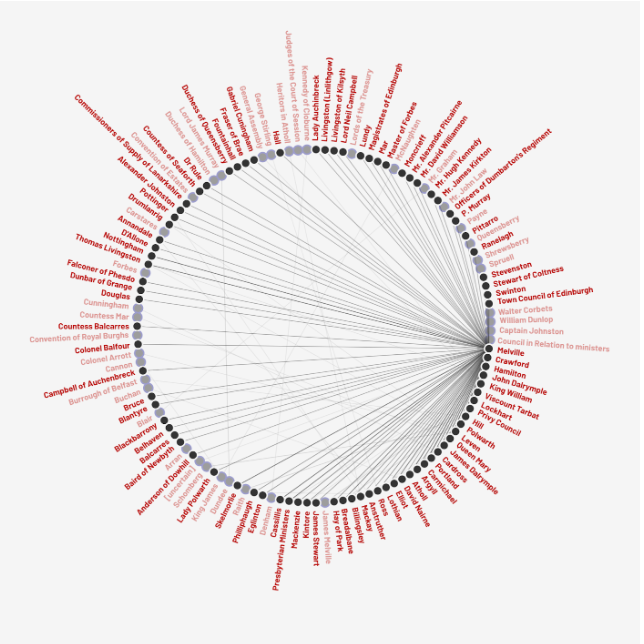
Flourish is an interactive data visualization tool that permits complex visuals through a wide variety of templates. By simply importing the network data into a desired theme, Flourish creates a detailed visualization where we can further analyze relationships displayed from the letters. Flourish also allows us to customize and fine tune our data and graphs for more specified results. Figure 5 or the radial network of Melville’s correspondence shows that his network was widespread but generally concentrated with other high-ranking ministers and military officials.
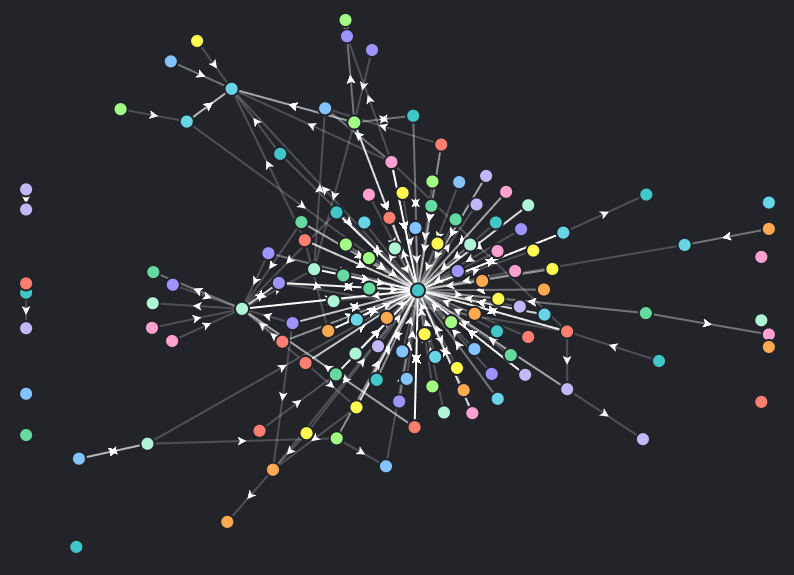
Figure 5: Radial Network Diagram of Melville’s CorrespondenceFigure 6: Directional Network of Melville’s Letters
Figure 6, our directional map, shows the breadth of the network of letters. It also shows that the Leven and Melville corpus contains letters not specifically directed to Melville and intercepted letters or anomalies. Many of the networks were two ways but this is an incomplete view of the social network because as stated in the manuscript letters themselves many were destroyed or stolen in the period.
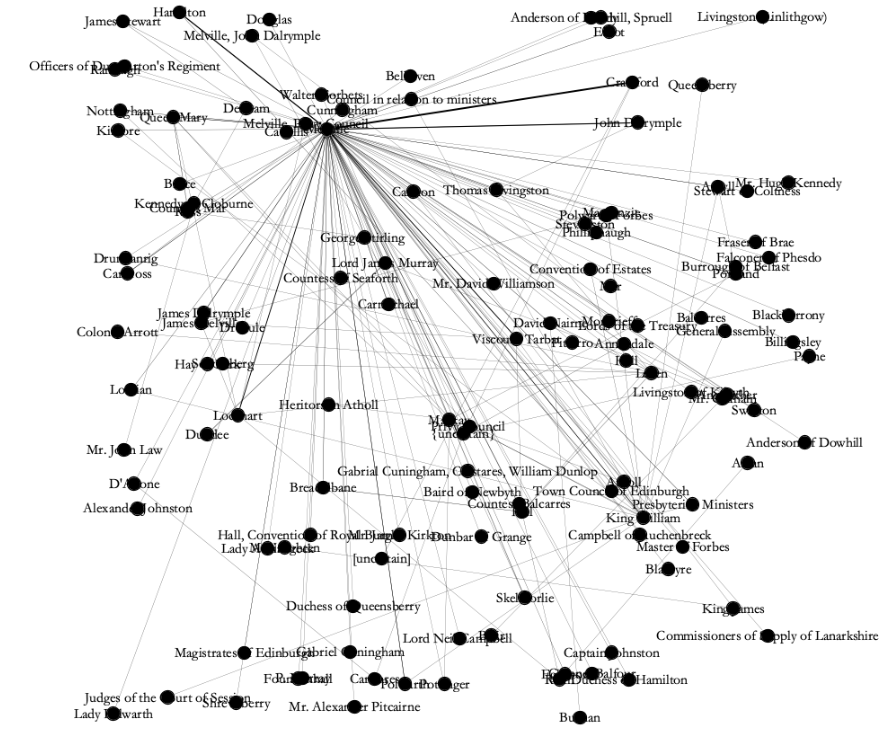
Figure 7: Gephi Network Map
Gephi visual shows the complicated web of communications that took place in this short span of three years. The randomized graph shows the degree of connectivity between certain nodes. For example, Melville has heavily weighted edges with Crawford (79), Hamilton (44), John Dalrymple (42), Tarbat (34), Lockhart (33), and King William (18). This is not very surprising since Crawford, Hamilton, and John Dalrymple are crucial members of the Scottish administration, Tarbat was a Jacobite convert to the Williamite cause, Lockhart is the Solicitor General for Scotland and William is the newly installed monarch. All of the data (csv files, visualizations etc) are now housed in an open-access GitHub repository. The repository is open to the public so that other scholars can access the material.
Future Directions
Networking Letters of the Revolution is a nascent prototype project with potential to grow considerably. Melville and Leven’s corpus of letters alone constitute approximately 650 pages of material and there are several manuscript counterparts. Future directions in this project include adding manuscript letters not currently held within the Leven-Melville papers, expanding upon the range of correspondence. We also aim to integrate other key members of the network to offer a more comprehensive view of the data. Furthermore, expanding the project to encompass the entire letter network during this three-year time frame would provide meaningful and in-depth insights on the complex interconnections between people’s lives during early modern society.
Food plays a complex role in our daily lives. In addition to providing us with the nutrition we need to nourish our bodies, food access and choice reflect many different cultural practices and ideologies, which in turn can affect health for better or for worse (White, 1999). Thus, many archaeological studies focus on the intersection of diet and social organization to determine how and why this relationship varies within and between populations, as well as to identify and interpret dietary shifts resulting from technological, environmental, and social changes.
Archaeologists have attempted to reconstruct the diet of ancient individuals in a multitude of ways, both indirectly and directly. Examples of indirect methods include analyses of faunal and floral remains recovered from archaeological contexts and analyses of residues on pottery and tools. These methods allow scientists to accurately identify which species were consumed by ancient populations but do not distinguish individual diets, making the sources of dietary variation difficult or impossible to determine (White, 1999). Direct analyses of skeletal remains can provide evidence of dietary variation at the individual level but do not identify the specific foods eaten. For instance, stable isotopic analyses of teeth and bones allow us to determine an individual’s place in the food chain, identifying the general source of their dietary proteins and carbohydrates (Sponheimer and Cerling, 2014). Paleopathological analysis provides an additional direct line of skeletal evidence by identifying lesions associated with metabolic disruptions or consumption of cariogenic foods (Ortner, 2012). These methods allow researchers to compare individual diets and identify variations present. However, neither can identify the specific components of diets.
One underutilized resource that can aid researchers in reconstructing ancient diets is dental calculus. Dental calculus is mineralized plaque on the surface of the tooth (Hardy et al., 2009; Tromp et al., 2017) that is formed during life as a result of interactions between saliva and gingival crevice fluid and colonies of microorganisms living in the mouth (Lieverse, 1999). Thus, because calculus cannot be formed after death, the microparticles inside of the matrix are those that would pass through the mouth in life (Lieverse, 1999). These mineralized deposits survive well in the archaeological record and the microfossils trapped within dental calculus uniquely allow the identification of specific foods that individuals consumed.
The use of DC in dietary studies complements previous dietary studies, including stable isotopic research, by providing a more nuanced view of an individual’s access to foods without the need to destroy human bones or teeth. Analyses of DC can provide information on not only diet, but also on food preparation (García-Granero, 2020), disease (Weyrich et al., 2017), occupation (Chan et al., 2022), and long-distance trade (Blatt et al., 2011).
One notable finding comes from Hardy and colleagues (2013), who found evidence of medicinal plant use in Neanderthal DC, allowing the researchers to learn more about the potential medicinal knowledge of Neanderthals and ailments that would not have affected their skeleton. The finding of medicinal plants in DC opens a new door for understanding accessibility to resources, types of non-skeletal affecting ailments the individual may have had, and works towards the reconstruction of traditional knowledge.
One drawback of this work in Mesoamerica comes from a lack of published and easily searchable microbotanical medicinal plant databases (one notable exception is the Phytolith Project, University of Missouri). When travel is impossible, or access to labs to conduct specialized research is unavailable, databases provide an accessible and affordable way for students and professionals alike to start and continue research. Additionally, multiple projects can be conducted with the same dataset, allowing us to better understand the sample in question.
While medicinal plant use has surely changed over the centuries, understanding what these plants are used for today is an integral first step for asking health and care-related questions in antiquity. As a part of my dissertation, I will be creating a microbotanical medicinal plant database by collecting microbotanical images from several previously published sources and adding my own reference collections.
Project Description and Outcomes
I applied for the DH Seed grant so that I could begin working on the outline and structure of this online database. Once I created a wireframe, and because of my previous experience working with GitHub, my original plan was to build this database using GitHub pages. However, after discussing this with several people, I realized that GitHub was not the best place for hosting a database. From here, I made a lateral move to MSU Domains, where I started a WordPress site (images below).
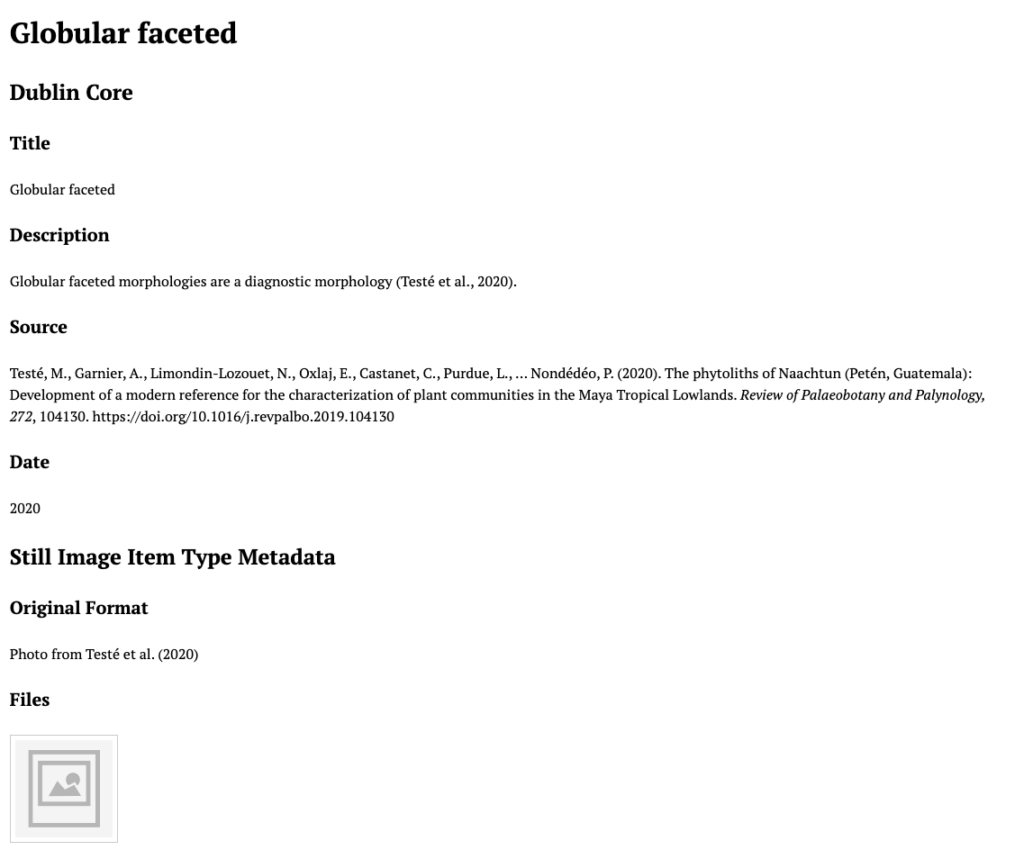
At this point, I was hopeful that I had found my database. I included about 11 new phytolith shapes, but with each new item I added, I realized that I didn’t quite love how each category was turning out:
So, I went back to the drawing board. I realized that, instead of basing the items by shape, it was best to do it by plant species. Then, after talking to a few key people about my project and the long-term vision for it, it became clear that one of the best sustainability options was to host my project through H-Net. This is how I decided to apply to H-Spaces, an initiative that aims to expand access to content management and plug-ins for different projects and data visualizations. I’m excited to be a part of the first cohort, and to get additional advice as to what I should consider when creating this project and how to improve it. With that said, I am once again at square one with the creation of the database itself. But in the meantime, I stayed busy collecting much of the data that I will need for my database.
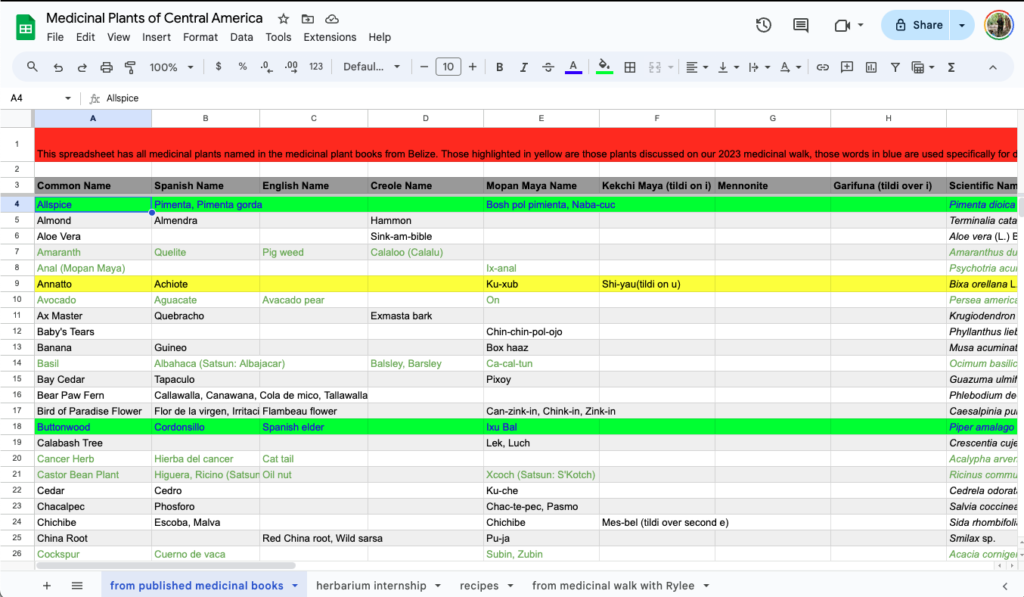
The first part of my data collection included going through previously published books (especially Arvigo, 1993) and articles that discussed medicinal plants in the region. I was able to complete two separate books, review several articles, and review notes from a previous medicinal walk that I took in the summer of 2023 with Mr. Antonio at Elijio Panti National Park in San Antonio, Belize. In addition, I was able to talk a little bit with other Belizean individuals during the summer of 2024 and learned more about some of the local vegetation. I collected all of this information in an Excel spreadsheet, which included the plant name (scientific, English, Spanish, Creole, Mopan Maya, Kekchi Maya, Mennonite, and Garifuna), plant family, traditional use, research results, and how they relate to dental health if they did. The spreadsheet can be seen below.
After this was completed, I was able to work in the MSU Herbarium as a part of the Natural Science Collections Summer Professional Internship to digitize their Central American and South American medicinal plant collections. In this process, I learned a new skillset, was able to see what plants were already available at the herbarium, and what plants still needed to be collected. I am still working on digitizing the plants, but once completed, I will apply for a permit to collect the compiled list of plants not available at MSU and bring them here.
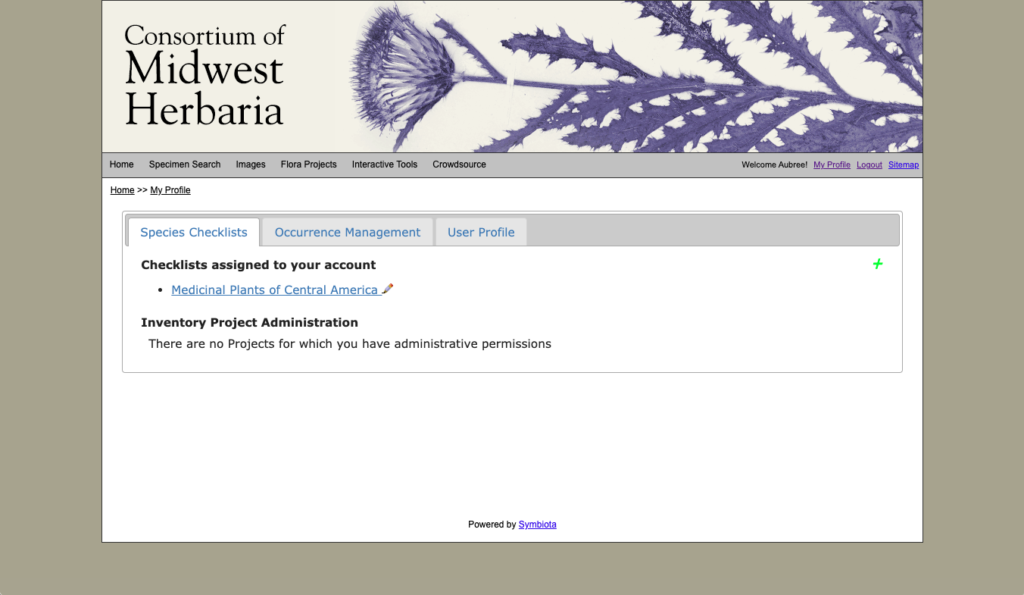
In addition to digitizing the plants available at the MSU Herbarium, I have also begun a checklist through the Consortium of Midwest Herbaria with the previously published information that I have collected. The checklist is not visible to the public yet but will be once more of the species are digitized.
Why was this such an important part of my project? Not only will I know exactly what plants will need to be collected in the field, but knowing what plants are already available in Michigan is incredibly important because not all of the plants we’re digitizing have had their microbotanicals analyzed. I will be working with the herbarium to collect small samples to dry ash in an attempt to identify any microbotanicals of medicinal plants that have not already been published.
Future Directions
When I submitted my DH Seed Grant application, I was hoping to collect data, build the framework of my website, include at least thirty samples into the website, and begin creating K-12 lesson plans for educators. However, almost nothing worked to plan with this project.
While I do not have all of the deliverables that I hoped for, I do have an extensive amount of plant information that can be directly uploaded to the database once it is created. In the immediate future, I am excited to work with H-Net Spaces to further develop my ideas for the project and to get it off the ground. Once off of the ground, I will include lesson plans that will be available for educators to use in their schools if they find that they fit into their curriculum, as well as interview data once collected. Interviews are planned for the summer of 2025.
As I mentioned before, the long-term goal of this research is to create an open-access digital database and a handbook for people to reference. Information for each plant will include the plant image, associated microbotanical images, medicinal uses, recipes where available, and interview information. This resource will be helpful to both researchers and educators interested in medicinal plants in Mesoamerica and in understanding the past lived experiences of the individuals utilizing those plants. My dissertation article associated with this project will describe the process leading up to the creation of the database along with the medicinal plant information gathered based on the interviews. This paper will provide a framework for community-engaged work in the region as well as the methodology regarding prepping plants to create a microbotanical reference sample.
References
Blatt, S.H. (2007). Biocultural Implications from Scanning Electron Microscopy of Prehistoric Human Dental Calculus, Ohio. The Ohio State University.
Chan, A. M., Brady, J. E., and Scott Cummings, L. (2022). Blue fibers found in dental calculus from Maya sacrificial victims. International Journal of Osteoarchaeology, 32(6), 1310–1314.
García-Granero, J. J. (2020). Starch taphonomy, equifinality and the importance of context: Some notes on the identification of food processing through starch grain analysis. Journal of Archaeological Science, 124, 105267.
Hardy, K., Blakeney, T., Copeland, L., Kirkham, J., Wrangham, R., and Collins, M. (2009). Starch granules, dental calculus and new perspectives on ancient diet. Journal of Archaeological Science, 36(2), 248–255.
Hardy, K., Buckley, S., and Huffman, M. (2013). Neanderthal self-medication in context. Antiquity, 87(337), 873–878.
Lieverse, A. R. (1999). Diet and the aetiology of dental calculus. Int. J. Osteoarchaeol., 9(4), 219–232.
Ortner, D. J. (2012). Differential Diagnosis and Issues in Disease Classification. In A. L. Grauer (Ed.), A Companion to Paleopathology (pp. 250–267). Oxford, UK: Wiley-Blackwell.
Home | Phytolith Project, University of Missouri. Accessed March 27, 2024, https://phytolith.missouri.edu/.
Sponheimer, M., and Cerling, T. E. (2014). Investigating Ancient Diets Using Stable Isotopes in Bioapatites. In Treatise on Geochemistry (pp. 341–355). Elsevier.
Tromp, M., Buckley, H., Geber, J., and Matisoo-Smith, E. (2017). EDTA decalcification of dental calculus as an alternate means of microparticle extraction from archaeological samples. Journal of Archaeological Science: Reports, 14, 461–466.
Weyrich, L. S., Duchene, S., Soubrier, J., Arriola, L., Llamas, B., Breen, J., … Cooper, A. (2017). Neandertal behaviour, diet, and disease inferred using ancient DNA preserved in dental calculus. Nature, 544(7650):357-361.
White, C. (Ed.). (1999). Reconstructing Ancient Maya Diet. Salt Lake City: The University of Utah Press.
Main Library, Digital Scholarship Lab, Flex Space (2nd Floor, West)
Join the MSU Digital Humanities Program for our second annual DH Research Showcase in the MSU Main Library, Digital Scholarship Lab, Flex Space (2nd Floor, West), where recipients of DH summer funding will discuss their projects, and where we invite all faculty, staff and students working on DH projects to share their projects in process.
Please feel free to bring your own lunch.
The interdisciplinary field of digital humanities (DH) aims to bring together humanistic inquiry and digital technologies, organizing new modes of archival research, developing computer-aided methodologies for answering humanistic questions, curating digitized archives of all kinds, bringing digital platforms into the classroom in creative ways, and engaging critically with the culture of new media.
Schedule:
12-12:10PM – Introduction
12:10-12:17PM: A Community-Engaged Approach to Mesoamerican Plant Knowledge: The Co-Creation of a Botanical Database, Aubree Marshall (Seed Grant Report)
12:20-12:27PM: Taking A Walk Down Memory Lane: Exploring Immersive Digital Approaches in Local Communities, Ashley Cerku (Seed Grant Report)
12:30-12:37PM: “Below the Line – The Feuilleton and Modern Jewish Cultures” Matt Handelman
12:40-1PM: Questions/Discussion
1-1:07 PM: Walking virtually with Nokomis, Heather Howard
1:10-1:17PM: Networking Letters of the Revolution (1689-1691), Gillian MacDonald and Morgan Fox (Seed Grant Report)
1:20 – 1:27: Mapping Reproductive Injustice Law, Taylor Mills and Gregory Rogel (Seed Grant Report)
1:30 – 1:37PM: Rebuilding Department Stores in SketchUp, Marissa Knaak
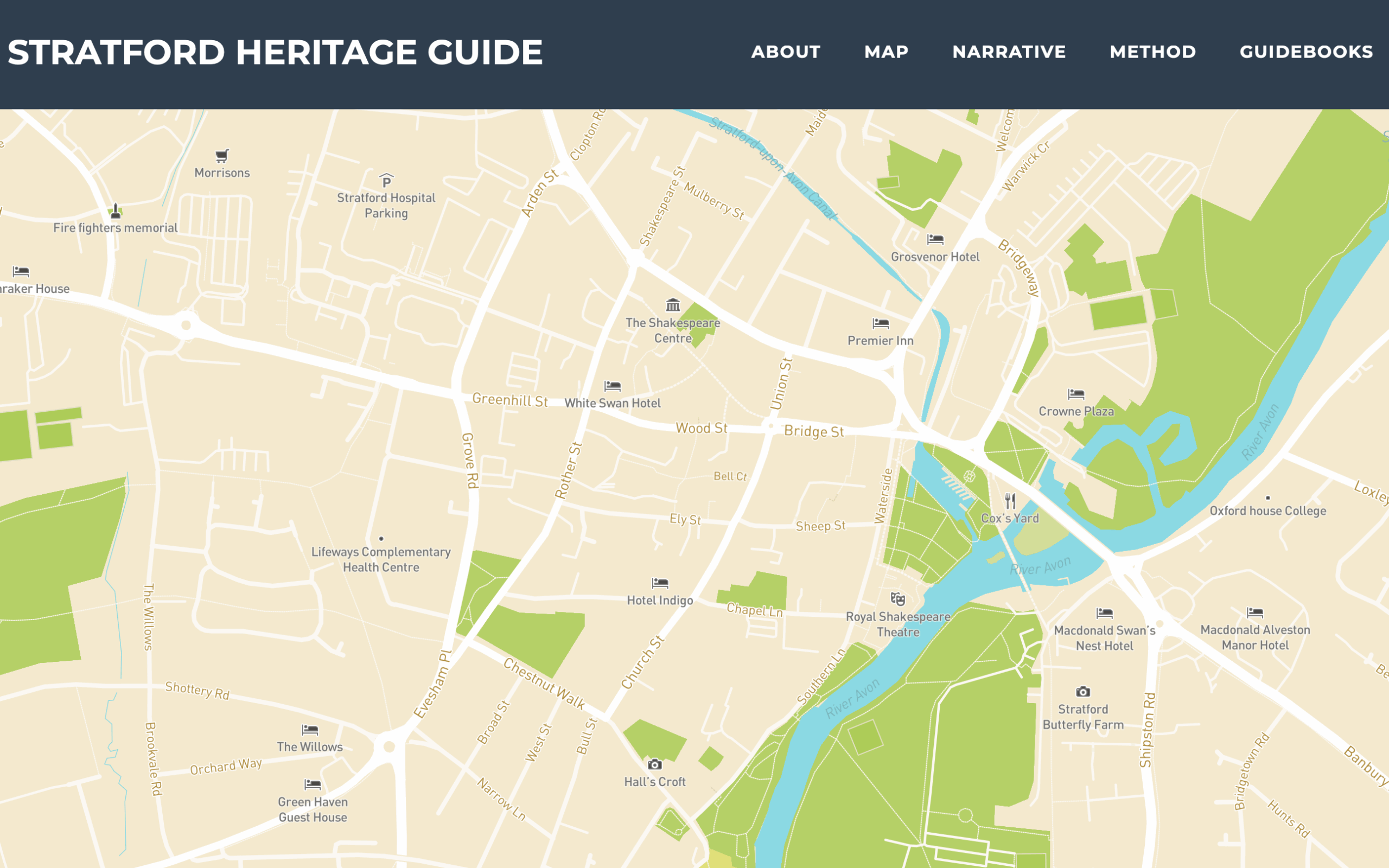
The presentation of Shakespeare’s legacy has evolved over the centuries, and narratives regarding the greatness of the playwright have been curated in very specific and intentional ways to cement him as an English cultural icon. Although Shakespeare wrote all his plays in London, his hometown of Stratford-upon-Avon has grown to become more closely associated with the playwright through these constructed histories. However, this gravitation toward the playwright’s childhood home and grave site did not become popular until the 19th century. By analyzing guidebooks from this period, I aim to demonstrate how public understanding of the various monuments in Stratford has evolved and analyze how the information provided in these guidebooks has been continually reinvented over time. Ultimately, this project demonstrates the subjective nature of Stratford’s relationship with Shakespeare and explores how narratives about that town that are presented to visitors as completely objective have attempted to influence visitors’ perspectives in this space.
This Project Highlight was originally created for the DH@MSU Undergraduate Newsletter and was featured in the April 15, 2024 issue. Subscribe to the Newsletter here.
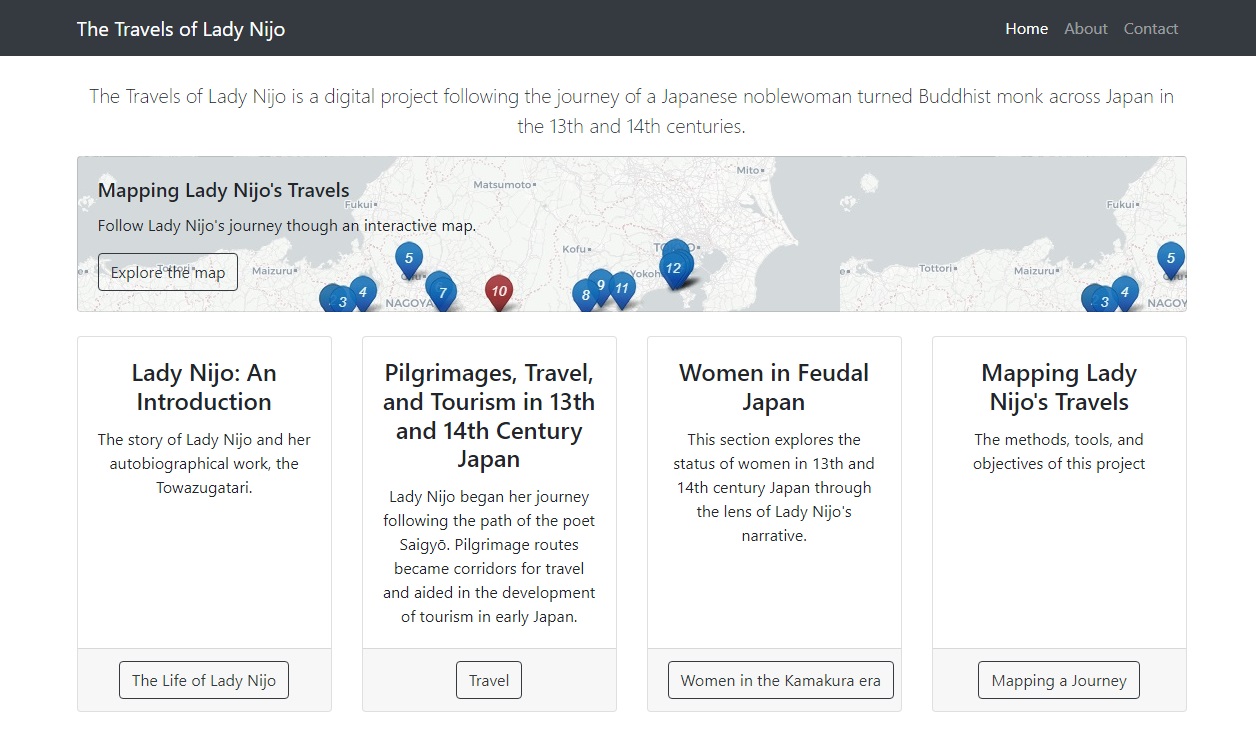
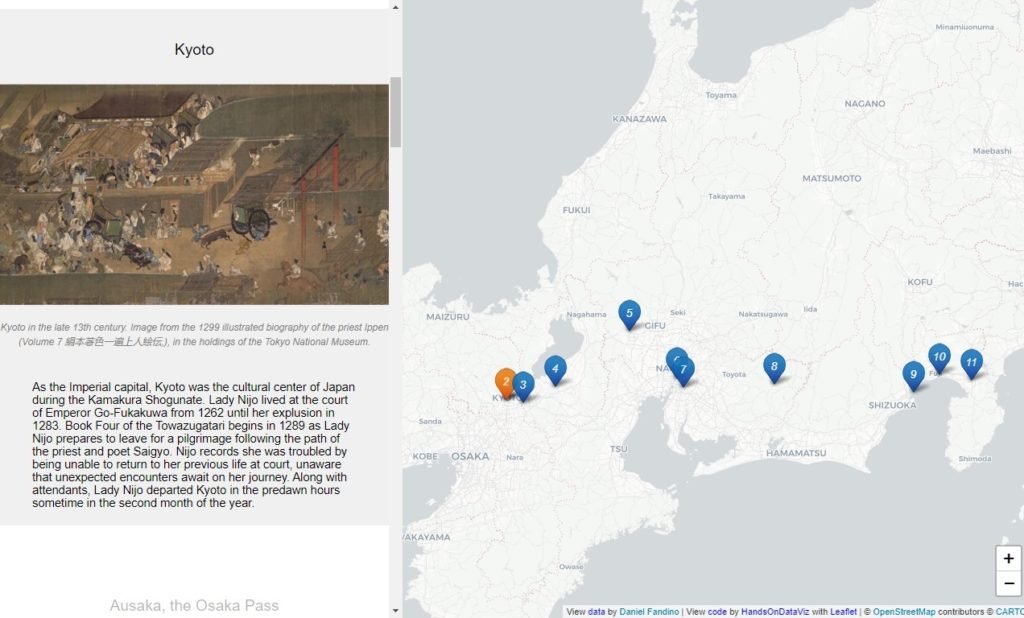
The Travels of Lady Nijo: Pilgrimage, Travel, and Tourism in 13th and 14th Century Japan by Daniel Fandino
The Confessions of Lady Nijo is a work written around 1307 by Lady Nijo, a Japanese noblewomen turned Buddhist monk. The first three sections of the work describes her time at the imperial court of Emperor Go-Fukukasa. The last two sections chronicles her travels as a Buddhist monk after being expelled from the court in 1283. Nijo’s narrative provides a rare glimpse into pilgrimage, travel, and early tourism in Japan during the late 13th and early 14th centuries. The project explores Nijo’s life on the roads of Japan by tracing her travels from 1289 to 1304 through Leaflet Storymaps. The project examines the relationship between Nijo’s travels and pilgrimage routes and the evolution of the road system to the Edo era under the Tokugawa shogunate. Essays explore the development of tourism, the road network, and the experience of women traveling in premodern Japan.
The following Project Highlight was originally created for the DH@MSU Undergraduate Newsletter and was featured in the April 1, 2024 issue. Subscribe to the Newsletter here.
When I first came to MSU, I didn’t even think to consider myself part of digital humanities. I was someone who studied the eighteenth-century novel and the history of mind who also happened to do cognitive approaches to literature, using tools like fMRI and behavioral methods from psychology to study our responses to fiction and the arts. Sure, we did text analysis of Jane Austen novels and presented a chapter digitally for brain scans. I was learning to read Python a little, but I couldn’t write lines of code. Was I part of DH?
As the MSU community quickly showed me, of course I was! As I learned about the “big tent” model of DH, we had the opportunity in the Department of English to create the Digital Humanities & Literary Cognition lab, or the DHLC—which I founded with Steve Rachman and now co-direct with Julian Chambliss. In the lab, I learned that DH championed the things most important to me: interdisciplinary scholarship across science and the arts, a radical inclusivity of student research and community engagement, and a dedication to team-based work that pushes back on traditional hierarchical structures of academic knowledge and creation.
Today, the DHLC lab tries to model these principles on the ground in daily interdisciplinary work. What began with an fMRI of reading Jane Austen has grown into global collaborations on the pleasure we find in poetry reading, the stories we hear in orchestral music, the creative outlets we turned to during Covid-19—and, thanks to Julian Chambliss, work on mapping black geographies all-too-easily lost to the historical archive. Students, as always, are at the center of this work. We do research; we analyze all kinds of data; we co-author articles and write grants; lately, we create accessibleart exhibitions.
What I love most about DH is how its inclusivity and emphasis on community engagement has urged me to grow, expanding my work in cognitive studies of literature and eighteenth-century history of mind into art exhibits on Creativity in the Time of Covid-19 that champion disability justice and accessibility. (Come check out our exhibits at MSU and Detroit in 2024!) This most recent turn is leading us to integrate DH, cognitive studies, disability studies, and health humanities by bringing examples of how people turned to creativity during the pandemic into hospitals. I couldn’t be more grateful to the DH community at MSU for making this kind of student-centered interdisciplinary work possible. It’s led to some of the most exciting and fulfilling experiences of my academic life.
–Natalie M. Phillips
Associate Professor, Department of English Affiliated Faculty, Cognitive Science Program Affiliated Faculty, Center for Interdisciplinary Research, Collaboration, Learning & Engagement
Founder and Co-Director, Digital Humanities & Literary Cognition lab (DHLC)
The following piece was originally created for the DH@MSU Newsletter and was featured in the March 18, 2024 issue. Subscribe to the Newsletter here.