• Teaching Highlight: Chicano/Latino Studies Oral Histories

    Teaching Highlight: Chicano/Latino Studies Oral Histories

    Chicano/Latino Studies Oral Histories in LEADR (CLS492)

    Staff members of the Lab for Education in & Advancement of Digital Research (LEADR) work with History and Anthropology faculty to bring digital tools and methods into their classrooms. This semester (Spring 2023) they helped students create an oral history of Chicano/Latino Studies at MSU. Students were tasked with collecting and interpreting the past, present, and future of the program as a capstone project. Collaborators included Delia Fernandez-Jones (History Professor and Chicano/Latino Studies Core Faculty Member), Alice Lynn McMichael (Director, LEADR), Dani Willcutt (PhD Candidate History and LEADR Graduate Assistant), and 21 students in CLS 492, the Chicano/Latino Studies Capstone. By the end of the project students will have made a significant contribution to sharing the story of MSU’s Chicano/Latino Studies Program as it celebrates twenty-five years on campus. 
     

    Students came to LEADR for a series of workshops covering aspects of project management ranging from planning to implementation to post-production. Dani drew on her own research experience of conducting oral history interviews when leading the workshops. Discussions included methods (such as Oral Histories versus Interviews), best practice in interviews, writing release forms, choosing camera angles and optimum lighting; types of cameras, camcorders, and microphones based on setting. In addition to the pre-interview process and tips on production, Dani taught students how to use iMovie to edit and create a documentary from the footage they captured. 

    Group sitting viewing a presentation

    Students worked in groups, each with a specific set of tasks. Interviewers focused on composing questions that would lead to rich conversation. Others worked behind the scenes to ensure the camera angles, sound, and lighting were perfect for capturing in-person interviews.. With a variety of skills, students were able to choose tasks based on their own strengths and specialized knowledge. Working with the LEADR tutorials, the post-production team will finish compiling the interviews. The finished projects will be made publicly available along with a resource guide for students at MSU and a short documentary about the future of CLS. 

    The following Teaching Highlight was originally created for the DH@MSU Newsletter and was featured in the May 9, 2023 issue. Subscribe to the Newsletter here.

  • Spin Offs: The MI Diaries as a Starting Point

    Spin Offs: The MI Diaries as a Starting Point

    November 4th, 2021, 2PM-4PM, Virtual

    Registration for Locus: Spin Offs: The MI Diaries as a Starting Point is HERE.

    What are all the ways that an existing Digital Humanities project can be adapted, grafted, remixed, and spun off into other projects? How can we creatively employ methods, ideas, data, and tools from one research group and use them to feed something new?

    MI Diaries has been collecting self-recorded audio reflections from Michigan residents since the Covid-19 lockdowns began in spring 2020. Participants respond to weekly questions like What are you grateful for this week? and Are there any news stories that have stood out to you lately? MI Diaries was developed to capture the effects of social distancing on everyday language. But it has since proven to be fertile ground for the nurturing of other kinds of research as well. The MI Diaries mobile recording app has been adapted for a study of what people learn about Judaism from watching television. The audio reflections and their transcriptions are being employed to teach learners of English about grammatical structures. Youth participants in a photovoice project have used the app to orally respond to questions related to the images they have captured.

    This Locus will provide a collegial forum for presentation of MI Diaries-related projects and for broad discussion of how interdisciplinary research can benefit from the spin-off process.

    This event will include live captions and ASL interpretation.

    Schedule

    2:00 – Gather, welcome, intro to Locus. 

    2:15 – Betsy Sneller & Suzanne Wagner (MSU): Michigan Diaries project overview

    2:22 – Danielle Brown & Charlene Polio (MSU): Using MI Diaries data as part of TESOL education, to illustrate colloquial American English 

    2:30 – Klaudia Janek (Bloomfield Hills International Academy): Integrating MI Diaries into a high school curriculum

    2:40 – Discussion of talks 2-3

    3:00 – Brian Wibby & Jackie Martin (MSU Extension 4-H): Partnering with MI Diaries to support a youth photovoice project

    3:07 – Julie Hochgesang (Gallaudet University): Documenting the Experiences of ASL communities during COVID-19

    3:14 – Laura Yares (MSU): Adapting MI Diaries data collection infrastructure for digital ethnography in the study of Judaism and television

    3:25 – Discussion of talks 4-6

    3:45 – Big Picture discussion / Closing remarks 

    Locus is a regular forum for students, faculty, and researchers to share ideas and works in progress and to build relationships through short (5-7 minute) presentations. Each Locus is built around a broad yet distinct theme, method, or topic and to foster a vibrant, collaborative, and active research community interested in digital humanities and social science work.

    To brainstorm with the MI Diaries team, contact Betsy Sneller, sneller7@msu.edu.

  • Spatial Analysis in Humanities and Social Science

    Spatial Analysis in Humanities and Social Science
    alt=" "

    Partners: German Studies & Anthropology

    Theme: Spatial Analysis in Humanities and Social Science

    Date: 2/25/2015

    Time: 3:00-5:00

    Location: Main Library, 3 West, REAL Classroom

    Register to attend (space is limited) – bit.ly/1zLqpo9

    Digital technology has brought about a renewed interest in geographic space in humanities and social science research. Projects using spatial analysis or cultural mapping take many different forms: aggregated data layered on geographic information systems (GIS), archaeological or archival objects tied to their places of origin, a visualization tool to illustrate differences in space and place, and plotting sites of encounter and technologies of modernity geographically and temporally. This LOCUS aims to examine the similarities and potential breadth of this growing methodology across the humanities and social sciences.

    Program

    Flyer


    First Story Toronto Mobile App 

    Heather Howard, Anthropology

    First Story is a smart phone app created by First Story Toronto (formerly the Toronto Native Community History Project) of the Native Canadian Centre of Toronto in partnership with COMAP, a non-profit organization assisting community groups with digital mapping. Launched in 2012, and in ongoing development through an array of partnerships, collaborations, and community-based projects, the app maps Toronto’s Indigenous histories on the modern city through text, photographs, audio, video, and art. The presentation will discuss successes and challenges of First Story in re/educating the public and reclaiming Indigenous relationships to urban space and place. Key issues to be examined are whether digital mapping can effectively represent Indigenous knowledge of Toronto’s Indigenous history, including oral tradition and Indigenous conceptual categories, and how well digital mapping lends itself to Indigenous community collaboration and the representation of multiple and even conflicting historical stories or interpretations. The author, a founding member of First Story can detail several specific First Story projects and collaborations including First Story’s involvement in the Pan Am Path legacy project associated with the 2015 Toronto Pan Am Games.

    Mapping Germany: Teaching Literature and Culture with Digital Media 

    Elizabeth Mittman and Krsna Santos, German Studies

    (Video not available)

    Mapping Germany (GRM 445, Spring 2015) attempts to address challenges posed by the upper-level foreign language and culture curriculum, engaging students by foregrounding spatial and visual modes of cultural communication and knowledge creation. In this course we use maps as both thematic and formal tools for thinking about the dramatic changes occasioned not only by large-scale political and social upheaval, but also and in particular by the rapidly expanding mobilities afforded by technological advances. Mapping literary and filmic texts, and reading maps as texts, can help us to understand the compression of time and space, and contested relationships between space and place. In our presentation we will describe the curricular and pedagogical goals of the course, indicate some of the many ways in which spatial thinking permeates course structure and daily activities, and explain a bit more concretely what the digital mapping assignments look like.

    Digital Atlas of Egyptian Archaeology 

    Ethan Watrall, Anthropology and Matrix

    Built during the Fall 2014 ANP455: Archaeology of Ancient Egypt class, the Digital Atlas of Egypt Archaeology was an experimental project in which students collaboratively built an online atlas of Egyptian and Sudanese archaeological sites. The atlas was built using bootstrap, Leaflet, and Omnivore. GitHub was used as a collaborative development environment for students (https://github.com/matrix-msu/daea) as well as the platform to host the atlas proper (https://matrix-msu.github.io/daea/). Students were challenged to hand build atlas entries on their chosen archaeological site in HTML/CSS (and some light JS if they were feeling particularly ambitious). This talk will briefly explore the motivations behind the project, its architecture and underlying tools, the collaborative process, and the project’s outcomes (both successful and not so successful).

    A Work in Progress: Using GIS to map Rahel Levin Varnhagen’s correspondence networks 

    Kathryn McEwen, German Studies

    This project uses GIS to map Rahel Levin Varnhagen’s correspondence networks, beginning with her residences in Berlin during her lifetime (1771-1833). By reconstructing geographical space — as opposed to tracing the intellectual space created in the correspondences — this initial map already opens a number of questions about how we “map” a life that was lived mostly at home.

    Zulus on Display: Mapping Narratives of Ethnicity Using StoryMapJS 

    Liz Timbs, History

    From the mid-19th century to the early twentieth century, Zulus (or pseudo-Zulus) were displayed as entertainment in venues across Europe and North America. Utilizing StoryMapJS, I have begun to map those performances, integrating narratives and primary source photographs and documents, to illustrate how these displays were indicative of broader societal attitudes and proclivities. For LOCUS, I intend to discuss the process of building this project, as well as the wide-ranging applications of this technology for my own research and pedagogical goals.

    Kenya-Tweet: (Almost) Real-Time Geospatial Tweet Mapping

    Brian Geyer, Anthropology

    Kenya-Tweet utilizes multiple open-source tools – including the Hawksey Twitter Archiving Google Sheet, Leaflet’s Omnivore and Markercluster tools, and Mapbox map tiles – to grab tweets geolocated to Kenya from Twitter’s API, map their location, and display the text and the author’s handle for each. Though this specific project seeks to map tweets in near real-time, these same tools can be used to collect tweets with specific attributes and map them. This would allow for geospatial analysis of any number of variables made available through Twitter’s metadata, as well as the text of tweets themselves.

    MSU Vietnam Group Archive 

    Dean Rehberger, Matrix and History

    Partners on a project at Michigan State University funded by a grant from the Preservation and Access program of the National Endowment for the Humanities have been working to develop multiple entry points into the MSU Vietnam Group Archive. This digital archive contains nearly 90,000 pages of scanned documents, maps, and images from 1955-1969. Drawn from three collections held by the University Archives and Historical Collections at MSU, the scanned materials focus on a time when MSU worked with the American government in South Vietnam for the purpose of producing a stable, non-Communist country in the Cold War era. The proposed presentation will focus on the development of one such entry point – an interactive map-based interface to the MSU Vietnam Group Archive. It will touch on the process of designing a meaningful user experience; decisions about metadata, historical maps and place names, and the digital tools used to visual the archival records. It will also reference technological and design challenges encountered during the implementation stage of development as well as insights gained from user testing.

  • Intersections of Digital Technology and Gender Studies

    Intersections of Digital Technology and Gender Studies

    Seeking feedback on an idea for research or teaching? Developing research in progress that you’d like to share? Interested in presenting a poster? This Locus event will provide a collegial forum for scholars in any discipline to share research developments at any stage (including brainstorming, works in progress, and/or fully developed projects), as well as ideas and best practices for teaching. Please feel free to reprise past presentations or posters to share with the MSU community in this forum!

    The Locus event is scheduled for Wednesday, November 4th, 12:00-1:30 p.m. on Zoom (link sent to registrants before the event). Register to attend here.

    Program


    Presentations

    The Internet of Cows: Gendered Labor and Technology

    Scout Calvert

    This presentation explores the Cyborg Manifesto, a feminist response to science and technology, in relation to the feminized technological labor of dairy cows, and suggests possibilities for cross-species solidarity.


    Please Teach Your Kids to Stand Up Against Online Toxicity

    Rabindra (Robby) Ratan

    This talk will cover one line of my research focusing on the relationship between video games, gender stereotypes, attitudes about STEM fields, and online toxicity. The fundamental argument is that toxicity in online games triggers stereotype threat, which not only harms gaming performance, but also reinforced gender stereotypes of STEM fields. In other words, being a jerk in online games potentially harms others’ future career aspirations.
    Then, speaking as a parent of four game-loving boys (along with evidence from other researchers), I will implore other parents/guardians to help their kids stand up against online toxicity in respectful and effective ways.
    My goal in this talk will be to practice framing this argument in a way that appeals to audiences so that I can better pursue future scholarship in this area.


    JavaScript as a Queer Object

    Jess Tran

    JavaScript’s many quirks and oddities make it a very queer language and love it or hate it, JavaScript now runs the entire web. The language was written by Brendan Eich in 1995 in a matter of 10 days. However, the history of JavaScript begins with Peter Landin, a gay computer scientist and gay rights activist, who first made a connection between lambda calculus and computer science in the 1960s.

    In our research, we want to continue the explore the various levels of queerness and gender, from JavaScript’s history to its current implementation, through a framework of queer epistemology of computing. Some areas worth exploring are Promises, “an object that may produce a single value some time in the future” which act as futurity, vis-à-vis José Esteban Muñoz. Another area of interest is the unique design of what is called a falsy boolean value within JavaScript. Falsy values include types such as “null, 0, undefined, false” and so on, which prove the existence of not just a third-value logic, but also a selection of third-values that defies a binary logic we accustom ourselves to when thinking about computers. Due to the large number of women working in this field, we also examine how the labour of writing JavaScript has been gendered, and as a result deskilled and devalued. Finally, we address how JavaScript and web standards are a colonial project through its history of privileging English, which has caused issues for languages with diacritical marks and Cyrillic languages, for example.


    Gender and Genre Bias: Women Writers & Networks in Latin America

    Rocio Quispe-Agnoli

    It is well known that the literary history of Latin America and its canon has been/is written by a patriarchal Eurocentric society that controls what constitutes national literature. It is also established that (colonial/contemporary) Latin American subjects in the periphery of the urban republic of letters are not included due to their gender (women), race and ethnic origin (Indigenous, mestizo, African-descent) or the expectation that women write within the boundaries of certain textual genres.
    I want to learn about digital tools and resources to address the production and networking of female communities and make visible their work, efforts, writings and publishing paths in the two following contexts: (i) women’s voices dispersed in the colonial archives of Latin America (1500-1799), and (ii) contemporary Latin American women who write speculative fiction (sci-fi, horror literature, dark fantasy), a genre expected to be written, published and controlled by men.
    Could we assign a gender to the writer of a text?

    My project considers two major areas of research using digital tools and resources: (a) building maps of women’s networks such as
    https://www.bieses.net/las-autoras-y-sus-redes-de-sociabilidad/#Ejemplo_de_red_elaborada_con_Visone (Visone) and/or
    https://www.bieses.net/las-autoras-y-sus-redes-de-sociabilidad/#Ejemplo_de_diagramas_elaborados_con_Tableau_Public_y_de_red_elaborada_con_Gephi (Gephi)
    (b) To analyze and compare visualization tools (such as voyant: https://voyant-tools.org/) of extensive texts (10,000+ words) written by men and women within the same genre or topic.


    Intersectional Identity among Kenya’s Technology Professionals

    Brian Geyer

    Kenya’s technology sector is the premier national technology sector in eastern Africa and one of the largest on the continent. As an important part of the country’s long-term economic development, the government’s Vision 2030 development plan uses the sector’s ostensible moniker – Silicon Savannah – as the future name of a proposed tech-centric metropolis. Due to this importance, the sector enjoys significant interest from not just international venture capitalists, but likewise from development organizations. International development literature frequently discusses the importance of women’s empowerment as a means of lifting a population overall, especially within the most economically-productive sectors of a country’s economy. As such, there is significant interest in those who work in Kenya’s tech sector, especially with regard to women.

    Through past research activities in Nairobi and Kisumu, Kenya, I have observed that women appear to comprise ~35% of the sector workforce, which is much higher than the 26% found in the U.S. Intriguingly, the sector seems to have a higher rate of Catholicism than Kenya’s national rate of ~20%. And perhaps most importantly, there is little agreement among sector professionals regarding the cohesiveness of their industry as a discernable community, a fact emblematic of the broader lack of cohesion amongst all Kenyan professionals. My dissertation research will further explore these initial findings, utilizing an intersectional approach to Kenyan tech professional identity, to take into consideration participants’ gender, ethnicity, religion, location within the country, and socioeconomic class, to investigate how one’s intersectional identity affects their ability to find tech sector work.


    Crip Studies, New Media, & Digital Public Feminism

    Nicole McCleese

    My short oral presentation would describe two similar intersectional digital public feminism projects on disability studies. This fall my students in English 140: Literature and Society are completing a public feminism outreach project as an asynchronous digital symposium of student work on the neurodegenerative disease, Huntington’s Disease for the Huntington’s Disease Society of America (HDSA)–Lansing chapter. In course work, students analyze disability narratives on social media using mediated narrative analysis and in popular culture using Black feminist disability studies before creating a video essay about disability stories. This smaller scale project is a test run for a spring public feminism asynchronous digital symposium. In spring, I’m developing a course, ENG 482: Feminist Theory, with a final interdisciplinary public feminism project on the topic of “Black, Feminist, Queer, Crip Narrative Medicine” and delivered as an asynchronous digital symposium. One option would be to have a call for lightning talks, open to English Department faculty and graduate students, or invited scholars. Using Flipgrid, or a similar platform, participants could upload their lightning talks on the topic of shared stories of disease and disability in new media, film, literature, or critical theory. By bringing together black feminist scholarship on medicine and narratology, this proposal, and my research on transmedia disability narratives, builds on Ruth Page’s contributions to New Media studies and theorizes new directions for the emerging field of Crip Studies. This course development, antiracist pedagogy, and public feminism digital project is supported by an English Department NICE Fellowship and an Adams Academy Fellowship.


    Designing Social Technology with Rural LGBTQ Communities

    Jean Hardy

    Rural and remote regions frequently face challenges with respect to social connection and community formation. While information and communication technologies (ICTs) are often touted as solutions to rural social and economic challenges, rural areas still lag behind urban areas with respect to ICT access, adoption, and use. Lesbian, gay, bisexual, transgender, and queer (LGBTQ) people living in rural areas are a salient population to observe these issues in action, as rural areas have drastically fewer resources for them. Social media and other ICTs can be incredibly important for rural LGBTQ people in navigating issues related to isolation, population density, and a lack of cultural resources.

    In this presentation, I will briefly describe The LGBTQ Futures Project, a community-based participatory design project that seeks to better understand what the future of social technology could look like that prioritizes the specific needs and desires of rural LGBTQ people.


    CFP (now closed)

    We are seeking short presentations on research and teaching specific to digital technology and gender studies.

    Please fill out the participation form, including a short description of your presentation, by Wednesday, October 21st at 5:00pm.

    Possible topic areas include, but are not limited to, the following:

    • Feminist digital humanities
    • Gender, globalization, and the digital
    • Intersectionality and digital humanities
    • Feminism and gaming
    • Queer identity and digital media
    • Feminist pedagogy and digital technologies
    • Gender and data visualization
    • Gender and the digital divide

  • Visualization, Gaming, & Digital Storytelling

    Visualization, Gaming, & Digital Storytelling

    What are new directions in research and teaching about serious gaming? What is the current and future social impact of immersive technologies? What are emerging areas of inclusive game development? What are current directions in visualization, including (among other areas) virtual reality and text analysis?  In what ways are digital tools transforming the process of storytelling?

    This LOCUS will provide a collegial forum for broadly exploring visualization, gaming, and digital storytelling. We encourage wide participation from scholars in any discipline to share developments in their research at any stage (including brainstorming, works in progress, and/or fully developed projects). 

    The fall LOCUS event is scheduled for Thursday, November 21st, 12:00-2:00 p.m. in the Digital Scholarship Lab Flex Space of the MSU Main Library. We look forward to seeing you there!

    Program:

    12:00-12:30: Networking and Discussion, moderated by Beth LaPensee
    12:30-1:00: 7 Minute Presentations:

    • “What just happened?!” Digital Storytelling, Level 101, and the 2019 Summer Data Visualization Institute, Justin Wigard
    • Providing Choice and Control for Those with Difficulty Hearing in a 360 Video Environment, Max Evjen
    • Notes on Diversity, Inclusion, and Accessibility from the MSU Game Studies Guild, Jonah Magar

    1:00-1:15: Questions and Discussion, moderated by Beth LaPensee
    1:15-1:45: 7 Minute Presentations:

    • Visualizing Poetic Meter in South Asian Languages, Sean Pue
    • Science On a Sphere: A Technology for Digital Storytelling, Visualization, and Gaming Too?, Denice Blair
    • Knowing Queer Bodies Across Digital Media and Literary Genres, Nicole McCleese

    1:45-2:00: Questions and Discussion/Wrap Up, moderated by Kristen Mapes

    Proposals:

    “What just happened?!” Digital Storytelling, Level 101, and the 2019 Summer Data Visualization Institute

    Justin Wigard

    My dissertation, Level 101: A Video Game About Video Games, is a serious game that explores, explains, and interrogates the video game medium along three distinct paths: video game history, design, and theory. Last winter, I was able to present prototypes of this work at the 2018 DH Mini-LOCUS on Narrative. The overall aim is to provide an update on this work through a specific focus: switching digital storytelling platforms.

    I first began this project using Twine, a digital narrative program with a low barrier of entry (read: little-to-no programming experience required). However, Twine is not a program primed for the levels of interactivity and play necessary for the critical aims of my project. This meant that I needed to make a switch to Unity. In comparison to Twine, Unity is a powerful game development program with a much higher barrier of entry (C# knowledge recommended, but not required).

    Thus, this presentation explores the progress of Level 101 since last year, and particularly highlights the lessons to be learned by the trials & tribulations (and occasional success) I encountered in moving from one digital storytelling platform, Twine, to another, Unity. I end by speaking about my experiences at the 2019 Summer Data Visualization Institute, where I learned more about Unity as a digital storytelling program, particularly with regards to Virtual Reality and the future of this project.

    Providing Choice and Control for Those with Difficulty Hearing in a 360 Video Environment

    Max Evjen

    360 degree video is a spectacular visualization tool, but provides difficulty for those with difficulty hearing when there is narration since captions are not an easy option. Where does one place captions in the 360 degree video when elements of the video appear all around the 360 degree space at random times? The MSU Museum and Digital Scholarship Lab at the MSU Libraries created slides that auto advance in concert with narration that can be presented on any device (in our case on an iPad) in the World War One in Vauqois 360 degree video. This provides viewers with difficulty hearing choice and control for where they want to look, while still being able to follow narration.

    Notes on Diversity, Inclusion, and Accessibility from the MSU Game Studies Guild

    Jonah Magar

    This presentation would recount and expand on conversations we have had at Game Studies Guild Critical Let’s Play events (which couple live-streamed gameplay with presentation and discussion of associated themes) to describe issues in diversity, inclusion, and accessibility within the video game industry.

    Since its inception in 2017, the majority of the guild’s membership has identified as LGBTQ+, and many of our discussions have touched or centered on topics such as identity, gatekeeping, and other cultural topics in games and gaming communities. While members have not been particularly diverse in terms of national origin, we do consider (and in some cases, specifically study) products of international origin and significance.

    In addition to the types of diversity and inclusion mentioned above, we often comment on accessibility, noting how well or poorly it may have been executed in each game we play, which elements of games/platforms help or hinder access for different types of individuals, and opportunities we see for championing accessibility for game makers, game players, and the connective systems between them.

    We would be happy to focus broadly or narrowly depending on the assemblage of presenters or suggestions from the organizers.

    Visualizing Poetic Meter in South Asian Languages

    A. Sean Pue, Ahmad Atta, Rajiv Ranjan

    The explication of poetic meter in the modern languages of South Asia is a source of consternation even for experienced poets. Poets competent in established meters have difficult articulating them, and less familiar readers or listeners have difficulty learning them. The trouble is that the traditional prosodic systems do not align well with the phonological features of modern South Asian languages. Modern scholars have offered alternative ways to think of meter. We augment that work by presenting an interactive web-based software package under development to visualize poetic meter using directed graphs that accommodate multiple languages and scripts to make accessible poetic knowledge for readers, scholars, and poets.

    Science On a Sphere: A Technology for Digital Storytelling, Visualization, and Gaming Too?

    Denice Blair and Nick Vanacker

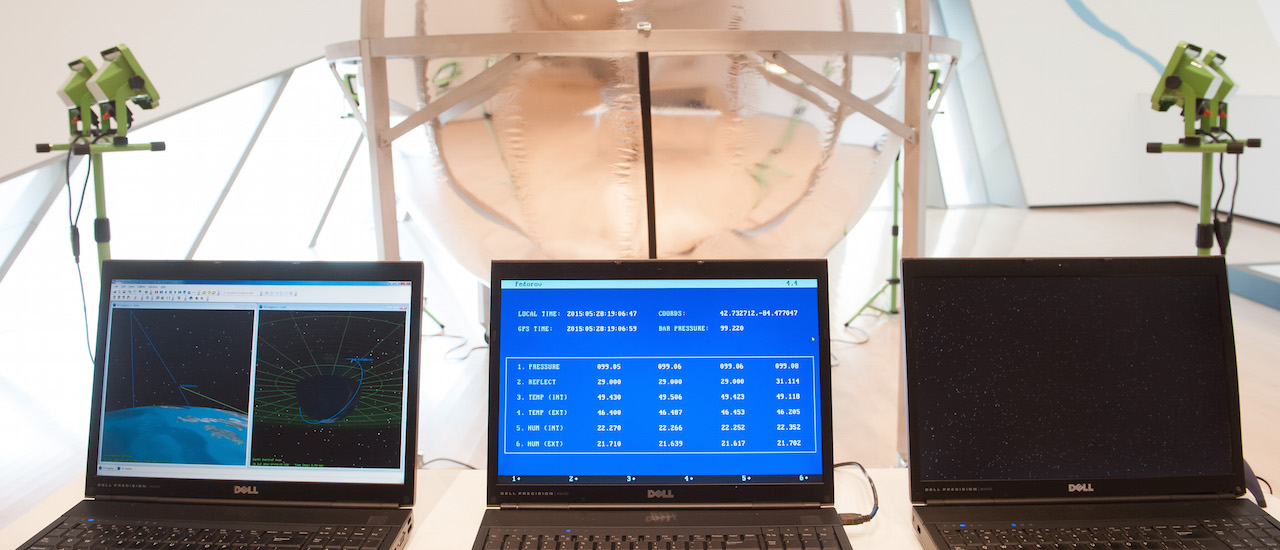
    Science on a Sphere (SOS) was just installed at the MSU Museum (the University’s museum of science and culture). MSU is now one of 160 sites around the globe with SOS. Students and instructional staff will have access to facilitated programs and lab times beginning in January 2020. SOS is a 54″ animated globe that allows users to explore earth sciences and other natural and social phenomena (https://sos.noaa.gov/What_is_SOS/). Developed by the National Oceanic and Atmospheric Administration (NOAA), the SOS system comes with hundreds of datasets and animations ready to use for instruction and exploration. This large-scale digital learning technology is well suited for different types of storytelling and data representation and has potential to be used for game development. This session will describe SOS as a learning and teaching technology and invite input on how participants envision using this exciting new tool, particularly for gaming, which is only just starting to be explored by SOS sites and software developers.

    Knowing Queer Bodies Across Digital Media and Literary Genres

    Nicole McCleese

    In the lightning talk, I reflect on teaching the video essay in literary studies as a technology for knowing queer bodies, socally engaged DH pedagogy, feminist collaboration, and queer failure. I discuss two examples of the undergraduate student video essays, on “Femme” and “Passing,” which engage critical discussions of race, sexuality, and gender through their projects’ intersectional, comparative analysis of queer media and literature. These video essays not only analyze queer media in content; they also capture an aspect of their identity through their choices and digital storytelling. In the course, our engagement with the huamnities through critical work on queer media in the video essay is informed by our course readings in black queer studies–such as, James Baldwin, Audre Lorde, Samuel Delany, and L. H. Stallings’s Funk the Erotic: Transaesthetics and Black Sexual Culture–and comes from a desire to use DH for collaborative feminist pedagogies and to situate the digital turn in undergraduate education in literary studies for the purposes of social change. One learning objective of this assignment, the digital keywords video essay, is to use socially engaged DH for a comparative analysis of keywords on queerness in gender and sexuality in popular media and literature.

  • Narrative

    Narrative

    November 29th, 2018
    3:00-4:30pm
    Digital Scholarship Lab Flex Space, Main Library (2nd Floor West)

    Program

    Level 101: A Video Game About Video Games

    Justin Wigard

    Within the field of game studies, video games are explained, analyzed, and dissected through modes of meaning-making that lack interactivity, a surprising problem given that the medium of the video game is, according to Mark J. P. Wolf, a medium hingent upon player interactivity for “without player activity, there would be no game.” I argue that the video game represents an area of great potential as a tool of meaning-making, one that is ripe for intervention through the digital humanities in terms of producing video games that act as modes of academic inquiry, that extend beyond simple instances of educational games or edutainment. The proposed presentation talks about the development and current progress of Level 101: A Video Game About Video Games — a serious video game that hopes to explain, interrogate, and deconstruct the video game medium through three significant branches of understanding video games: 1) Video game history, 2) Video game design, and 3) Video game genre. Each of these three branches will feature five levels that are designed to educate undergraduate college students about the video game as a medium, as well as encourage students to think critically about video games and the process of playing through them. As a recipient of the DH@MSU 2018 Summer Seed Grant Award, this presentation will report on 1) the rationale behind Level 101, 2) data from an informal user experience survey about Level 101, and 3) the current development progress for Level 101.

    Visualizing Queer Narrative in Video Games

    Cody Mejeur

    This presentation examines how games alter our conceptions of narrative through the fluidity and variability of play. As Shira Chess argues, games demand a reconsideration of narrative because they reject heteronormative expectations of climax and catharsis that dominate other narrative media, and instead embrace a “narrative middle” that emphasizes process and open-endedness (Chess 2016, p. 88). Building on Chess’s work, this presentation argues that games challenge perceptions of narrative form as static or determined, and that they instead reveal how play animates, warps, and shatters forms such as signs, interfaces, and rules. Using visualizations of queer games as examples, this paper demonstrates how play queers narrative forms by blurring their boundaries and exploding their structures, and suggests that narrative is a living, playful, and situated process with emergent and queer potentials.

    Binge vs Not Binge: The Content Analysis of the Common Features of the Binge-able TV Series

    Ezgi Ulusoy

    The current research will conduct a content analysis of binged and non-binged TV shows by using Netflix data. According to Netflix study (2016), people are more likely to binge on thrillers, dramatic comedies, horror, sci-fi and action rather than political, historical, superhero, and crime dramas. Looking at the summary of shows binged (Netflix, 2016), it appears that people do not prefer cognitively challenging contents to binge-watch. However, there is not a systematic analysis relating to this relation and the list includes different genres each year. For example, last year’s analysis (Netflix, 2017) on binged contents included the Confession Tapes which is a documentary/crime that is more likely to be listed under cognitive challenge. Thus, studying the core elements of binge-watched shows might indeed help explaining why people binged. Previous literature has been focused on the relation of binge-watching to addiction and mood restoration. Nevertheless, the current research stresses a necessity on a deeper understanding. Therefore, this research will study the content features (content challenge, dispositional alignments and valence of emotion) beyond genres to explain why some shows are binge-watched while others are consumed in a slower order. While it is a research in the developing stage, the researcher hopes to get feedback and suggestions to improve her idea and paper.

    The Museum of Urban Naturalism: Digital Narrative in Citizen Science

    Matthew Rossi

    Media portrayals of nature, such as exist in film series like Planet Earth frame the natural world as vast, dramatic, and other. This constructs nature in the public imagination in ways that reinforce Romantic notions of wilderness and make it difficult to understand the presence of biological systems in human spaces. How can we use tools of citizen science, such as photographs taken with a simple paper field microscope and a smartphone, to reframe the public narrative around nature as small, quiet, and coexistent with humans? In this presentation, I will discuss the Museum of Urban Naturalism, a multimodal experiment in translating the narrative moves of a natural history museum into an online space. My presentation will address my project’s efforts to harness the reach of social media and the ubiquity of smartphone technology to engage with scientific communication as a narrative form. It will also consider how the tools of citizen science, may be used to see, listen to, and consider nature in ways that are restricted by the demands of traditional scholarly research.

    Old Friends, New Faces: perceptions and expectations when narrative characters are reimagined

    Sara Grady

    Characters which leap off the page or live beyond their source text(s) are nothing new. Indeed, ancient myths and oral traditions require character and narrative mutability to survive infinite retellings and reimaginings. Zeus is larger than life; Falstaff, Jane Eyre, and Mr. Darcy are, too. (See also: Superman, Han Solo, and Spock.)

    Yet little empirical research explores how the cognitive experience of narratives and their inhabitants changes over repeat exposures and across digital environments. Modern social science provides new tools with which explore our cognitive, mental and emotional involvement with narrative content and shed light on the meaning-making process. And digital media afford unique opportunities to watch, share, discuss, and relive the same stories and meet the same characters over multiple channels and interactive interfaces.

    In the preliminary plans, our focus centers on user expectations (and expectation violations) when new content or new adaptations are introduced to an existing narrative canon. Initially, we propose two studies which analyze audience expectations and impressions of new incarnations of established characters. The first, a time-release survey surrounding the new adaptation of Little Women; the other, a content analysis of YouTube comments on movie trailers for a popular fiction franchise.

    Theme and word analysis in the contemporary corrido (Mexican Ballad)

    Mary Ann Lugo and Miguel A. Cabañas

    Reporting on the DH@MSU Seed Funding project as laid out here.


    CFP (now closed)

    Over 20 years ago, Janet Murray argued that new media and digital technologies had the potential to revolutionize narrative, heralding the arrival of the storyteller who is “half hacker, half bard” and media “capable of capturing both the hairbreadth movements of individual human consciousness and the colossal crosscurrents of global society” (9). Since then, digital environments ranging from electronic literature to video games to virtual reality to social media to archives and beyond have allowed multi-faceted approaches to narrative form, and generated a multitude of ways of utilizing digital tools to enhance the storytelling process. The adoption of digital tools to produce narrative has enriched the ways we construct meaning across the distinctive features of our digital and networked platforms, and led to new ways of using narrative to understand ourselves, each other, and our cultures. Narrative production and circulation are further entangled in politics, with digital platforms and user communities often controlling the ways that narrative is created, preserved, and spread.

    This LOCUS asks us to explore how Digital Humanities has engaged with narrative, broadly construed as the process of storytelling and meaning-making across media. We encourage participation from scholars in any discipline with projects that are fully developed, in process, or in the brainstorming stages.

    Possible topics for papers include, but are not limited to:

    • The nature of narrative production in multimodal digital environments
    • Evolution of narrative forms
    • Narrative possibility among non-linear formats (i.e., databases, online archives, etc.)
    • What counts as narrative in today’s media environment
    • The agency of users in narrative production
    • The role of platforms in the production and circulation of narrative
    • Interaction, reader response, and audience participation in narrative
    • Narratives of race, gender, sexuality, and identity in digital media
    • Narrative accessibility in digital environments
    • Narrative visualization (network analysis, geospatial tools, etc.)
    • Video narratives (YouTube, Vine, and more)
    • Sequenced navigation and menu-driven choice
    • Video games and narrative
    • Fan fiction/fandom and narrative
    • Social media and narrative

    We are seeking proposals of up to 250 words for 7 minute presentations to facilitate an interdisciplinary conversation on these topics.

  • Social Media and Social Media Analysis

    Social Media and Social Media Analysis

    Partners – Quello Center, WIDE Research Center
    Theme – Social Media and Social Media Analysis

    Date – December 7th, 2017
    Time – 3:00-5:00pm
    Location – Green Room, Main Library (4th Floor West)

    Social media comprise an important set of platforms for understanding the spread of information (along with mis/disinformation) on some of the most urgent social and political issues of the moment. Whether it is information sharing, the homogeneity or heterogeneity of social networks, issues of personal privacy, or concerns about election hacking, social media analysis provides a means of reckoning with public opinion on a global scale. Social media platforms provide data for social research, and also, crucially, provide venues for organizing and activism. They allow various grassroots organizations to support one another and arrange meetings and protests, even amid critiques about the role social media has played in fostering harassment and hate speech.

    We are seeking proposals of up to 250 words for 7 minute presentations to facilitate an interdisciplinary conversation on these topics. We are particularly interested in presentations that engage with one or more of the following issues:

    • What forms of social media analyses are particularly interesting or successful?
    • What does a “successful” analysis look like? How do we know?
    • What are we missing when we analyze social media? Whose voices are missing?
    • What are some of the critical gaps in social media analysis, and how might we ameliorate them?
    • What might ethics of social media analysis look like? What lessons have we learned from previous and current failures?
    • What about non-English language platforms and analysis? What are the areas of opportunity? What analyses or methodologies have been particularly useful, and what might others emulate?

    We are especially interested in works in progress relating to research, teaching, or any other type of work that wrestles with the challenges of access in the digital environment. Proposals from students (undergraduate and graduate), faculty, and staff are all encouraged equally.

    Submit a proposal by Monday, November 27 Tuesday, November 28 at 11:59pm

    Program


    Analyzing Political Memes on Instagram: Insights, Challenges, and Possibilities

    Julia DeCook, Information and Media

    As a social media platform, Instagram is monumental in its influence of youth culture, identity, and perceptions of the world, with the application serving not only for youth to follow accounts that are aspirational (celebrities, etc.) but also for entertainment and identity building through meme accounts and other types of Instagram accounts. Instagram’s primary user base consists of people who are teenagers and young adults, and meme accounts that espouse white supremacist, hateful ideology and subsequently, identity, are incredibly prevalent. Searching hashtags reveals that these meme accounts are not just a vehicle for entertainment, but rather are serving as spaces for identity building and identity reinforcement to occur. Of primary interest is the hashtag and alt-right affiliate movement the “Proud Boys,” which is being sold to young men as a fraternity-like organization to celebrate “Western ideals,” and operate on an ideology that consists of both symbolic violence and physical violence. Exploration to their recruitment and world-building practices on Instagram will be necessary to understand the movement, and gain further insight into how memes are being used as vessels of indoctrination. However, ethical issues emerge in scraping Instagram data and studying social media data in general, particularly for analysis of political and social movements. This presentation will share preliminary findings, analysis, and ethical issues that emerged during the research process.

    Pure Michigan on Instagram as Marketing Strategy

    Suzanna Smentowksi, WRAC

    The state of Michigan is known for many things. It’s Great Lakes. It’s natural beauty. It’s cherries. It’s Pure Michigan ad campaigns with Tim Allen’s voice over.

    The idea for the Pure Michigan campaign was launched back in 2008 with the help of professionals at Michigan State University to rebrand the state’s tourism industry following the recession. Since then, the state has found success in boosting the economy with the help of ads channeling nostalgia and a well-developed marketing strategy – earning them recognitions by Nikon, CNBC, Forbes and the Shorty Awards. Today, the campaign is still ranked one of the best in the country and affectively draws people from around the world to the state.

    The goal of my research is to study the trends of the Pure Michigan Instagram account to see how it matches up with the general marketing strategy of the campaign. Is their Instagram used in tandem to reach a unified marketing goal, or is the account more about posting pretty pictures from around the state?

    Snapchat Stories through the Anthropological Lens

    Adam Weickersheimmer-Austad, Anthropology

    Snapchat is used as a way to document ones life and the lives of those around them. It’s also a portal to observe the habits of friends and strangers. People have the propensity to share their daily activities for their digital tribe. Snapchat gives individuals the ability to be the narrator of their own life. In a two week study of the behaviors of Snapchatters, I started a study that I will continue for the duration of my undergraduate career. By using participant observation, I believe we can better understand the motives behind why people snap what they snap.

    When Cows Tweet

    Scout Calvert, MSU Libraries

    The labor of new data production comes in the form of a promise of information technologies that facilitate bovine-human communication. In one project, cattle tweeting is made possible as an affordance of a milking robot, activated by RFID collars that identify the cow to the robot so that it can guide its laser-sighted milkers to the specific teats on the particular udders of the cow who wears the collar. Data about the milking session are stored and tweeted under the Twitter handles of the cows. Automatic Milking Systems (AMS) are devices that enable a cow to concentrate on making milk and farmers to attend to cattle in more direct, yet highly mediated ways. In another project, Dell Technologies offers to let cows tell farmers how they feel by text message. Dell promises to aid rural Indian farmers through technologies for dairies to report milk data back to smallholders by text message, bringing cows and farmers both into global high tech production. Tracing the assemblage of technologies, relationships, and meanings that make texting and tweeting cows possible, this presentation on work in progress considers cattle as Harawayan cyborgs. Cows laboring as data, milk, and gamete producers do so globally. This paper explores the lives of cows in high tech assemblages globally and asks what we can learn about bovine lives from their tweets.

    Dark Patterns of Social Media Participation

    Liza Potts, WIDE

    In this talk, I discuss how social media platforms such as Twitter, Facebook, reddit, wikis, and others can be used by network actors in positive and negative ways for community building and knowledge production. First, I will point to research that showcases positive uses of social media by participants near and far during times of disaster. Then I will discuss negative uses of social media, illustrating methods that can trap unwilling targets and willing participants in an unending cycle of rhetorical invention through a mechanism of aggressive, hostile, mob-like activism. In both cases, everyday people and network actors worked to share information and spread knowledge. However, through the deployment of dark patterns, the ways in which participants are enrolled and knowledge is produced diverges dramatically across these two examples. These dark patterns–user experiences that can convince people to participate in ways they may not want, need, or intend–can create realities that become unstoppable if platform owners are unwilling to act. This higher level of abstraction makes this an important topic for researchers grappling with issues of methods, ethics, and scholarship in social media.

  • Modeling

    Modeling

    Partners – Art, Art History, & Design and Media & Information
    Theme – Modeling

    Date – December 1st, 2016
    Time – 3:00-5:00
    Location – REAL Classroom, 3W, Main Library

    Models are simplified representations that can be used to examine an idea, experiment with features and variables, or create an immersive experience. Across the arts, humanities, and social sciences, scholars have turned to modeling – including but not limited to virtual reconstruction models, topic models, data models, and network models – as a way to explore systems and provide new ways to access visual artifacts and spaces. In order to foster an interdisciplinary conversation on this topic we are seeking proposals up to 300 words for 7-10 minute presentations that engage with one or more of the following issues:

    • How can physical and virtual models help us study and teach about artifacts, architectures, and landscapes that are far away or no longer exist?
    • What are the strengths and weaknesses of modeling as a method of understanding complex systems?
    • How do experimentation, modeling, and prototyping impact teaching and learning across disciplines?
    • Can modeling help create experiences that improve cross-cultural understanding and empathy?

    We are especially receptive to hearing about works in progress relating to research, teaching, or any other type of work that wrestles with the challenges of access in the digital environment. Proposals from students (undergraduate and graduate), faculty, and staff are all encouraged equally.

    CFP Close –  11/18/2016

    Please submit abstracts of no longer than 300 words to: go.cal.msu.edu/locus

    Program


    Archaeology and 3D Modeling

    Autumn Beyer

    Creating 3D models in archaeology has become extremely useful. It allows us to teach students, professionals, and the public about museum quality artifacts without the risk of breaking or damaging a unique specimen. For the Morton Village Archaeological Project, we decided to create a 3D model and print of an sandstone pipe recovered from this past summer’s excavations. It allowed us to present the object in various ways, in relation to our interpretation of its archaeological context, and gave visitors a chance to pick up and hold the object themselves. We are going to continue to create 3D model of other artifacts found at the Morton Villages site with the purpose of having them as teaching tools and allowing for greater access to these unique specimens.

    3D Modeling of Archaeological Human Remains: Digitally Preserving and Reconstructing Past Populations Through Photogrammetry

    Jack Biggs

    Over the past year and a half, students in the MSU Maya Bioarchaeology Lab have been using photogrammetry and Agisoft PhotoScan software to create 3D digital models of many skeletal remains from archaeological excavations.  Skulls have been the primary focus, but models of mandibles and long bones are also being created.  The premise for the implementation of this research method is multi-faceted.  Firstly, creating these models allows for digital preservation.  The antiquity of the remains, the environment from which they were unearthed, and the resulting taphonomic processes they endured have culminated in the overall fragility and friability of the skeletal material, most of which are already fragmentary.  The presence of digital models of the bones ensures that researchers have continued access to artifacts that may one day become damaged beyond repair and prevent further research.  Secondly, the digital models grant us the opportunity to conduct metric studies with minimal margins of error as the points of measurement become digitally fixed.  Lastly, and as a result, the 3D digital models give us the ability to look at overall shapes of skulls (an important aspect of ancient Maya identity) in both a quantitative and qualitative capacity which further aides us in reconstructing population dynamics.  Although we are still working through many of these aspects of the project, its potential as a statistical and curatorial tool cannot be overemphasized as anthropology and archaeology are becoming increasingly digital.

    Participatory 3D Model-Building: What Can Multimodality offer Urban Planning?

    Jack Hennes

    2D models are routinely used in the practice of urban planning. In public forums, for instance, planners often present a series of 2D models using presentation slides. However, envisioning a future development in two dimensions—especially when those developments will of course be three dimensions in our physical world—creates a communication problem of dimensions. Furthermore, the public is limited to offering their comments through two modes: written and oral. Limiting citizen engagement through dimensional models and literacies can result in development projects that fail to reflect the rich, diverse perspectives of residents.

    In this presentation, I highlight two recent developments in model-building that allow citizens to richly participate in urban and transportation planning. Minecraft, a simple 3D sandbox video game, is now being used to engage citizens in planning parks, cities, and entire regions—and in developing contexts in particular. Meanwhile, 3D printing is being used in cities like Oslo, Norway and Louisville, Kentucky to inspire public input in future designs. To conclude, I highlight how the use of three dimensions can work as a powerful tool to encourage citizen participation, input, and ideas. Furthermore, fostering multiple modes of engagement—written, oral, visual, and haptic—presents citizens with more avenues to provide input on the landscapes where they live, work, and play.

    Environmental Computer Simulations: A Look Under the Hood

    Stuart Blythe

    In this presentation, I would report on research I have conducted with an ecologist and a psychologist as they developed a computer simulation designed to help first-responders predict what might happen during an extended heat wave in Michigan. I would describe the scientists’ particular approach to model creation. My description will be primarily methodological, not technical. In other words, my purpose will not be to demonstrate how to use a simulation program such as STELLA. Rather it will be to describe the kinds of epistemological, procedural, and ethical decisions these experts made as they developed their model. With this presentation, I would hope to enrich an audience’s understanding of types of models, their purposes, and approaches to their development.

  • Access in a Digital Environment

    Access in a Digital Environment

    Partners: Experience Architecture Program and Museum Studies Program

    Theme: Access in a Digital Environment

    Date: 2/24/2016

    Time: 3:00-5:00

    Location: Libraries, REAL Classroom, 3 West

    While more websites and digital experiences are created, we must ask questions about access. In order to foster an interdisciplinary conversation on this topic we are seeking proposals up to 300 words for 7-10 minute presentations that engage with one or more of the following issues:

    • Who are the multiple audiences for websites, online collections, or mobile apps?
    • How do the affordances of various digital environments impact the notion of access?
    • What assumptions are made about user ability to interact with these digital environments?
    • What design decisions are made to encourage successful navigation in these environments?
    • What constitutes successful navigation of a digital environment?
    • How can different modes of engagement facilitate use for diverse communities?

    We are especially receptive to hearing about works in progress relating to research, teaching, or any other type of work that wrestles with the challenges of access in the digital environment. Proposals from students (undergraduate and graduate), faculty, and staff are all encouraged equally.

    Call for Proposals deadline: February 15, 2016

    Please submit abstracts no longer than 300 words to: go.cal.msu.edu/locus

    Please register to attend at: classes.lib.msu.edu/view_class.php?class_id=159

    Program

    Flyer


    Aurality, the Sonic Self, and the Mobile Device: Pathways for Interaction Design

    Ben Lauren, Brooke Chambers

    Interaction design as a field often emphasizes the visual over the aural (Follet, 2007). Lord (2004) explains the rationale: “audio feedback is an unreliable communicator of complex information (at least of anything other than panic), [and] it is often relegated to a secondary or illustrative role” (n.p.). We’ve all been interrupted by the sounds emitted by someone’s mobile device at a meeting or public place. In the book Acoustic Territories, Brandon Labelle (2010) explains, “sound opens up a field of interaction” (p. xvii) and cites Connor (1997) as he illustrates the concept of “the sonic self” as a sort of “membrane” or “channel” that sound passes through (p. xx). Labelle (2010) also suggests the sonic self is made up of cultural, historical, technological, and embodied situations and conditions that influence listening and how people experience and interact with sound. It is in this way, filtered through the sonic self, disagreeable sounds can elicit frustration or annoyance. Based on our own experiences with sound and mobile devices we are asking a central question: since interaction designers diminish the usefulness of audio feedback, what aural experiences or limitations are (perhaps unintentionally) programmed into people’s experiences with mobile devices? This presentation reflects on the above question by discussing the concept of the sonic self as a sort of heuristic for designing aural experiences with mobile phones. We discuss and seek feedback on our methods for answering this question, and seek feedback about our project.

    Copyright and Access to a Marxist Group’s Audio Files: Challenges and Ideas for Moving Forward

    Sara Bijani

    I am a fellow in the Cultural Heritage Informatics Initiative here at MSU, currently building an Omeka/OHMS gallery showcasing the Finally Got the News related materials here in Special Collections. I would like to briefly discuss the (significant) copyright and access conflicts I’ve encountered in this project, and to encourage a stronger defense of fair use digital educational access on our campus. I know I am not alone in expressing these concerns, but the problems of access are especially relevant and concerning for the particular project I’ll discuss. The small corpus of work I’m interested in was collected in the late 1970s by a complicated group of Marxists, anarchists, and their various sympathizers and affiliates. The raw audio footage collected by these people offers glimpses of their interjections in the logics of late capitalism, as they rallied and lectured and marched against the racial violence of industrial labor in the manufacturing core of the nation. Locking away the raw material of this revolutionary effort under obscure and imprecise copyright, rendering it unheard and unknown, does that material violence at its very center, as well as violates the core impetus of its creation. We need to find a better way.

    The Bot Wars: Russian Censorship and Citizen Subversion of Public ‘Nonhuman’ Discourse

    Jack Hennes

    Following the 2011 Russian legislative election results, activists on Twitter used the #триумфальная (Triumfalnaya) hashtag to express their disgust with what they believed to be a flawed election process. Within hours, Triumfalnaya become one of the most widely used hashtags on Twitter. In response, a flood of pro-Kremlin tweets was sent by bot accounts to the Triumfalnaya hashtag, effectively drowning out the voices of protesters. This is one of many instances of the Russian government’s use of twitter bots to control civic discourse and resistance, especially when citizens attempt to mobilize and subvert the state’s use and misuse of power.

    In this presentation, I survey the use of Russian bots created to censor and control users with Russian ISP addresses. I begin by briefly describing Roskomnador, the federal service for media supervision in Russia and the passing of the Russian Internet Restriction Bill of 2012. I’ll then highlight three examples of state control and “netizen” subversion from May through July, 2014. In the first, Roskomnador demanded that all social media accounts with 3,000 daily readers must register with the Russian government and reveal their true identities. Following in June 2014, Roskomnador blocked all 485 million pages generated by Archive.org’s legion of Wayback Machine bots. Lastly in July 2014, a twitter bot monitoring the Russian government’s anonymous edits of Wikipedia pages revealed a shocking change of language pointing to the persons responsible for shooting down Malaysia Airlines Flight 17 in the Ukraine.

    Based on these cases, I will conclude by highlighting how social media analysis can help researchers distinguish between human and nonhuman communication networks. As state control of public discourse with nonhuman agents seems to be at its peak, understanding the formation and distribution of bot networks is vital. However, it’s equally vital to consider how bots are being created to subvert control of the state in inspiring ways. I conclude by suggesting how nonhuman agents and the control of online discourse may well be the future of activism in the 21st century.

    User Experience and Power

    Heather Noel Turner

    I would like to show a 7-10 minute presentation of my current inquiry related to UX/XA, design, and issues of power. I hope to address argue for the importance of acknowledging cultural contexts, politics of interfaces, and consequences of user resistance.

    Viable VR: BOYD Immersive Multimedia

    Eric Martin, Tommy Truong

    Immersive multimedia is content that allows participants to engage in a more tangible and interactive context through placing them within environments from either the real world or computer-replicated simulations. While originally developed to immerse users within games, this technology has recently transitioned outside of the gaming industry into fields such as education, business and healthcare. We believe that with the right direction, immersive multimedia can further benefit existing pedagogy if it can become more affordable and widely available.

    The current use of immersive multimedia within academia have been relatively basic, but continued practice and support for these new methods could lead to far greater content being developed to help the academic community prosper. One example of this application is the Innovations Team at Michigan State University’s College of Arts & Letters, who developed a method for organizations such as the Detroit Institute of Arts to quickly model museums in 3-dimensions, making explorable exhibits for visitors to see first-hand and promote interactions on a deeper level than the traditional exhibit. Dr. Jon Frey, a professor with Michigan State University’s Art and Art History department, is currently creating methods to use immersive, embodied experiences to aid in the delivery of historical art content in the classroom.

    Another aspect of current uses of immersive multimedia is its expense. With price tags of the Oculus Rift and Hololens ranging from $500 to $3000, these devices are very expensive and are unfortunately not always viable for a classroom or personal environment. We hope to adapt this technology to be much more accessible and affordable by utilizing existing technologies that are more accessible. Through tapping into the expansive market of smartphones, we can create much more affordable methods of teaching and experiencing immersive multimedia.

    Accessible Learning Experiences for Students with Disabilities

    Phillip J. Deaton, Jessica Schein, and Anuj Shah

    Student experiences at universities are created in large part in digital environments. What kinds of challenges do students with disabilities face and how do web, course, and content developers build digital environments that are inclusive and engaging? This presentation will run through the types of digital environments that students use, the types of barriers the students with disabilities in higher ed face, and the design strategies and questions to use when planning curricula, courses, websites, and content that will be accessible.

    Concepts, Workflows, and Lessons Learned in the History Department from Providing Transcriptions and Accessible Online Courses

    Rachael Firehammer, Sam Jaksa, and DeLacey Yancey

    With more and more course being placed online, it has become essential for departments to ensure that these online courses are made accessible to students with disabilities. One of the major components of this is standardizing online lectures so that they are closed captioned. The Americans with Disabilities Act (ADA) requires that this must be completed for all online lectures within the next five years. The History Department has been working on this process for over a year now, while also focusing on other accessibility components, such as editing websites so students with screen readers are able to navigate the history department and course websites. While automatic transcription software continues to improve, the resulting captions always have errors – sometimes so many that correcting the results can take even longer than manual transcription. The main process of transcribing and captioning for the Department of History involves the use of Kaltura Mediaspace and other software such as Express Scribe and a text editor. The task of transcribing lectures involves uploading videos onto the MSU Mediaspace and then editing the text after the program has automatically transcribed the lecture. After editing the transcription, within a text editor, the video and the captions are complete. This transcription and captioning process is very important to make sure that online course videos are accessible to everyone who needs to watch these lectures for their class.

    Connection over Content: Building a Digital Strategy at the MSU Museum

    Max Evjen

    Museums are dynamic, educational, and engaging. However, the traditional audience demographic for museums continues to be old and white. This is a troubling fact considering the increasing minority population in the United States, and it’s more troubling for the MSU Museum since it seeks to engage the traditional target audiences at museums (K-12, adults and families) but, as a University museum, it also seeks to engage a diverse student population.

    In order to be a more social, connected, inclusive, and visitor-centered organization, the Museum is formulating a digital strategy using the Digital Engagement Framework, a free tool developed by MuseumNext Practice. According to the MuseumNext Practice website, “The Digital Engagement Framework helps you identify the value creation opportunities of digital engagement for your organisation and develop the strategies, processes and technologies to structurally engage your audience to maximize your co-created value.” The Framework has been used in a variety of settings including museums, festivals, heritage sites, performing arts organizations, by individual artists, and for specific exhibitions.

    The development of a strategy using the Framework requires the participation of many individuals who are all increasingly busy and under-resourced, and who are from all different departments in an organization. Max Evjen, Exhibitions Technology Specialist at the MSU Museum will describe the successes and challenges in developing the Digital Engagement Framework, and will share how the Framework can be used in other organizations.

    Participatory Museums: The User Experience of Creative Agents

    Erin Campbell

    User experience (UX) is an emerging field, and many businesses and institutions are coming to the realization that, although the quality of a product is important, the user’s experience with it often influences a product’s success. Some organizations, such as museums, still wrestle with how to best implement UX methods to learn about customer experiences. Too often people view museums as places to visit once and never return to. Cultural artifacts hang on walls next to “Do Not Touch” signs and museums remain bound by traditional ways of interacting and participating in art. But what if curators took down the “Do Not Touch” signs and encouraged visitors to participate as part of the experience?

    This research project will explain the participatory work I am doing with the Eli and Edythe Broad Art Museum at Michigan State University. The museum has encountered a unique challenge collecting information on visitors given that people are not required to stop at the front desk to pay for admission or interact with museum staff. Thus, most visitors participate and leave while remaining anonymous.

    To help solve this problem, I have designed a project aimed at discovering the experience of visitors to better understand how the museum could encourage different kinds of participation. Researching visitors’ experiences could provide an appropriate time and place for collecting information. Visitors would no longer come and go anonymously.

    For my presentation(s) at LOCUS, I will explain the results of this research, noting how the case can inform future work with museums. I will also explain how what I learned connects to other important work in UX, like service design and participatory design. Finally, I will address the promise of this work as someone interested in doing UX work in museums as a future career goal.

  • Visualizing and Narrating Space

    Visualizing and Narrating Space

    Partners: School of Journalism and Department of Geography

    Theme: Visualizing and Narrating Space

    Date: 11/18/2015

    Time: 3:00-4:00

    Location: Libraries, REAL Classroom, 3 West

    With the advent of digital tools for mapping and geographic information systems (GIS), the increased ability to narrate stories and conduct research over space and time has furnished scholars with new opportunities to visualize their work geospatially. Equally, the adoption of other visualization approaches—from graphs and trees to network diagrams and infographics—has enriched discussions and provided arguments on a variety topics, cutting across the humanities, social sciences, and sciences—as well as beyond the academy. This LOCUS seeks to bring together the narration and visualization of space to examine how scholars and journalists use these new tools and techniques in the their work—whether with fully developed projects, projects in process, or ideas for new projects. Sponsored by the School of Journalism and the Department of Geography, this LOCUS, “Narrating and Visualizing Space,” encourages participation from those working in any field whose research and writing touches on these approaches or uses these techniques.

    Call for Proposals deadline: November 9, 2015

    November 13, 2015 Please submit abstracts no longer than 300 words to: go.cal.msu.edu/locus

    Please register to attend at http://classes.lib.msu.edu/view_class.php?class_id=147 [Registration is encouraged but not required]

    Program

    Flyer


    Visualizing Agricultural Land Cover Change in Zambia

    Victoria Breeze, Department of Geography

    This presentation for “Visualizing and Narrating Space” will focus on land cover change research in Zambia being done as part of a graduate level Remote Sensing class. This in-progress project looks at how large-scale agriculture has developed in the region near Kitwe, Zambia from 1997 to 2011, with the hypothesis that there has been an overall increase in large-scale agriculture. This presentation will walk the audience through how to conceptualize space at each stage of the research as well as what visualization tools are used for each stage of spatial analysis. This presentation will show the audience three different software: TRIMBLE eCognition, ESRI ArcMap, and Adobe Illustrator. This presentation will first discuss what constitutes a large-scale farm. Second, it will show how eCognition’s object-based image analysis allows geographers and other researchers to pull out land cover features of interest that might be hard to differentiate in a traditional, pixel-based image analysis (i.e. differentiating large-scale farms from small ones and other vegetation). Next, mixed analysis and visualization capabilities of ArcMap will be displayed as the resulting land cover classifications are brought into ArcMap for further analysis. Finally, the finishing touches are put on the classification and change maps in Adobe Illustrator. This presentation highlights the importance of understanding multiple tools and techniques in spatial analysis as different stages of research require different approaches to visualizing and understanding the space in question.

    The Religious Soundmap of the Global Midwest: Process, Project, and Possibilities

    Bobby Smiley, Michigan State University Libraries

    Three Spatial Tools Useful for Environmental Journalism: Aerial Imagery at MSU, NASA Satellite Imagery, and Computer Modeling

    David Poulson, School of Journalism

    Three spatial tools useful for environmental journalism:

    • Michigan State University’s archive of aerial images helps explain land use changes.
    • NASA satellite images explores the Great Lakes environment.
    • Computer modeling of oil spills and other environmental phenomenon lays groundwork for explanatory animation.

    Immersive Multimedia and Pedagogy

    Tommy Truong, Eric Martin, and Jon Frey, College of Arts and Letters

    Immersive multimedia is content that allows participants to engage in a more tangible and interactive context through placing them within environments from either the real world or computer-replicated simulations. While originally developed to immerse users within games, this technology has recently transitioned outside of the gaming industry into fields such as education, business and healthcare. We believe that with the right direction, immersive multimedia can further benefit existing pedagogy. While the utilization of these technologies within academia have been relatively basic, with continued practice and support for these new methods we could see far greater content being developed to help the academic community prosper. For example, the implementation of technologies such as virtual and augmented reality, along with new forms of video (e.g. 360 degree videos), immersive multimedia could enhance the education experience for students by engaging them deeper in the materials. This presentation will cover an introductory overview of immersive multimedia, its potential to benefit education and several methods of achieving the application of these new technologies into existing pedagogy. To showcase real-world application, attendees will be presented with how the MSU College of Arts and Letters’ Innovation Team has experimented with systems to quickly prototype virtual environments and how Dr. Jon Frey is working to use immersive and embodied experiences to aid in the delivery of art historical content in the classroom.