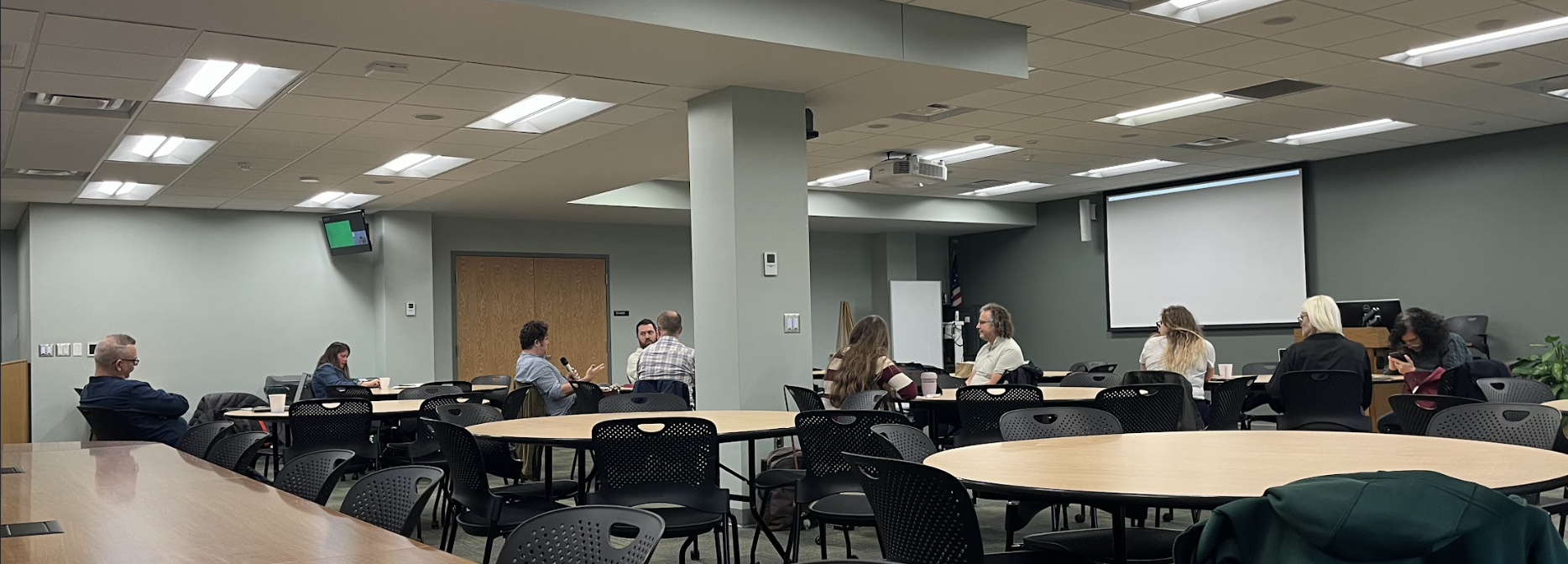
Digital Humanities is holding social hours several times this semester for Faculty, Staff, and Students. Bring your lunch or just stop in to say hi! We’ll be focusing on different audiences on different days. We may include some additional treats!
All social hours will happen in Project Room J of the Digital Scholarship Lab in the MSU Main Library (2nd Floor, West), 11:30AM – 12:30PM. More information coming soon!
September 6, Wednesday, Social Hour, Faculty/Staff Focus
September 20, Wednesday, Social Hour, Graduate Student Focus
October 4, Wednesday, Social Hour, Faculty/Staff Focus: Opportunity Potluck – Tell us about a conference CFP or registration, a resource you want to share or question you might have about a project!
November 1, Wednesday, Social Hour, Undergraduate Student Focus, FREE PIZZA!
November 29, Wednesday, Social Hour, Faculty/Staff Focus: Presentation from ICER
Join the MSU Digital Humanities Program for our inaugural DH Research Showcase, where recipients of DH summer funding and faculty/staff and students will discuss their projects in process. Join us for a wonderful day of DH projects!
The interdisciplinary field of digital humanities (DH) aims to bring together humanistic inquiry and digital technologies, organizing new modes of archival research, developing computer-aided methodologies for answering humanistic questions, curating digitized archives of all kinds, bringing digital platforms into the classroom in creative ways, and engaging critically with the culture of new media.
Schedule for the Day
12PM: Intro
12:10PM: Daniel Fandino: Lady Nijo: Travel, Tourism, and Pilgrimage in 13th and 14th Century Japan
12:20PM: Daniel Trego: MOCAP Dance Exchange
12:30PM: Aubree Marshall: Merging LEADR and CAP – Utilizing StoryMaps to Tell a Story as a method utilizing time, space, and media.
12:40PM Discussion/Questions
12:50PM: Dani Willcut: Mapping Food Networks
1:10 PM: Kara Haas: Unlocking Squareland Mysteries: The development of Squareland Digital Field Trips
Join us for the 2023 Distinguished Lecture by Dr. Suzanne Churchill in the Green Room of the MSU Main Library (4th Floor, West) on Thursday, November 16th, 4:00-5:30pm.
“THE future is limitless”: Mina Loy as a Model for Inclusive DH Designs
Dr. Churchill will showcase a series of projects that develop and theorize a practice she calls “inclusive UX design.”
Graduate Student Lunch with Dr. Churchill
Digital Humanities is arranging a lunch for graduate students to meet with Dr. Churchill on Thursday, November 16th, 2023, 12:00-1:00pm in Linton Hall 120. Graduate Students from any discipline are welcome to join. Please RSVP by 12pm Tuesday 11/14/23 so we know how much Potbelly to order.
THATCamp (which stands for “The Humanities and Technology Camp”) is a gathering where the agenda is set by attendees on the day of the event based on what people want to learn and/or share. It is an event where students, staff, and faculty from any discipline and from all skill levels learn and build together in sessions proposed, led, and voted upon by the community.
Why THATCamp MSU?
At DH@MSU THATCamp, we create space for meeting fellow members of the community in informal networking sessions, and we encourage people to share their work in impromptu discussions and workshops.
DH@MSU started hosting bi-annual THATCamps each August and January targeted at MSU faculty, staff, and students for a few reasons:
To bring people back together at the start of the semester
To introduce new folks to the DH@MSU community
Share knowledge, expertise, and skills among the community
Build connections between community members for future collaborations, troubleshooting, and less formal interactions
This day-long unconference is a fantastic opportunity for members of the DH@MSU community (old and new) to gather, learn from each other, and make connections to carry forward into the academic year.
THATCamp is FREE, but we do strongly encourage registration in advance (it helps us determine how much pizza and coffee to buy). A tentative schedule and the registration form are available below. Please direct any questions to Max Evjen (evjendav@msu.edu).
2:45 – 3:30 PM Share out from the sessions, closing thoughts, and next steps (and raffle!)
Technology and Communication
Slack
We encourage all THATCamp attendees who have an MSU email address to join and engage in discussion and information/resource sharing on the MSUDH Slack group. The Slack group can be accessed via a browser and/or by downloading the app on your device and then signing into the MSUDH community. To sign up for the MSUDH Slack Group, go to msudh.slack.com/signup. Note that you must signup using your MSU email address. After signing up, you will be added to the #thatcamp channel. Once you have registered, you can sign in by visiting msudh.slack.com.
Please reach out with questions about signing up, accessing, and using Slack by contacting dh@msu.edu or @DHatMSU!
Additional Information
Mask Policy
As of August 10, 2022, MSU has lifted its face-covering directive. Masks are encouraged, but they are not required.
Contact Us
If you have any questions about this event, please do not hesitate to contact DH@MSU at dh@msu.edu or planning committee chair Max Evjen at evjendav@msu.edu.
Founded in 2016, Humanities Commons is an open, not-for-profit social and professional network and knowledge exchange environment for scholars, researchers, and practitioners across the humanities and around the world. Humanities Commons provides a communication infrastructure that unites professional profiles, group discussion spaces, a WordPress-based publishing network, and a library-grade repository, CORE. Humanities Commons unites a broad spectrum of researchers within an open-source and open-access environment, enabling them to discuss, share, and store cutting-edge research and innovative pedagogy.
The following Project Highlight was originally created as part of a list of DH@MSU projects on this website.
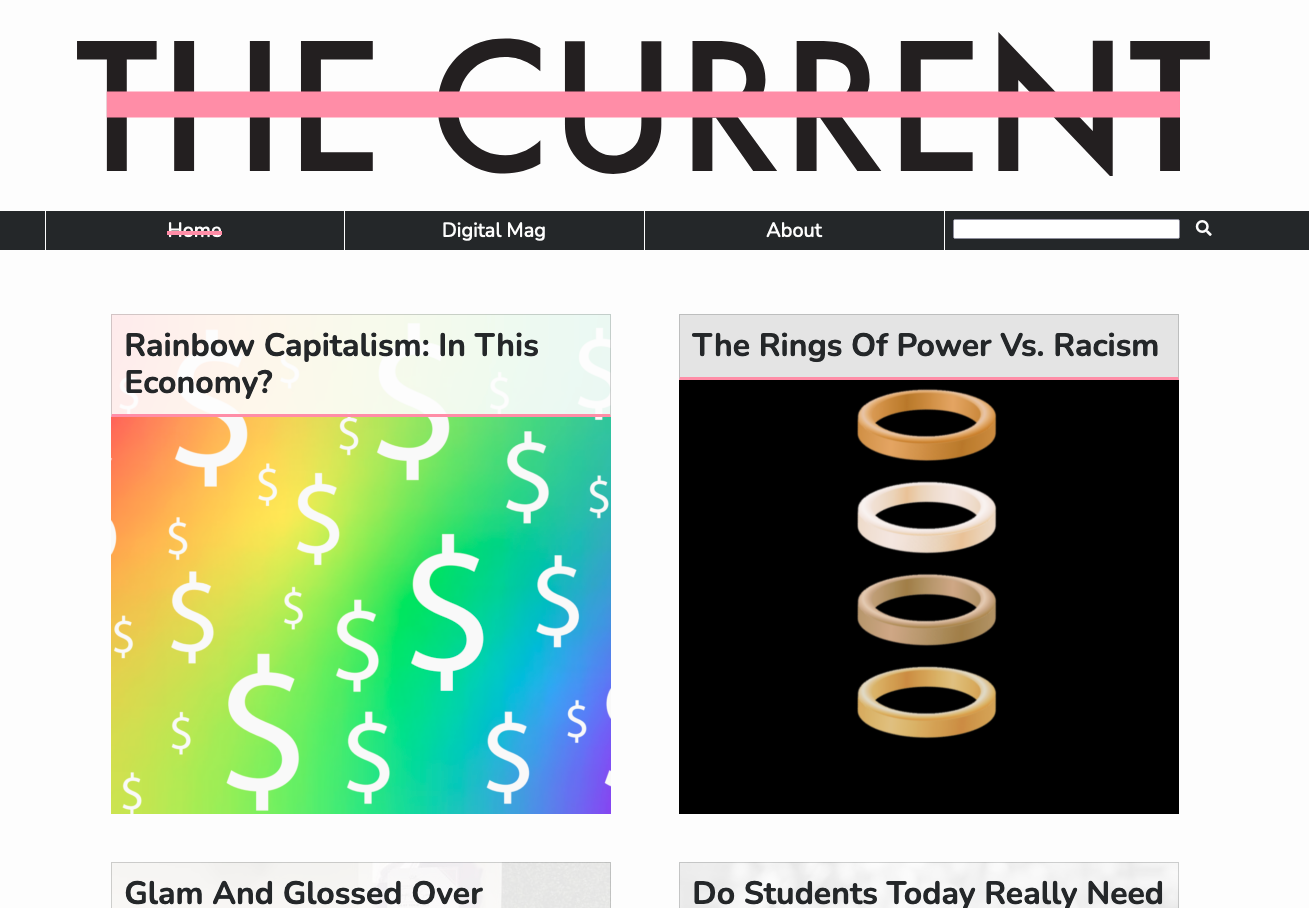
The Current is a unique publication that allows students to participate in every aspect of creating a printed magazine, from writing to editing and design. By targeting one of the biggest demographics in the country, Gen Z, students learn how to market and aim a publication toward a specific audience as well as creating unique pieces for their portfolios. To complement the print edition, The Current’s website allows students to expand their writing beyond the East Lansing audience and gain experience writing for a national audience of their peers.
The following Project Highlight was originally created as part of a list of DH@MSU projects on this website.
MSU Digital Humanities Fall 2021 Distinguished Lecture
Jacqueline D. Wernimont “Visceral Data: Renderings that Matter”
4:00PM-5:30PM, October 12, 2021, Virtual
I closed the book Numbered Lives: Life and Death in Quantum Media with a call “to rematerialize data, to make it into something that one can touch, feel, own, give, share, and spend time with. We can leverage quantum mediation to make media with texture, sound, color, heft, weight, and length—media that grapple with the n-dimensionality of human experience.” This call was in response to 2 phenomena: the long history of ‘aesthetic rationalism,’ a mode of relating to the world in ways that bring unruly living bodies and matter under the representational control of quantum media, and the success that linear conceptions of time have had in ordering our relations to the past. After a brief overview of these histories, I’ll be presenting two ‘data visceralizatons:’ one of energy consumption in the U.S. and the other on eugenic sterilization in one U.S. state. We will use these two examples in order to think about how we might rematerialize data and how doing so might change our relationship to the phenomena represented therein.
Jacqueline D. Wernimont is the Distinguished Chair of Digital Humanities and Social Engagement and Associate Professor in Women’s, Gender, and Sexuality Studies at Dartmouth College. She is also Co-Director of HASTAC.
Staff members in the Lab for Education & Advancement in Digital Research (LEADR) collaborate with History and Anthropology faculty to incorporate digital research methods into a variety of classes each semester. This fall (2022) Dr. A.L. McMichael (Director, LEADR) and Professor Chantal Tetreault (Anthropology) continued a tradition of collaborating on ANP 420: Language and Cultures that began in 2014. This time they worked closely with LEADR Graduate Assistant Marcela Omans-McKeeby (PhD candidate, Anthropology) to focus students’ attention on current modes of communication and styles of language online.
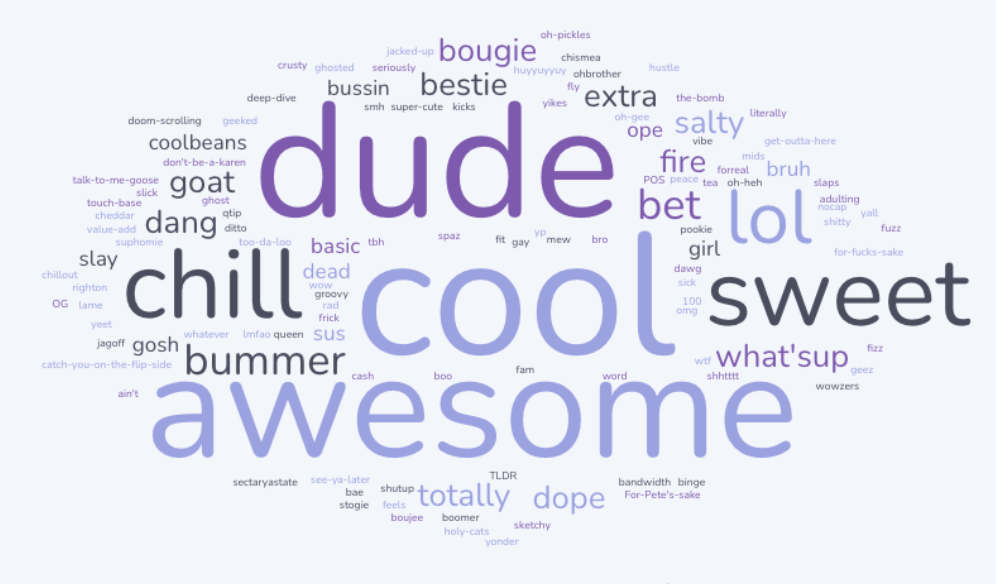
For the project, students learned about the ethics of data collection, survey design basics, and how to analyze survey results. The hands-on workshops used two free tools, Google Forms and Voyant, to collect and visualize survey data. Marcela was able to draw on her own dissertation experience developing and disseminating a city-wide survey on perceptions of China in Tijuana, Mexico.
Prof. Tetreault assigns the project because learning about online communicative environments allows students, often for the first time, to critically evaluate their own practices. Some of this year’s research topics include “use of digital technology for classroom communication,” “phone use between generations” and “use of emojis in texting.” Students apply current theories of language to the online environment and learn how to communicate complex ideas as they share results.
By the end of the semester students will have designed a robust survey that is generated and disseminated by the group with clear research questions and a clear set of goals for the data collection. They will have hands-on experience with data collection, analysis, and disseminating research findings. Thus the project entails enhancing digital awareness and literacy as well as the complex ethics of research generally, which are further complicated by the online environment.
The following Teaching Highlight was originally created for the DH@MSU Newsletter and was featured in the December 6, 2022 issue. Subscribe to the Newsletter here.
What Digital Humanities Means to Me: Amanda Tickner
I am the GIS (Geographic Information Systems) Librarian at MSU and I have a PhD in Anthropology from UNC-CH. As a GIS Librarian, I help people with all things related to GIS, including consulting about using GIS in research and classes, supporting learning with GIS workshops, and helping people find GIS data. What attracts me to helping people as a GIS librarian and what drew me to Anthropology is the broad range of subjects they can encompass and connect to.
Collaboration is another DH value that I appreciate, having participated in quite a bit of collaborative research I think it can be effective and useful. Digital Humanities as a discipline often expands collaborative activity into humanities disciplines that traditionally have been focused on solo work, and I think this is valuable. And I value my collaboration and participation with DH at MSU, they have provided a great opportunity for connection to faculty and graduate students who are interested in GIS and digital scholarship services at the library.
I enjoy teaching applications to the DH community, in addition to GIS I have taught class workshops on Twine, 3D modelling and other applications that can be used in DH. Giving people confidence to enter technical subject areas and accomplish things with new methods that they may not have felt comfortable with previously and opening them to possibilities of technology are things I value. Digital Humanities as a discipline shares those values.
The following piece was originally created for the DH@MSU Newsletter and was featured in the January 23, 2023 issue. Subscribe to the Newsletter here.
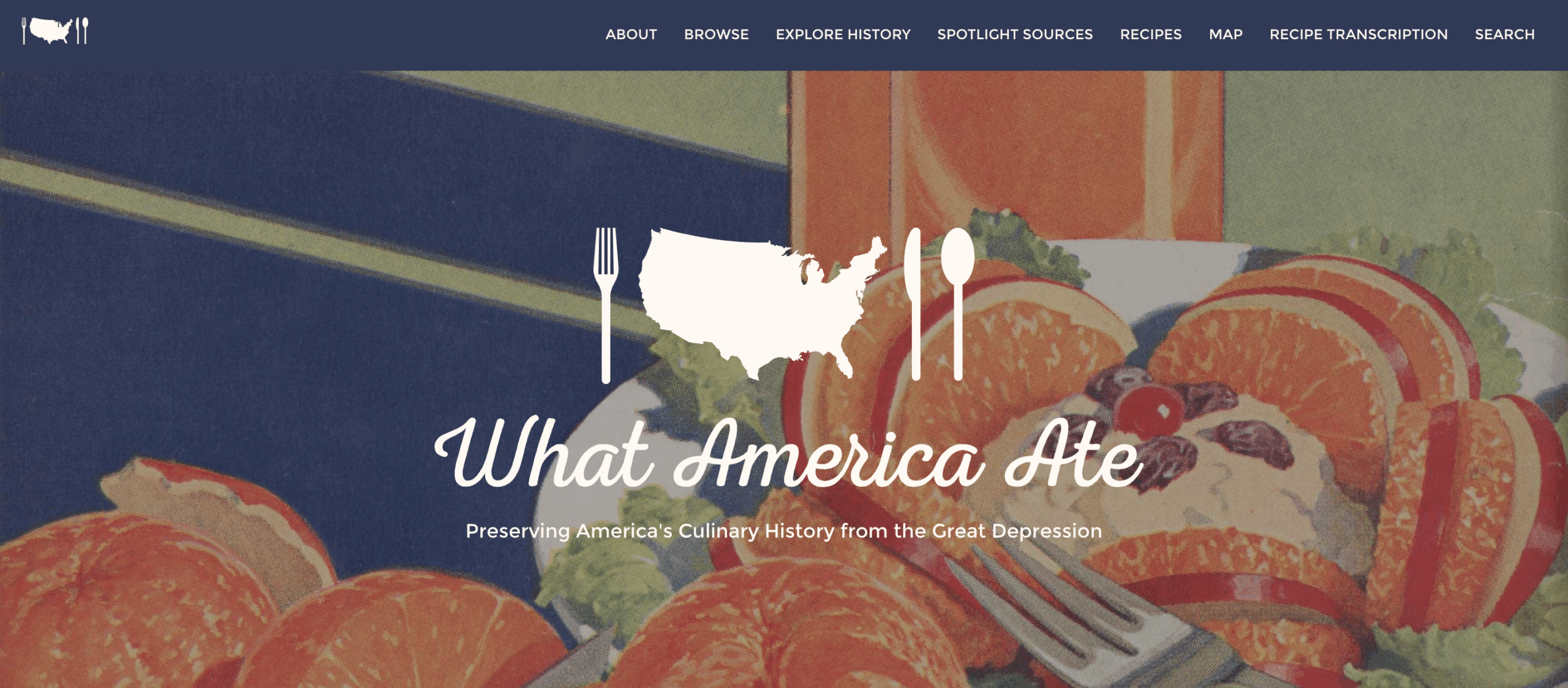
What America Ate Led by History professor Helen Zoe Veit
This is a interactive website and online archive about food in the Great Depression, funded by the National Endowment for the Humanities. What were Americans eating in the Depression? Economic upheaval, mass migration and technology were all changing Americans’ diets, and people living through the Depression wondered if there was such a thing as American cuisine and who was eating what. To answer those questions, the U.S. government did something extraordinary: it created the America Eats Project, sending writers around the country to document American eating. Today, for the first time, America Eats sources that had been scattered across the country are digitized and fully searchable, along with almost two hundred local community cookbooks and thousands of food advertising materials from the 1930s. Start exploring now!
Dr. Helen Zoe Veit joins Michael Cullinane to answer all his questions about decadent recipes, food security, poverty, picky children, and the connections between Gilded Age foodstuff and our diet today. Dr. Veit is a professor at Michigan State University and the director of the “What America Ate” project.
The following Project Highlight was originally created for the DH@MSU Undergraduate Newsletter and was featured in the January 26, 2023 issue. Subscribe to the Newsletter here.
The following piece was originally created for the DH@MSU Newsletter and was featured in the January 23, 2023 issue. Subscribe to the Newsletter here.
Alumni Highlight: Miranda Madro
What is your current role/responsibilities in your job?
I am an Adult Services Librarian at a public library in Virginia. Public libraries act as free community centers with a focus on equal access to information; most of my job is thinking of new, innovative ways to serve my community.
I help customers find library books and navigate library resources, like our free music and eBook/eAudiobook apps. I create programs for adults, like the Diversity Book Club I’m planning to start in June that will be held in a local coffee shop or bar. I create social media content for our library, as well as flyers and other promotional materials. I make book displays and organize our collection of materials. I provide notary services and an adult volunteering program. I’m also constantly looking for and attending professional development opportunities.
How did DH connect to your major?
I was an English Major, and there were a lot of exciting opportunities to enhance my study of literature with digital humanities resources. For example, text analysis became so much easier with a tool like Voyant, and comparing authors became simpler with Literature Map.
What experiences in DH stand out from your time at MSU?
I went on a four week Digital Humanities Study Abroad trip in 2016, called Technology, Humanities, and the Arts in London. This was a wonderful opportunity for me to see how digital humanities techniques were being applied in real institutions. Through the two classes I took during my study abroad, “Creative Arts and Humanities: The Creative Process” and “Culture: Physical and Digital”, I visited four libraries, seven museums, two archives, four galleries, two universities for conferences and lectures, three theaters, and one charity organization in London, Manchester, and Liverpool. Outside of class, I was able to visit many other places in England and Scotland with my study abroad group, which enhanced the whole experience. For one of my assignments, I created a map of each institution I visited during classes on my study abroad trip, and it still exists!
Also, Kristen Mapes introduced me to an academic librarian at MSU, who helped me decide on librarianship as a career path. Kristen is partially responsible for my happiness in my chosen field!
What did you learn in DH that you didn’t expect?
I didn’t expect that my Digital Humanities studies would turn into an internship at the MSU Archives, teaching me to transcribe, digitize, and input collections of Civil War era letters into the MSU Archives website. I also compiled a digital project based on my analysis of the digitized materials, including a genealogical research of a Civil War soldier (who I found out married his niece, scandalous!).
How did your experiences in DH prepare you for success?
Digital Humanities is all about innovation, analysis, collaboration, broadening access to information, and data management. I apply all of these principles in my job as a librarian. I was introduced to #TransformDH, a movement to work for social justice, accessibility, and inclusion in the Digital Humanities field, during my Digital Humanities studies, which is an extremely important goal and should be a goal in every field, including my own. I also still use resources I learned about during my Digital Humanities courses, like Trello, on a daily basis.
Your advice to today’s students and soon-to-be graduates?
Keep digital humanities in mind, no matter where your career path takes you. I still search for digital humanities resources that apply to my job, even as a librarian, and I’ve found some just in the past year or two, like Which Book and What Should I Read Next.
DH@MSU Core Faculty Kate Birdsall discusses her project The Cube, a space for diverse ranges of people, places, and communities to participate in communications of all kinds, from traditional book production to user experience research to web and app development.
“The Cube has a new website and several exciting projects underway, including social media strategy for Detroit Accessibility Project (for whom we did the build last year), a new website for WRAC, information architecture and a website for MSU Financial Planning and Budget, and a brand new site for MSU’s Chief Financial Officer. We’re also working on content strategy, graphic design, and a website for STRIDE, a new center housed in the College of Education that will help individuals with disabilities.
In community news, we’re partnering with Holt Public Schools to expand the DEI initiative we created last year to include a mental health content strategy campaign.
We completed the new website for the MSU Work/Life Office in the fall, and it’s up and running.
Stay tuned!”
The following Research Highlight was originally created for the DH@MSU Newsletter and was featured in the February 7, 2023 issue. Subscribe to the Newsletter here.
Theme: Text Analysis in Humanities and Social Science
Date: 4/9/2015
Time: 3:00-5:00
Location: Main Library, 3 West, REAL Classroom
Increasingly, scholars operating in a wide array of disciplines use computational methods to study digital texts. These digital texts include but are not limited to journal articles, professional proceedings, government documents, novels, websites, and social media (Twitter, Facebook, among others). How can the content of these sources be collected and analyzed to infer the underlying structure and dynamics of human intent or behavior? What computational hurdles and opportunities exist to fruitfully utilize this digitized information in the context of (inter)disciplinary questions? What leverage does digital text as a medium offer vs. its analog antecedents? To what extent do computational methods align, complement, or diverge from methods used to study analog text? This LOCUS will gather scholars together to explore these questions in the context of specific research projects and/or pedagogical applications.
There is an ongoing debate in international relations about the evolution of human rights across the globe. Some recent work concludes that human rights practices have been consistently improving over time, while standards for judging human rights by international organization and researchers have grown monotonically higher. In this project, we attempt to broaden this debate by arguing that the evolution of human rights may not be constrained by a linearly increasing path, along a single dimension running from weak to strong or lax to strict standards and behavior. Instead, we hypothesize that human rights, and thus human rights standards, are multi-dimensional and have specific content that has evolved over time. Thus we expect to observe backsliding on some topics such as torture or rendition while simultaneously improvements in other facets of human rights, such as genocide prevention. To explore this idea we return to the texts of human rights reports that have been used by human coders to create ordinal scores of human rights practices for countries in specific years around the globe. We measure whether the mappings from words to human rights scores have evolved over time and if so, in what ways and for which words. Because of the scale of our problem, we are using tools from machine learning and Bayesian computation to estimate these relationships in a supervised learning framework.
Laura McGrath, Department of English; Savannah Smith, Department of English
(Video not available)
The Digital Humanities and Literary Cognition Lab (DHLC) has been analyzing a variety of unusual texts: not only Jane Austen’s Mansfield Park, but also essays written by literature Ph.Ds. after reading Mansfield Park in an fMRI scanner. With our team of undergraduate researchers, we are at the ground-stages of a comparative topic-modeling project, considering the cognitive and linguistic relationships amongst 18 individual subject essays, and between these essays and the chapter of Mansfield Park to which subjects responded. Through analyzing these texts and the relationships between and amongst them, we have already asked a number of fascinating questions about literary reading from a literary perspective.
Topic Modeling Urdu Poetry
Sean Pue, Department of Linguistics and Germanic, Slavic, Asian, and African Languages
(Video not available)
This talk will address some of the challenges and possibilities in topic modeling Urdu poetry, both classical and modern. It will also compare the idea of the ‘topic’ to that of the indigenous concept of the ‘mazmun’, or poetic theme/symbol. The presentation will also consider the possibility of topic modeling as means for comparative analysis of poetry on the acoustic level of sound. The presentation will use a combination of IPython Notebook—a reproducible “notebook” of code in Python—the gensim module—a Python module that alleges to be “topic modeling for humans”—and the Javascript graphics library D3.js for word cloud visualizations.
From a Distance: Affective Responses To Otherness in German Literature between 1779-1961
This work in process seeks to use the text analysis tool Voyant in order to examine patterns in six German literary texts produced between 1779 and 1961. More precisely, I seek to disclose patterns of affective responses to Otherness in these texts. The underlying null hypothesis of this research is that the creation of (in this case) German identity in opposition to a Jewish or African Other has less to do with any one specific quality of the Other, but instead is comprised by the self’s affective response to the perception of Otherness.
PromptMe is an application intended to help teachers develop better writing assignment sheets. Our system allows teachers to upload their writing assignment sheets to facilitate a discussion about how specific words on thse assignment sheets may be defined. Students provide feedback on instructors’ assignment sheets before writing, hence developing a more contextualized understanding of what they are being asked to accomplish. In this way, PromptMe prompts conversations between teachers and students about writing-related expectations. Currently, we are in the process of testing our system in classrooms at MSU. At the MSU Locus, we will introduce our system, share findings from our research as well as our mockups, and present implications for teaching and learning with technologies.
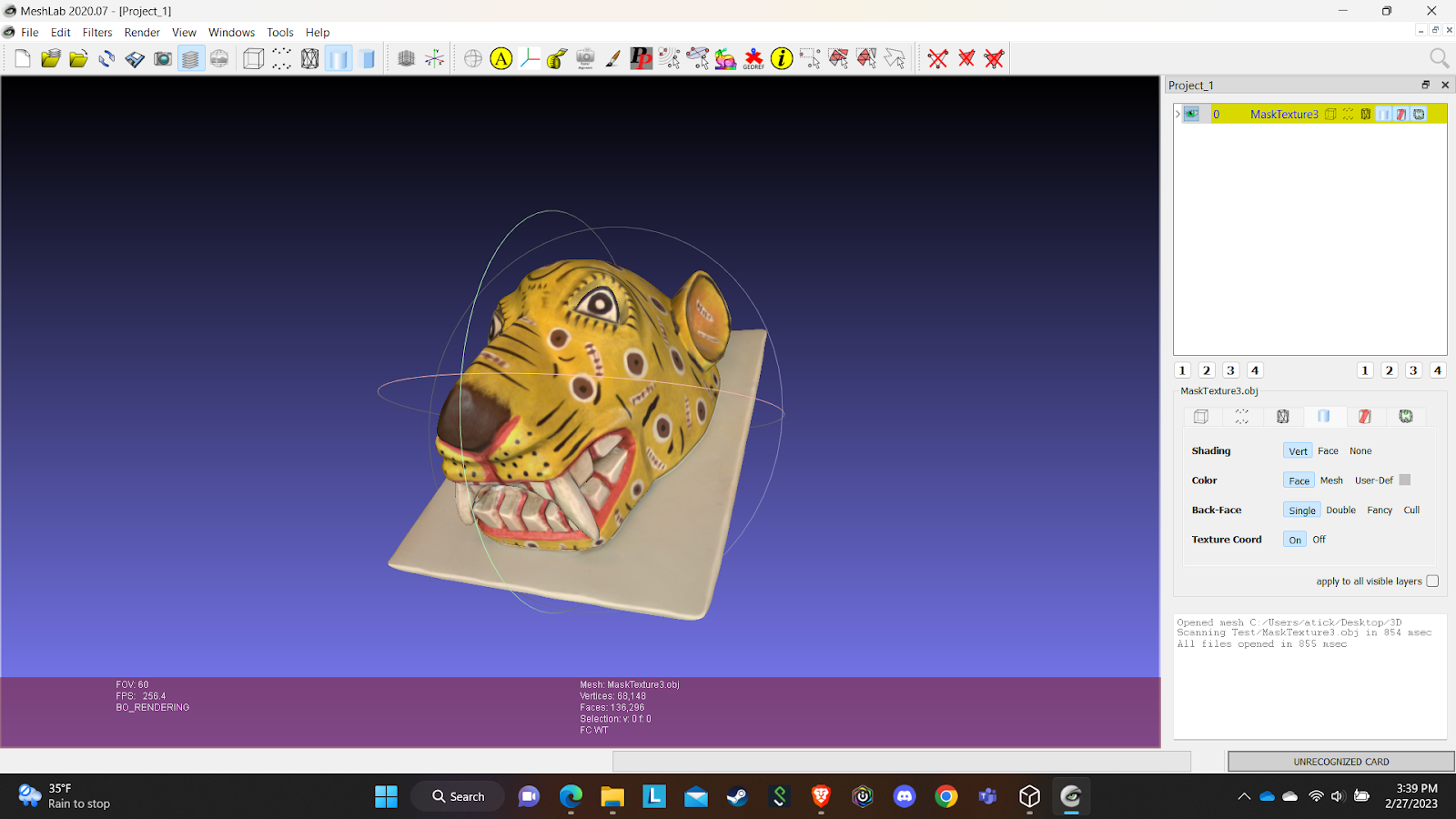
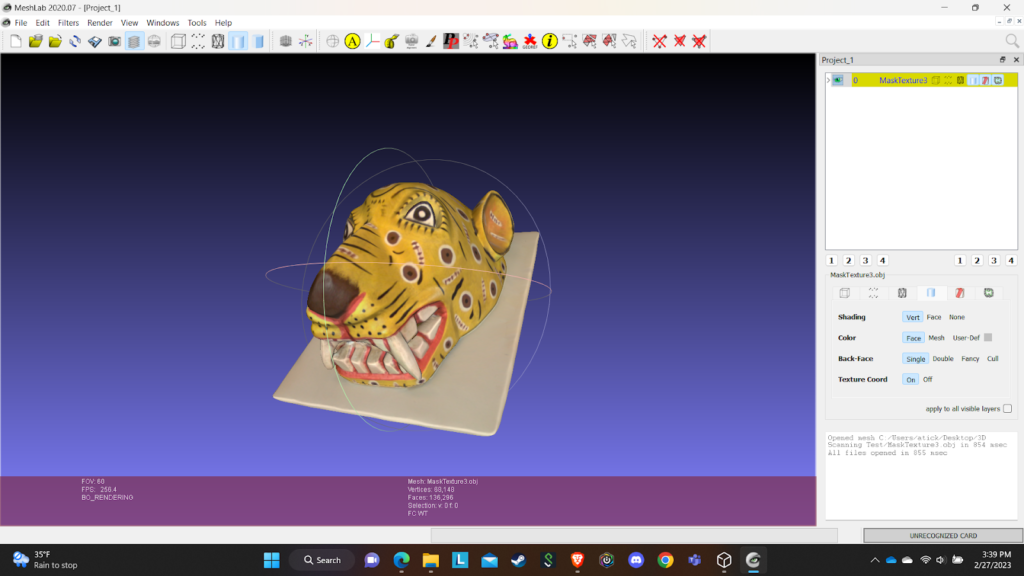
3D scanning in Learning and Experience in Museums (MUSM498)
This semester, students in the the Arts, Cultural Management and Museum Studies course MUSM 487/887 “Museums, Arts, and Culture in the Digital Future” will be learning about creating museum learning objects by 3D scanning and 3D printing and other digital use. Denice Blair, Director Education at the MSU Museum, and Amanda Tickner, GIS LIbrarian at the MSU Libraries, were awarded a Catalyst Information Grant through the Center for Teaching and Learning to work with professor Max Evjen in incorporating the experience into the course. It will involve one class in which students will scan a museum object, and then edit the resulting digital file to make it ready for 3D printing and other uses. As a result of this project, this course now satisfies the requirement for being an approved course for the DH minor and DH Graduate Certificate.
The following Teaching Highlight was originally created for the DH@MSU Newsletter and was featured in the January 22, 2024 issue. Subscribe to the Newsletter here.
I’m an Assistant Professor of Digital Humanities through the English department and the Film Studies program, and what that has meant over the last (almost) three years is opportunities to teach classes at the intersection of film and media. The number of departments and programs listed in my job title alone symbolizes the truly multidisciplinary nature of Digital Humanities. For the longest time, and perhaps to an extent even now, I’ve hesitated to think about what Digital Humanities is because it feels like a trick question, one with no satisfying answer. After observing the range of work that faculty and students affiliated with DH@MSU do, however, I’ve come to think of the discipline’s unsure boundaries as its strength rather than a shortcoming. DH as a discipline and as a program at MSU is as productive as it is because it is now comfortable with being in a constant state of emergence, of coming into being.
I’ve taught one DH course every year, and the breadth and openness of this discipline has meant that I got to teach a course in “adaptions” wherein we engaged with two meanings of the word: one, technological adaptations for people with disabilities, and two, textual adaptations. While these two seem to be quite distinct from one another, when studied under the aegis of Digital Humanities, we got to think through “textual” and “technological” as overlapping terms. The following year I taught a course on Media Archives, and had students from Film Studies, Creative Writing, History, and German to name a few. Each student brought their own archival interests to the class while also debating the politics of archiving and historiography in an increasingly mediated world.
While my training and primary interests are in the critical examination of theories and concepts of media and culture, my aim with each of my Digital Humanities courses is to include some practical element that allows students to engage more closely with actual media. In the archives course for instance, we did “labs” where students picked areas of interest and then did a digital deep dive looking for primary material on that subject.
This semester, I’m teaching a mobile media course which began with examining the Walkman—which I located on eBay—as a mobile technology. One of the subsequent sessions was on mobile gaming, for which I made my students play Pokemon Go. To share their embarrassment at playing this already outdated game, I decided to join them, and now I am hooked. So, if you see a woman clumsily trying to walk two dogs while also trying to hit pokemon on her phone screen, there’s a good chance that’s me!
The following piece was originally created for the DH@MSU Newsletter and was featured in the February 28, 2023 issue. Subscribe to the Newsletter here.
I am a third-year student studying Human Development and Family Studies and I am minoring in Law, Justice, and Public Policy and Digital Humanities.
How did you find Digital Humanities?
I was explaining to my advisor how I was interested in combining my social justice work in a creative way. As I’ve grown up technology has played a major role in my development and has been a useful tool for me. I was looking for something to intersect social justice work in a creative digital format that is engaging, creative, and accessible. She then gave me the contact information for the Digital Humanities advisor and I was able to set up an appointment. I learned more about the minor and got connected with the community! Last spring I saw an email about the Global Symposium internship and took on that opportunity. It really expanded my understanding of Digital Humanities and allowed me to see the multitude of ways to connect humanities work to digital projects
What do you like most about Digital Humanities?
What I like the most about Digital Humanities is that it is so broad. There is room to do so many different topics that align with your interests and passions. I am very passionate about education and was drawn to the idea of the intersection of technology and humanity work to educate. I like the idea of utilizing technology and using digital tools to show data and display information in a different format that challenges people to view different perspectives in a unique way.
How is Digital Humanities enriching your academic experience?
While taking Introduction to Digital Humanities (DH285- a required course for the minor) I was exposed to so many interesting and different types of Digital Humanities projects. This inspired me greatly when creating my own Digital Humanities project. By the end of the course we were tasked with creating our own project of our choice and I created a website using digital tools that explored Decolonizing Education. It was exciting to take a passion of mine and further do research and utilize those tools to tell a story and educate others. I was able to submit it to the Honors College: Diversity Research Showcase and that was my first time presenting a research project. It was such a great learning experience to have! I also will be presenting my work in UURAF this spring! Digital Humanities have allowed me to tap into my creativity and infuse that into my academic career, gaining opportunities that have helped me grow academically and personally.
What have you learned so far that you didn’t expect about Digital Humanities?
I have learned that there is no right way to go about creating a Digital Humanities project. There are so many creative ways that are so expansive from topics to mediums that can build an amazing project. I didn’t expect the broadness of the field but I appreciate the creative flexibility to exist within the community without having to fit into a certain box.
What advice might you have for other students as it relates to Digital Humanities?
The advice I have for other students would be to talk to as many people as possible. I have always been a person to ask questions and you’ll find that most people are enthused to share their own journey or advice and could point you to people or tools that can help you. This community has been so great in providing workshops, opportunities, and exposure to the DH community on a global scale. Take advantage of those opportunities while they are available to you (for free!). You can learn a lot from simply talking to people, asking questions, and attending events. Eventually, this will lead you to foster your own creative ideas and from there bet on yourself and just go for it!
The following piece was originally created for the DH@MSU Newsletter and was featured in the March 1, 2023 issue. Subscribe to the Newsletter here.
Comics as Data Led by Julian Chambliss, Justin Wigard, and Kate Topham
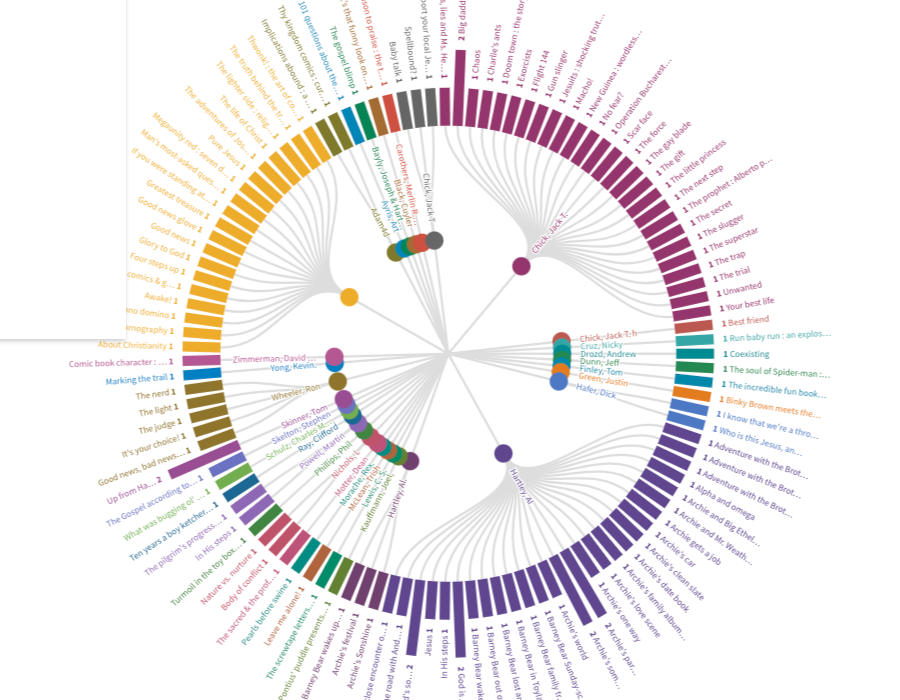
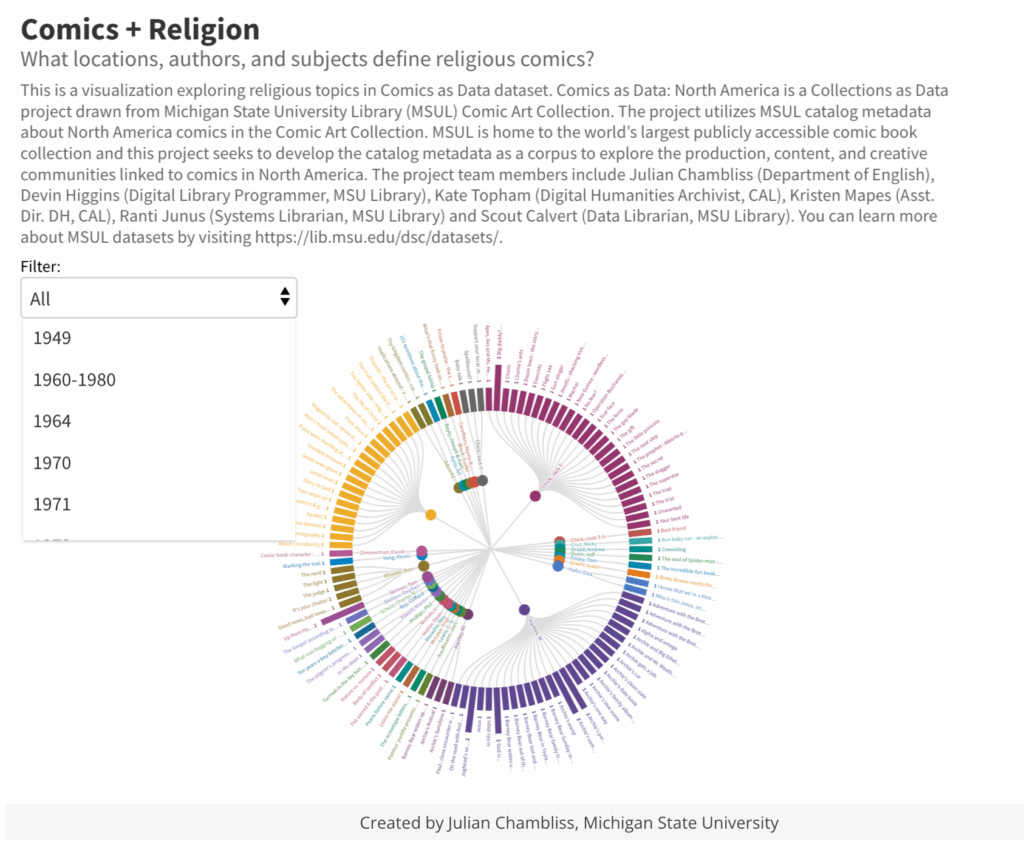
“Comics as Data is an ongoing collaborative project that examines library catalog data to explore geographies of publishing and library collecting policies in North American comics. Continuing an institutional history of creating collections as data, a group of Michigan State University librarians, digital humanists, and faculty formed a working group in 2018 to compile and analyze comic book data. GPRW has taken up the work of exploring this data through our Wikidata Edit-a-thons. You can download the dataset here.
The project utilizes MSUL catalog metadata about North America comics in the Comic Art Collection. MSUL is home to the world’s largest publicly accessible comic book collection and this project seeks to develop the catalog metadata as a corpus to explore the production, content, and creative communities linked to comics in North America. The project team members include Julian Chambliss (Department of English), Devin Higgins (Digital Library Programmer, MSU Library), Kate Topham (Digital Humanities Archivist, CAL), Kristen Mapes (Asst. Dir. DH, CAL), Ranti Junus (Systems Librarian, MSU Library) and Scout Calvert (Data Librarian, MSU Library). Learn more about MSUL datasets here. The current work linked to CaDNA is pursued within the Graphic Possibilities Research Workshop (GPRW) in the Department of English. You can find the latest information about CaDNA by visiting the GPRW website.
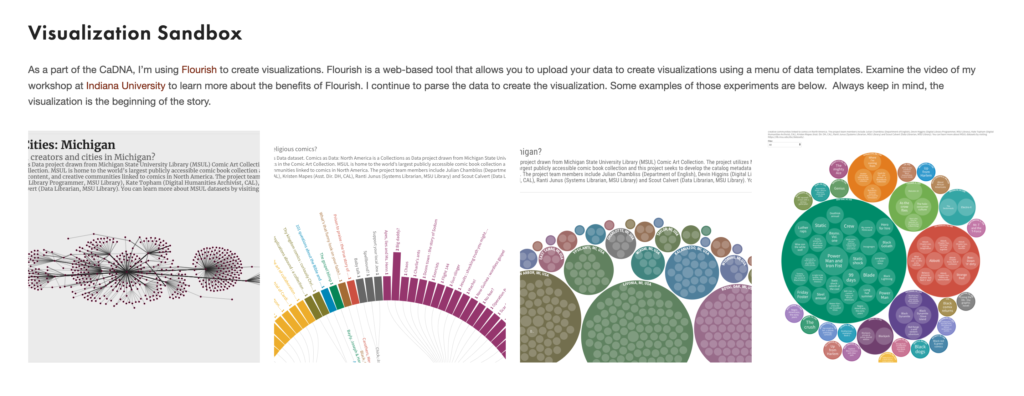
The CaDNA dataset allows users to explore relationships linked to comics publication. Below are examples of sample visualization created using the data.”
Check out the presentation below to learn more about the project!
2021 MSU Comics Forum (2-26) Welcome & Roundtable 1: Comics as Data North America (CaDNA) Participants: Julian Chambliss, Professor of English, Michigan State University, (Moderator) Justin Wigard, Michigan State University, Kate Topham, Digital Humanities Archivist, Michigan State University (not appearing)
The following Project Highlight was originally created for the DH@MSU Undergraduate Newsletter and was featured in the March 1, 2023 issue. Subscribe to the Newsletter here.
Interfaces and Us: User Experience Design and the Making of the Computable Subject
This new book (in full color!) by DH@MSU faculty member, Zach Kaiser, is an interdisciplinary artist-scholar monograph, which examines the role of UX design in the production and legitimation of the idea that people are both computing—meaning that they operate according to computational processes—and computable—meaning that every aspect of every person is fundamentally a computationally-legible piece of data. The book chronicles how the world becomes seen merely as an agglomeration of data, the resulting aspiration to computational legibility that individuals and societies adopt, and the new morality that is a product of this aspiration. Zach then addresses the role of design education in combating this computable subjectivity and its effects, concluding by exploring what he calls a “provisional program of Luddite design education.” The book telescopes between macro-scale political-economic and philosophical issues and the minutiae of interface design, drawing on discourses from the history of science and the history of computing, case studies of contemporary consumer tech, autoethnographic accounts of Zach’s own artistic practice, and his pedagogical interventions in the design classroom.
Zach recently wrote for FastCompany about the underappreciated role (and often pernicious effects) of interfaces in consumer tech, and discussed his book and some of his work on the AIGA’s Design Adjacent Podcast.
The following Research Highlight was originally created for the DH@MSU Newsletter and was featured in the March 13, 2023 issue. Subscribe to the Newsletter here.
What Digital Humanities Means to Me: Daniel Fandino
I am a PhD. candidate with the Department of History at MSU, studying the postwar relationship between the United States and Japan. As a graduate student, Digital Humanities has meant new avenues for intellectual exploration, opportunities to develop as an instructor, and a sense of community that connected me to people across the university. It has brought to my studies and teaching new ways of working with sources and new ways to visualize the complexities of the past. It’s also been a lot of fun, as DH activities with friends and colleagues have been some of my best times at MSU. History is most often a solo profession, so the ability to collaborate and call upon others for assistance and input has been one of the most appealing things about DH.
As a graduate student I had the opportunity to participate in different projects and initiatives. With this participation came valuable mentorship. In my first year I took part in the Cultural Heritage Informatics fellowship, led by Ethan Watrall. The CHI Fellowship included students from diverse disciplines and this early exposure to DH ideas outside of my own department helped me think about my own work, and provided the funding and means to develop my first digital project. It also led to professional connections and lasting friendships. Taking a DH course as a component of the DH certificate and my minor field in Digital History put me in contact with even more graduate students, as did the many DH events at MSU including THATcamp and Global Digital Humanities Symposium. I’ve seen inspiring and fascinating work that have inspired me to continue to develop my own projects—truly motivation of the best kind. I eventually served terms as the graduate representative for the MSU Library Digital Scholarship Lab and the Digital Humanities Curriculum Committee, which gave me insight into student needs both inside and outside the classroom in a DH setting.
My interest in digital history led to a long term placement as a graduate assistant at the Lab for the Education in and Advancement of Digital Research (LEADR), a joint history/anthropology initiative, working with Alice Lynn McMichael. The appointment to LEADR allowed me to develop my own methods for teaching digital history and build skills in lab management. At LEADR I learned about agile work environments as everything from teaching an Omeka workshop to building new computers could be on the daily agenda. There was never a dull moment in the lab. In addition, the staff at LEADR is comprised of graduate students from both history and anthropology. We worked together on courses and operated the lab together, which cemented camaraderie and fostered interdisciplinary approaches to our teaching. Work in the CHI fellowship and LEADR also allowed me to pursue experimental interests, including photogrammetry, virtual reality, and 3D printing. This eventually led to being offered courses on the history of the digital age and global digital cultures, cornerstones of my teaching portfolio.
While I have used DH in my work and projects, DH has also just been fun. Playing with new tools like the MSU DSL 360 visualization room, working with others to figure out problems, and seeing what could be done with new technologies has been a collaborative exploration of ideas and processes. As I approach the completion of my degree, I see friends and colleagues across the globe doing amazing work. It is an ever expanding network that is one of the most valuable things I will take from my time at MSU.
The following piece was originally created for the DH@MSU Newsletter and was featured in the March 28, 2023 issue. Subscribe to the Newsletter here.
The American Religious Sounds Project Led by Amy DeRogatis
The American Religious Sounds Project (ARSP), is a collaborative research initiative co-directed by Amy DeRogatis (Michigan State University) and Isaac Weiner (Ohio State University), which aims to offer new resources for documenting and interpreting the diversity of American religious life by attending to its varied sonic cultures. The Project has centered on: (1) the construction of a unique sonic archive, documenting the diversity of everyday religious life through newly produced field recordings, interviews, oral histories, and related materials; and (2) the development of a digital platform and website, which draws on materials in our archive to engage users in telling new stories about religious diversity in the U.S. In the fall of this year, the project is drawing to a close, and its collection will be accessioned to the Vincent Voice Library at Michigan State.
“The American Religious Sounds Project (ARSP) Gallery features curated digital exhibits about religious sound produced between 2014 and 2022. Some of these exhibits were created by award grantees and other scholarly contributors, based on their academic research. Others were developed by ARSP staff members, organized around materials from the ARSP’s extensive archive of audio recordings. Collectively, they explore religion as an audibly complex social, political, environmental, and embodied phenomenon and ask us to consider how our understanding of religion in America changes when we begin by listening.”
The MSU Museum hosted an exhibition created by the project, called theSounds of Religion. The exhibit is part of the Smithsonian.
The following Project Highlight was originally created for the DH@MSU Undergraduate Newsletter and was featured in the March 29, 2023 issue. Subscribe to the Newsletter here.