Project Highlight: Marsh Time – Humanistic Ways of Measuring and Experiencing Corey Marsh Garth Sabo and Matt Rossi
Background and Context
Corey Marsh Ecological Research Center (CMERC) is a 400-acre parcel of land in Bath, Michigan, that is as noteworthy for its past as its future. The plot is the only remaining portion of the original MSU land grant that is non-contiguous with the East Lansing campus. For decades, the marsh served as the university’s Muck Soils Research Farm, but since 2018 it has been repurposed as an ecological research station thanks to the efforts of Dr. Jen Owen (MSU Department of Fisheries and Wildlife), who has reimagined the marsh as a site of research and engagement for MSU and the surrounding communities. The marsh is currently home to more than a dozen ongoing research projects run by faculty, community partners, and MSU students (graduate and undergraduate), covering topics like indigenous cultivation practices for wild rice, migratory bird tracking, and water quality analyses. These initiatives skew heavily toward STEM disciplines, and so the ways of knowing currently privileged within the marsh tend to be scientific in method.
Screenshot
“Marsh Time” is intended to supplement (not supplant) these existing projects with opportunities to engage with and understand Corey Marsh through creative means and humanistic epistemologies. Our goals, broadly construed, were to:
Preserve a sense of wonder that cannot be quantified. Bring the arts and humanities to the marsh without interrupting, changing, or interfering with the marsh itself by doing so. Deploy digital humanities methods in pursuit of these goals (without drawing visitors’ gaze from the marsh to their phones).
Project Description We used our seed grant funding to install and maintain two major pieces of equipment at the center of the marsh, near Trail Marker 4 at the end of the Accessible Center Trail to ensure the widest audience and to best reflect usage patterns within the marsh.
The following Project Highlight was originally created for the DH@MSU Undergraduate Newsletter and was featured in the January 29, 2024 issue. Subscribe to the Newsletter here.
LEADR Class taught by Gillian Macdonald (Associate Director) & Aubree Marshall (GA)
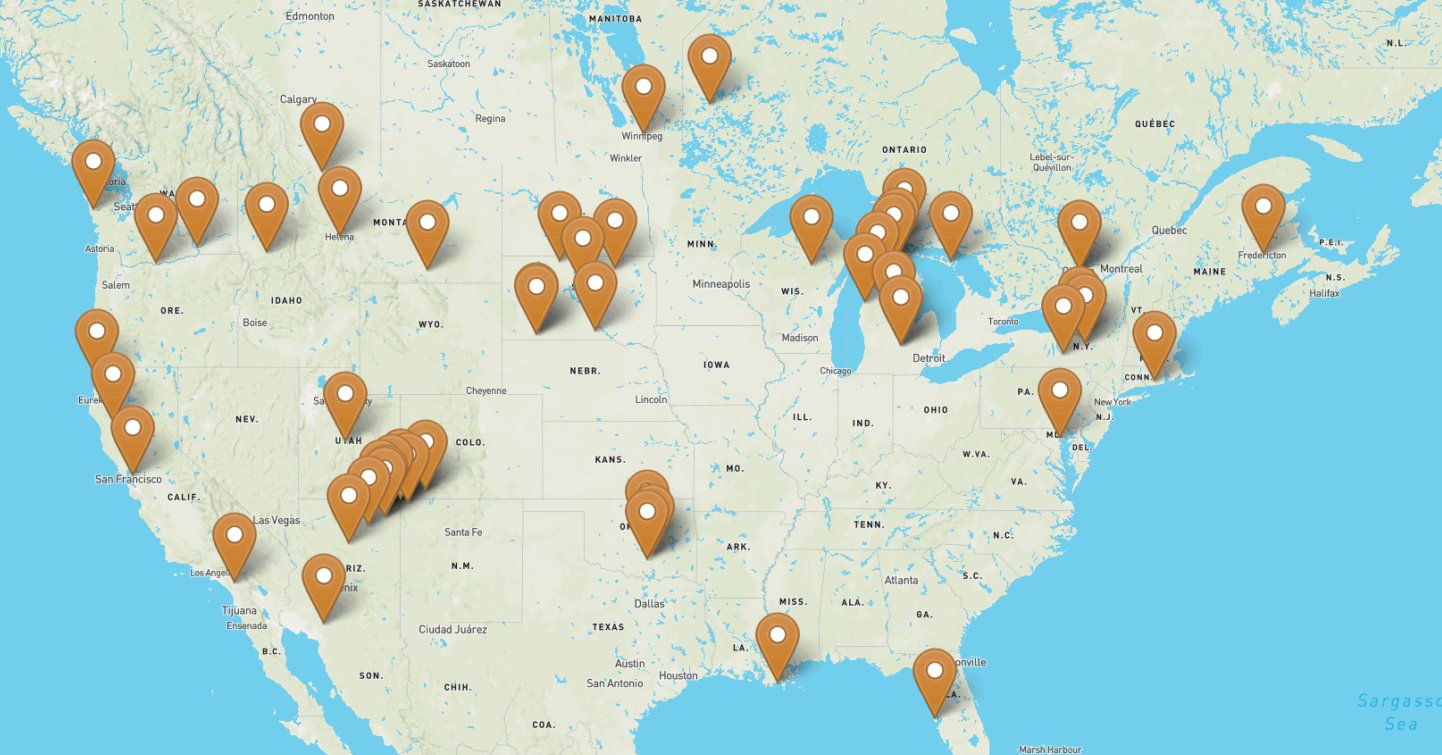
This semester LEADR Associate Director Gillian Macdonald and Graduate Assistant Aubree Marshall trialed the use of the digital tool KnightLab JS StoryMaps in a large ISS course. StoryMaps offer a unique way to display place-based research and it is free digital tool available to the public. For a class based on international security and borders in particular, the tool was a welcome addition to non-essay-based assignments which allows students to express their research in creative ways. Some examples of topics that students chose to focus on were the use of the English Channel in WWII, nuclear weapons proliferation in India and Pakistan, climate change and its effect on migration, and great power foreign policy in a globalized world.
Aubree came to Gillian’s class twice explaining the use of StoryMaps and offering guidance on their creation. Students have expressed interest and jubilation in using the tool. She then offered a zoom workshop for anyone needing to troubleshoot ideas and image imbedding. The experience has been very positive for both the class and LEADR. Here are examples of what a StoryMap looks like and our slides for construction:
The following piece was originally created for the DH@MSU Newsletter and was featured in the December 13, 2023 issue. Subscribe to the Newsletter here.
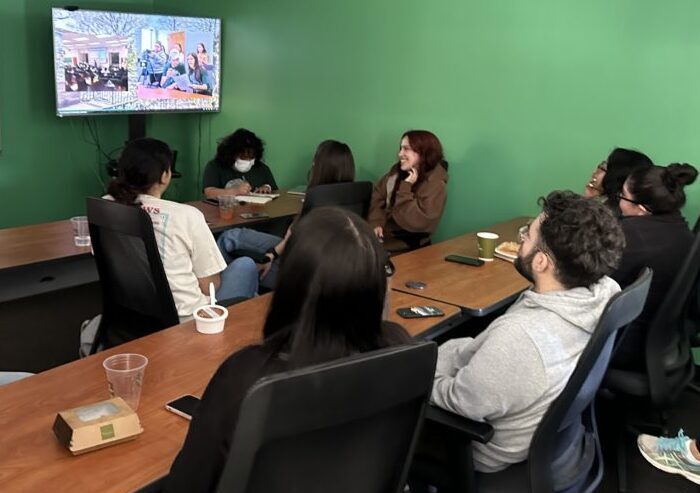
THATCamp (which stands for “The Humanities and Technology Camp”) is a gathering where the agenda is set by attendees on the day of the event based on what people want to learn and/or share. It is an event where students, staff, and faculty from any discipline and from all skill levels learn and build together in sessions proposed, led, and voted upon by the community. This “un-conference” event is a fun, low stakes way to engage and learn from like-minded folks in the MSU community about new and emerging ideas in the digital humanities field. Unlike typical conferences, at THATCamp, we set the schedule the morning of the event based by voting on a series of possible sessions proposed that day by participants. The event will be held from 8:45am to 3pm on Tuesday August 20, 2024, in the Digital Scholarship Lab of the MSU Library, but attendees may come and go as their schedule allows.
Why THATCamp MSU?
At DH@MSU THATCamp, we create space for meeting fellow members of the community in informal networking sessions, and we encourage people to share their work in impromptu discussions and workshops.
DH@MSU started hosting bi-annual THATCamps each August and January targeted at MSU faculty, staff, and students for a few reasons:
To bring people back together at the start of the semester
To introduce new folks to the DH@MSU community
Share knowledge, expertise, and skills among the community
Build connections between community members for future collaborations, troubleshooting, and less formal interactions
This day-long unconference is a fantastic opportunity for members of the DH@MSU community (old and new) to gather, learn from each other, and make connections to carry forward into the academic year.
THATCamp is FREE, but we do strongly encourage registration in advance (it helps us determine how much pizza and coffee to buy). A tentative schedule and the registration form are available below. Please direct any questions to Max Evjen (evjendav@msu.edu).
2:45 – 3:30 PM Share out from the sessions, closing thoughts, and next steps.
Technology and Communication
DH@MSU is on Mastodon and Instagram! Follow us there, and use the hashtag #MSUDH
Additional Information
Mask Policy
As of August 10, 2022, MSU has lifted its face-covering directive. Masks are encouraged, but they are not required.
Contact Us
If you have any questions about this event, please do not hesitate to contact DH@MSU at dh@msu.edu or planning committee chair Max Evjen at evjendav@msu.edu.
At the Kellogg Biological Station (KBS), MSU’s largest off-campus research and education complex, in-person field trips have been a mainstay of outreach efforts since the 1920s. Field trips are memorable learning experiences that connect students physically and emotionally with the local environment. Unfortunately, these in-person events are becoming less common in K-12 American schools, due to budget constraints, focus on standardized test performance and the COVID-19 pandemic (Behrendt & Franklin, 2014; Greene et al., 2014). In light of these constraints, teachers have been using schoolyards and near-school natural areas as field trip destinations. These near-school nature and community experiences should be encouraged. These local experiences could be paired with digital humanities (DH) tools and pedagogy (May, 2000) to provide the opportunity to deepen the context globally. When used together, local and digital experiences can support students in connecting their lived experience and local places with global issues such as climate change and agroecological systems. Digital experiences make possible travel to new places by removing barriers of cost and geographical distance to create more equitable opportunities for marginalized communities.
With the DH Seed Grant, allowed the opportunity to think more creatively and expansively about how K-12 students engage with the landscapes, people and stories of KBS.
We are working to create a digital learning space for teachers and students that will bring KBS to life through story, art, photography, and collaborative learning. The centerpiece of the digital learning space will be Squareland Mysteries, a graphic novel for middle school readers, written by Dr. Catalina Bartlett, DH Core Faculty member, during her Writer in Residence experience at KBS in summers 2019 & 2020. Squareland Mysteries tells stories related to the science and research of KBS, through the adventures of 5th graders Cora and Jackson. The primary setting for Squareland Mysteries is the KBS Long-Term Ecological Research experiment (KBS LTER). KBS LTER is a research site which aims to understand the ecology of Midwest cropping systems and agricultural landscapes. Funded by the NSF, it is one of 28 such sites across the country, each set in its own environment and with its own set of research questions. At the KBS LTER, hundreds of scientists work together to study interactions among plants, microbes, insects, management, and the environment to learn how agriculture can provide both high yields and environmental outcomes that benefit society. KBS LTER is also home to the K-12 Partnership, which brings together scientists and K-12 educators to share current science, develop curriculum and improve pedagogies. The inspiration to create Squareland Mysteries came from K-12 Partnership teachers requests for interdisciplinary ways to explore science concepts with students. In Squareland Mysteries, Cora and Jackson learn about biodiversity, ecosystems, nutrient cycling, soil health and its connections to growing food. They engage in scientific practices including observation, conducting background research, developing questions,communicating results, collecting evidence and analyzing data. Through storytelling readers will connect with place and the practices of science.
Project Outcomes
With the DH Seed Grant, we were able to complete the Squareland Mysteries manuscript, compensate a professional artist to create illustrations, share a draft with teachers and receive constructive feedback.
Catalina Bartlett was able to complete the writing of Squareland Mysteries in June 2023. By a twist of fate and a very generous offer, Catalina hosted Kara in her home for 5 days (Kara needed a place to stay while working with Lansing teachers for the Teaching Science Outdoors – Urban Partnerships program). Catalina’s generosity offered us the opportunity to live communally and work closely for 5 days. During the day Catalina would work on the story and in the evening we’d cook and eat while reading and editing the manuscript collaboratively.
During our week together, we also interviewed Erica Bradshaw, who we would choose to be the project’s illustrator. Erica’s skills, knowledge of KBS and the surrounding community and collaborative spirit made her the perfect fit. By August 2023, Erica produced an amazing set of 10 illustrations that can now be incorporated into the final edition of the book.
Cora’s view of the agricultural fields near her new schoolCora, 5th graderDrawing of food web of agricultural fields in SW Michigan
Sharing Squareland Mysteries with teachers: During the fall 2023 K-12 Partnership Workshop, Kara Haas and Erica Bradshaw led a session for teachers that involved reading an excerpt of the book, discussing how the story could be used in instruction and doing some guided sketching with Erica. Teachers shared great interest in sharing the book with students! They also shared that one of the things they like most about the story was the character development – because the book is written in Cora’s voice students can clearly read her thoughts about being the new girl, making friends and making a new community home. These are human emotions that teachers were excited to have modeled through a fictional character.
Kara and Erica standing outside with Wintergreen Lake in the background and golden fallen leaves on the green grass (Photo Credit: Liz Schultheis)Kara, Erica and K-12 Partner teachers sharing their fall leaf sketches, standing in front of a stone fireplace (photo credit: Liz Schultheis)
Reflection on the Project
While working on this project, I was reminded of the importance of relationships. It is through our relationships that we connect, collaborate, and strengthen each other. It is through sharing time, space, comforts and concerns of the small and big things in life that we help each other get through. My work is humanized by centering relationships. I find immense joy in long term collaborations which are melded by time, opportunity and our relationships. There is joy in sharing the journey.
Looking Forward
Squareland Mysteries is still waiting for its digital home to be completed. I’m working to format the text and illustrations together to complete the book. When complete Squareland will be put into Google’s Book Creator and shared widely.
Erica Bradshaw has accepted an invitation to be the 2024 KBS LTER Artist in Residence. In this role, she’ll be able to explore the lands and build relationships with folks at KBS. She will be able to take her own direction with interpreting and connecting to the landscapes of KBS. I cannot wait to see what she creates!
My work with teachers continues and deepens every day, I’m working toward my dissertation year while moving several different projects forward. This summer marks the 25th anniversary of the KBS K-12 Partnership which involves a celebration and a reflective project to collect and share stories from teachers, faculty, former graduate students and staff involved with the project since 1999. I appreciate the opportunity that the Digital Humanities Seed grant allowed to explore different formats for sharing stories and the capacity to develop new collaborations and deepen relationships.
Coregulating with Water: Building Resilient Community with Toxic Watersheds Through Art-Science
Dr. Jordan’s talk will be a hybrid event: in-person at the MSU Main Library, Digital Scholarship Lab, Flex Space, and virtual over Zoom at the following registration link.
Nick Sly is a PhD candidate in the Department of History at Michigan State University who received a Graduate Certificate in Digital Humanities in Fall 2023. He studies U.S. social and cultural history with an emphasis on education at the turn of the 19th century. His dissertation covers the controversies over textbooks and their adoption following the industry’s consolidation. Nick has worked on DH projects on the Dust Bowl in the 1930s, textbook author Harold Rugg controversy in 1941, and textbook author David Saville Muzzey controversy in the interwar period using textual analysis, mapping, and digital archiving tools. He used Voyant to compare textbook editions and Dust Bowl cultural texts, Neatline to map out migration during the Dust Bowl, and Omeka to create a digital archive of sources on Harold Rugg. He is currently a member of the DH@MSU Advisory Committee and slated to graduate in 2024.
Corey Marsh Ecological Research Center (CMERC) is a 400-acre parcel of land in Bath, Michigan, that is as noteworthy for its past as its future. The plot is the only remaining portion of the original MSU land grant that is non-contiguous with the East Lansing campus. For decades, the marsh served as the university’s Muck Soils Research Farm, but since 2018 it has been repurposed as an ecological research station thanks to the efforts of Dr. Jen Owen (MSU Department of Fisheries and Wildlife), who has reimagined the marsh as a site of research and engagement for MSU and the surrounding communities. The marsh is currently home to more than a dozen ongoing research projects run by faculty, community partners, and MSU students (graduate and undergraduate), covering topics like indigenous cultivation practices for wild rice, migratory bird tracking, and water quality analyses. These initiatives skew heavily toward STEM disciplines, and so the ways of knowing currently privileged within the marsh tend to be scientific in method.
Map of Corey Marsh. Downloadable copy available here.
“Marsh Time” is intended to supplement (not supplant) these existing projects with opportunities to engage with and understand Corey Marsh through creative means and humanistic epistemologies. Our goals, broadly construed, were to:
Preserve a sense of wonder that cannot be quantified.
Bring the arts and humanities to the marsh without interrupting, changing, or interfering with the marsh itself by doing so.
Deploy digital humanities methods in pursuit of these goals (without drawing visitors’ gaze from the marsh to their phones).
Project Description
We used our seed grant funding to install and maintain two major pieces of equipment at the center of the marsh, near Trail Marker 4 at the end of the Accessible Center Trail to ensure the widest audience and to best reflect usage patterns within the marsh.
Marsh Photographs
We placed time-lapse trail cameras, oriented east and west respectively. These cameras were programmed to capture photographic images of the marsh at three-hour intervals, starting at midnight and again at 3 am, 6 am, 9 am, 12 pm, 3 pm, 6 pm, and 9 pm every day.
Matt Rossi installs trail camera while his collaborator watches instead of helping
We used two open-source image analysis tools for the corpus we generated this way, which comprised 16 images per day throughout the image collection period. The first is Zach Whalen’s Image Macroanalysis in Javascript (IMJ) tool, which creates visualizations for large image sets. The second is Azer Bulbul’s Average Color Generator, which determines the average color for each image in any uploaded image set.
Screenshots of the user interface for the Image Macroanalysis in Javascript (IMJ) and Average Color Generator tools.
Poetry Installation
In addition to the trail cameras mentioned above, we also designed a poetry display to be installed in the bird blind that is also located at Trail Marker 4. This portion of the project aims to activate multiple overlapping perceptions of time in the marsh, and to foreground the utility of literary texts as a means for achieving this kind of simultaneity.
We selected the Canadian-Mohawk writer Emily Pauline Johnson’s 1895 poem “Marshlands” for display, which reads as follows:
“Marshlands” by Emily Pauline Johnson
A thin wet sky, that yellows at the rim, And meets with sun-lost lip the marsh’s brim.
The pools low lying, dank with moss and mould, Glint through their mildews like large cups of gold.
Among the wild rice in the still lagoon, In monotone the lizard shrills his tune.
The wild goose, homing, seeks a sheltering, Where rushes grow, and oozing lichens cling.
Late cranes with heavy wing, and lazy flight, Sail up the silence with the nearing night.
And like a spirit, swathed in some soft veil, Steals twilight and its shadows o’er the swale.
Hushed lie the sedges, and the vapours creep, Thick, grey and humid, while the marshes sleep.
Our selection of “Marshlands” was motivated, first, by the obvious subject matter relevance to Corey Marsh. A substantial secondary factor included the historical context of its publication in 1895, which is the same year that Michigan State (then called State Agricultural College) hired its first-ever female professor. We intended for these two contexts to spark visitors’ reflections on the marsh in the immediate present as well as in the context of MSU’s institutional history.
We further noted that the relationship between the year 2023 and the time elapsed since 1895 is roughly equal to the ratio of that roughly 120-year time frame to the millennia that have elapsed since the glacial period that formed the marsh. With this, we seized upon the poem’s 14-line structure as an opportunity to visualize these glacial timeframes, which would be difficult to conceptualize otherwise. We utilized a suite of software, including VCarve Pro, to apply specific physical dimensions to the stanzas of “Marshlands,” so that each stanza will take up 9.8 inches of space – which means that the physical space the poem takes up on the installation will be equal to the distance the glacier that formed Corey Marsh would travel in one week.
Screenshots of the VCarve Pro file for “Marshlands,” used to design apply physical dimensions to the lines of the poem and to determine an appropriate path used to carve the poem into wood for outdoor installation.
Our plan is to feed these dimensions into the Lansing Maker Network’s computer numerical control (CNC) router, which will allow us to carve the poem into wood salvaged from trees felled in Corey Marsh with the exact dimensions articulated above.
CNC Router at the Lansing Makers Network facility.
Project Outcomes
Work on this project is ongoing, but initial outcomes are encouraging. The images compiled from our trail cameras explore new ways of representing the time and space of Corey Marsh, as suggested by the examples below.
The month of June 2023 (facing east), with one day per second.
Progression of every noon during July 2023 (facing west).The average color of Corey Marsh according to photographs gathered from June 1 to August 30, 2023. We, like you, were initially surprised by the overwhelming grayness produced by images we see as so vibrantly green and blue, but we encourage viewers here to note (a) the extent to which this average color reflects nocturnal images, which may better reflect the perceptual habits of the marsh’s actual inhabitants, and (b) the air quality events and other climate disruptions of Summer 2023, which likely shifted the average color more towards gray than we might have seen otherwise.
We particularly sought opportunities to make manifest the cyclical nature of time in wetland environments such as this, and our use of IMJ was meant to capture a balance between the dynamics of individual images in the marsh and the reliability of time as it unfolds in more seasonal patterns. We envisioned average color analysis as a way to further abstract human visitors’ experiences of the marsh, with the goal of eventually producing a chromatic calendar of the area that could express the passage of time based on the landscape’s dominant colors.
We are still in the process of cutting and installing the poem based on the CNC specifications described above. This delay is primarily attributable to uncertainty regarding the long-term status of the bird blind and additional challenges associated with securing access to the Corey Marsh salvage wood, but we feel that this local connection is substantial enough to remain committed to despite the timeline challenges.
Moving forward, this project will find a digital home on the Corey Marsh Ecological Research Center’s website, which allow the materials generated through this Seed Grant funding to be widely available without inhibiting the physical spaces of the marsh we mean to celebrate. We are exploring opportunities to expand the photographic and color analysis projects to potentially accommodate externally submitted photographs, and we are also in the process of extending the image capture period to allow the chromatic calendar to cover an entire calendar year. Elements of this ongoing project have been funded by an MSU Lilly Fellowship, which we point to here in closing to show that the project seeded by DH@MSU funding continues to grow in new and exciting ways into the future.
I requested the seed grant to support preliminary research for finding a methodology for using bar and restaurant menus as data. I knew that I needed to find menus that were specific to Michigan and to Lansing and that the seed grant would provide the resources to digitize some of those menus and turn them into a reusable dataset. What I did not know when I proposed the initial ideas for Mapping Michigan Menus was that I would soon come into possession of a large collection of menus with a Michigan focus. The MSU Broad Art Museum contacted Helen Veit, my dissertation advisor, in case she wanted to use a collection of thousands of food and drink menus from the 1960s to around 2008. Dennis Cassidy was the original owner of the collection. Beginning in 1966, Cassidy worked at Crown Publishing, which became Crown Menus in the 1980s when they primarily catered to the restaurant industry. Cassidy and his wife, menus from his own company and throughout his travels and was heavily Michigan-centric—the largest collection of such menus. To begin, in mid-May, I visited the collection at Jim Nelson’s house with Sandra Brown from the Broad Art Museum. I took a box of menus that day, mostly the menus I could find with a Lansing focus. This collection became the basis for most of my experiments for the rest of the summer and has turned into a larger project with Matrix Center for Digital Humanities and Social Science at MSU. In fact, the collection of menus is now housed in Matrix (as of September of 2023). But first, I will describe what I did over the summer months.
To begin with, I alphabetized the first small collection (around 175 menus) I had from the larger menu collection. I got the idea from Laura Kitchings, a food scholar and archivist who had been working with the John Mariani menu collection at Boston University. Mariani was a well-known food writer and restaurant critic during the late twentieth into the early twenty-first century who wrote for publications like Esquire magazine and Forbes. During his life and travels, Mariani collected his own set of menus, complete with notes written on them to help him remember aspects of the restaurants when it was time to write. Since there was a large batch of menus to go through, Kitchings decided to alphabetize them. This was one way of creating an unbiased organization system that was not based on categorical information or even prices. I began by doing the same with the Crown Menu Collection, or at least for the ones that I had during the summer. However, when it came time to go through the entire collection for the first time, it proved to be too large to begin the project with alphabetizing them. There are simply too many menus in the Crown Menu Collection. Instead, working with Peter Berg, we have decided to separate the menus by geographic region (Detroit-proper, Detroit-Metro, the rest of Michigan, then Other). This system is one way of beginning the preliminary pass-through of the menus.
I experimented with a few different ways of digitizing menus. Using the first batch of menus that I took in May, I created a database of menus using Google Sheets. The restaurant names went into an alphabetized spreadsheet, but I had to decide which categories were the most important to include. The categories I decided on were: Name (of the restaurant or bar), Year or Years (the menu was in use), Location (if multiple, Location_#, each with a separate column), Menu Publisher, Phone Number(s), Material (the menu is made of), Physical Description (of the menu), Restaurant Owner, Chef, Staff Members, Meals Served, and Hours of operation. Different categories were going to answer different research questions, so I wanted to think about what the metadata for a physical item should look like so that it could be best translated to a description.
I chose a menu from Jim’s Tiffany Place in Lansing, Michigan, during the 1970s as my first sample item. Jim’s Tiffany Place was a popular restaurant in downtown Lansing, Michigan, from the 1960s to early 1990s, when it closed. First, I scanned the menu, along with several others, using the CZUR Book Scanner in LEADR, the Lab for Education and Advancement of Digital Research. Then I decided to put them into an Omeka Classic exhibit, named Mapping Michigan Menus. By scanning the menus, more people can see the menu and interact with it, making it into a more accessible dataset. I added the Annotation plugin, which allowed me to draw boxes around the menu items, transcribe them, and describe them. Annotating the menus did not, however, make them machine readable and easily searchable.
Some of the menus were and are more difficult to scan because of their size and the material they are made of. Plastic-coated menus were convenient for keeping them clean in a messy restaurant or bar, but the material reflects light, which isn’t good for photographing. Some of the menus are printed on or protected by a layer of plastic that can handle spills and wear and tear in restaurants. But others were printed on paper. For some menus, this meant they were re-printed more often. Paper was easier for restaurants to print in-house and so it could be changed more often than menus printed on special material by a publishing company like Crown Menus. Chain restaurants, like Olive Garden and Applebee’s, were able to use more expensive material for their menus because they did not change often. Such restaurants rely on months of recipe development and market research to determine what to put on the menu. There was no variation in the items from a location in Lansing, Michigan, versus a location in Pittsburgh, Pennsylvania. This was not the complete rule, as smaller, family-owned restaurants like Flap Jack Restaurant in the Lansing-area and the Delhi Café in Holt, Michigan, both had large, plastic-coated menus in the 1990s. They were both larger than the black mat that came with the CZUR scanner and the menu went outside of the scanner’s view. The camera was able to capture a wider range, but the height of the base limited its scope. I raised the scanner up using books until it captured the entire height of the menus. Lighting, however, remained a problem.
The Seed Grant Proposal was to consider a prototype for “mapping” a menu. Preliminary research was to see what types of tools were available. I built an Exhibit named Mapping Michigan Menus using Omeka Classic. Adding menus as Items in Omeka makes it possible to include a metadata scheme that follows along with the information that is most important for researchers and scholars who would use restaurant menus as data.
Before receiving the historic menu collection, I thought about the ways that restaurant workers themselves could annotate a dish they made. What would they say about it? One way to “map” a dish through photograph or image is to map the provenance of the ingredients or the cooking and preparation methods. How could we integrate an Omeka plugin into Instagram? Eventually, I realized I was trying to answer two different concerns. The first was how to map a menu over time, or how we can use a menu to answer historical questions concerning food, dining, culture, foodways, economics, and society. This would look quite different from mapping questions about modern food systems, which might be more interested in questions of transportation, supply, and labor.
Using an example of Pozole Verde from Mita’s in Cincinnati, Ohio (yes, a step away from the strictly Michigan menus, but it was an interesting photograph to use in the project), I used the Annotation tool to label the dish and write what items and ingredients were used, including links for more information. Tagging components of a dish seemed to be a good way of collecting information, but a specific vocabulary would have to be used. However, would enforcing a lexicon for tagging dishes stifle ideas? Is there a way to group similar tags (for example: seafood, marsicos, fruits de mer, shellfish, oysters)? What would that look like?
What is Next
The Crown Menu Collection is now at Matrix where it is being sorted, preserved, and digitized. During the Spring 2024 semester, I will work at Matrix to design a website prototype for the collection. Soon, I would like to turn the menus into a machine-readable dataset for sentiment analysis. Consumption is a great way into what a group of people found to be “good” or “bad” during a particular time and place. Matching historical research with linguistic analysis of tastes and Tastes over time is bound to provide a lot of interesting material. Jim’s Tiffany Place purposely used words relating to and highlighting Greek cuisine. Oftentimes, the adjectives were used to describe the preparation method for the menu item. Items were not just cooked, they were “Broiled,” “Stuffed,” and “Skewered.” Meats were “Golden Fried Perch” and “Golden Fried Chicken.” How and when have these words changed over time and across geographic locations? The Text Analysis Omeka Classic Plugin is one possibility for moving this part of the project forward, although that is project for the future. I am new to topic modelling and have only begun learning about different types of text analysis – especially through Kate Topham and Devin Higgins’s Text Analysis Learning Group. The purpose of a seed grant is to help a project grow. This project certainly has and continues to grow from my original ideas.
Mapping Michigan Menus began last summer with an exploration of available ways of “mapping” a food or drink menu, funded by a Digital Humanities Seed Grant. The project gained momentum and changed direction when I came into contact with the Crown Menu Collection in May. Consisting of thousands of menus from mostly Michigan, but also from Chicago, Maryland, Kentucky, Nevada, and California, the menu spans from 1965 to 2008.
All of the menus were collected by Dennis Cassidy, a co-owner of Crown Publishing in Dearborn, Michigan, which eventually became Crown Menus. Crown published many of the menus, but not all of them. Cassidy collected examples and souvenirs everywhere he went.
The collection is now in Matrix: The Center for Digital Humanities and Social Science at MSU, where we are organizing and, eventually, digitizing them. It is the largest collection of Michigan-based menus in existence (that we know of) and is a boon for scholars interested in foodways, restaurants, design, and advertising.
Food reveals a lot about a culture and menus in particular are meant to entice customers and to make people want to literally and viscerally consume something. Menus reveal what imagery and words evoke thoughts and memories of tastes, making customers want to eat and drink. Menus also reveal what people across space and time thought to be “good to eat” and to consume.
A future project with the menus is a sentiment analysis of language used on the menus. So far, a few of the menus have been digitized and live on an Omeka Classic site. This is where I have been experimenting with different ways of “mapping” a menu by using available Omeka Classic plugins like Universal Viewer and Annotation.
The following Project Highlight was originally created for the DH@MSU Undergraduate Newsletter and was featured in the December 4, 2023 issue. Subscribe to the Newsletter here.
The Green Book was a travel guide published between 1936 and 1966 that listed hotels, restaurants, bars, gas stations, etc. that Black travelers would be welcomed. NYPL Labs is in the process of extracting the data from the Green Books themselves and welcomes you to explore its contents in new ways. Learn more here!
Explore these books; map them in your mind. Think about the trips you could take, can take, will take. See how the size of the world can change depending on the color of your skin. Click below to make a trip and view the map!
The following Project Highlight was originally created for the DH@MSU Undergraduate Newsletter and was featured in the November 15, 2023 issue. Subscribe to the Newsletter here.